Taran
Also known as: Таран, Брюстерорт
active · Tower 31 m · Focal 64 m
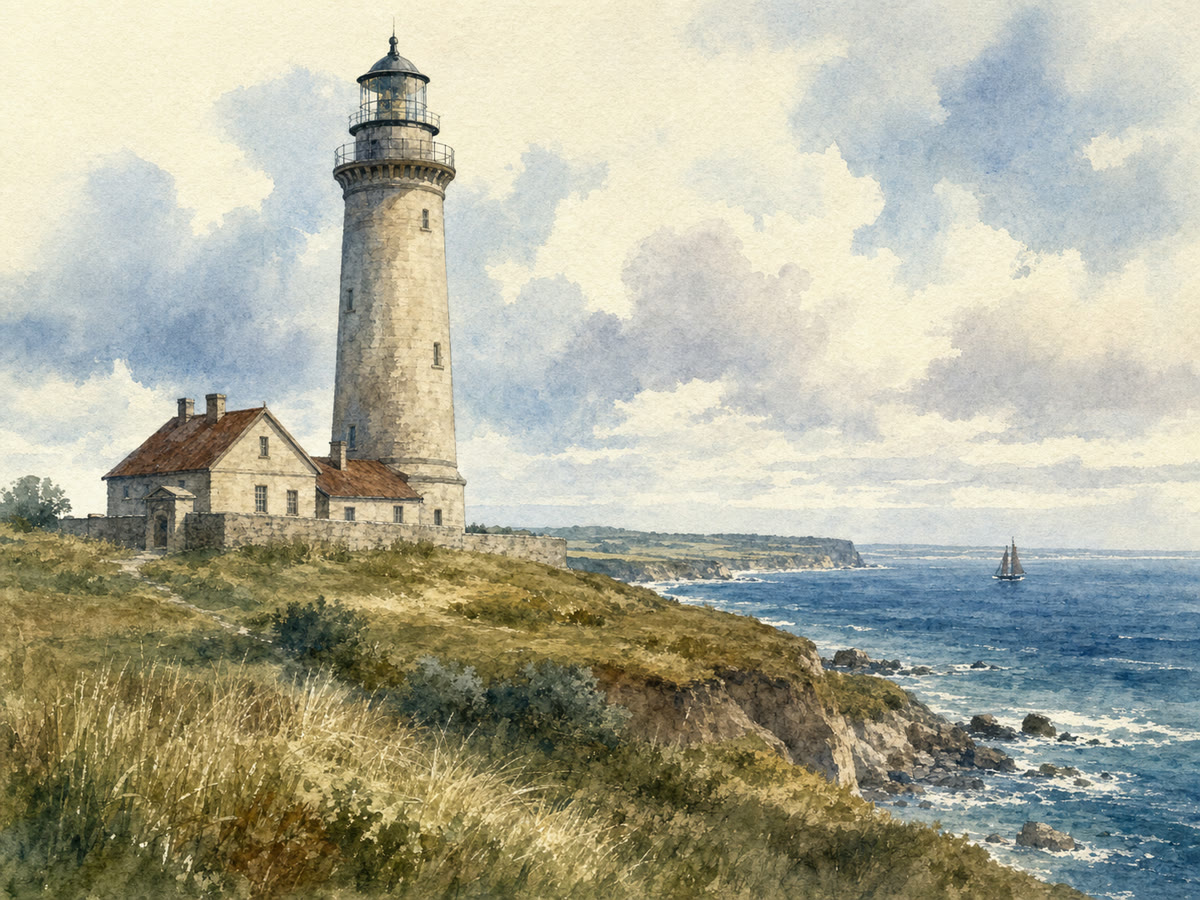 AI-generated illustration
AI-generated illustration - interpretative, not documentary evidence.
At a glance
Place
- Country
- Russia
Structure
- Status
- active
- Construction date
- 1846
- Tower height
- 31
- Focal height
- 64
Light Signature
No accepted light signature claims yet.
Signal pattern, color, period, visibility, optics, and operating context appear here after field-level review.
Light signature JSON will appear here after review.
Names & naming history
EN · Common
- Taran
- Mayachnik Drupal export Field: multi_fields.eng_name.field_eng_name_value
- Корреспонденты "РГ" побывали на самом западном маяке России Record-level source link
- Фото Елена Нагорных Record-level source link
- leuchtturm-welt Record-level source link
RU · Alternative
- Брюстерорт
- Mayachnik Drupal export Field: title.variant
- Корреспонденты "РГ" побывали на самом западном маяке России Record-level source link
- Фото Елена Нагорных Record-level source link
- leuchtturm-welt Record-level source link
RU · Official
- Таран
- Mayachnik Drupal export Field: title.variant
- Корреспонденты "РГ" побывали на самом западном маяке России Record-level source link
- Фото Елена Нагорных Record-level source link
- leuchtturm-welt Record-level source link
Machine-readable names JSON
This description is machine-translated and has not yet been reviewed.
The lighthouse is installed on the northwestern protrusion of the Kaliningrad Peninsula - a cape that was formerly called Brewsterort - from the German words "Brust" - chest and "Ort" - place. The peninsula was renamed Taran in 1947, and the lighthouse was renamed in 1963.
This name is very suitable for the peninsula and cape protruding into the sea where sea routes to many European countries pass. It’s as if he’s ramming them, forcing them to change course and go around the cape.
A.I. Nagaev, exploring this area, wrote in 1751: “Brewsterort is a blunt cape, high, steep to the W and N, overgrown with forest on the north side. There are two sandy mountains on it, and to the south of them not far, at the height of the coast, between the hills, there is a pickaxe, and behind it to Pillava (now Baltiysk. - Author) another. At its very north-west steepness I have been before this there was a fiery lighthouse, and now a building is visible... From Brewsterort on the NW there is an underwater reef stretching out into the sea for 1/4 mile, which those passing should be wary of.”
From this description it follows that the “fire” lighthouse existed on the cape, apparently, from ancient times. According to some sources, a signal light to mark the cape and warn sailors against the nearby rocky reef began to be lit on the site of the current lighthouse in 1700.
Until 1945, the cape belonged to East Prussia. It is known that the lighthouse was rebuilt several times by German specialists. In the 1820s, instead of a fire in the canfora, a tower was built on the cape, to the top of which a lantern with three parabolic reflectors was raised at night. The lighthouse existed in this form until 1846, when a red octagonal tower 30.5 m high with a black domed roof and a red brick house next to it were erected at the 33-meter height of the cape. The lighthouse shone with a constant white light.
In 1936, a light-optical device from the Pinch company was installed on the tower, which created a white group flashing light. The flashing characteristic was formed by three screens rotating around the optical part of the apparatus.
In 1945, as a result of the Great Patriotic War, the lighthouse became the property of the USSR. All buildings, tower, technical means
were left by the Germans without major damage, which made it possible to put it into operation as soon as possible.
The foundation of the tower is made of rubble stone. Its walls are four bricks thick at the base and two bricks at the top. Concrete staircase on metal stringers. The lantern structure is glazed with 6 mm thick storm glass. The roof dome is covered with blued copper.
In 1947, a LIEGE-type nautofon and a radio beacon were installed 120 m from the lighthouse. In 1956, a new light-optical apparatus with a white group flashing light was installed in the lamp structure, providing a visibility range of up to 21 miles.
Taran is one of those few lighthouses that are lit not only at night, but also during the day, if the visibility range at sea becomes less than 4 miles, and in the area of the cape this happens quite often.
The first head of the lighthouse after the end of the Great Patriotic War was Petty Officer 1st Article V. Zaitsev. He was replaced in this post by Sergei Aleksandrovich Teryaev, who worked at the lighthouse for 36 years. He was helped by dedicated specialists, and among them Nikolai Maksimovich Kulikov and Ivan Fedorovich Antoshin, who devoted about 40 years to the lighthouse - most of their lives.
Taran has been repeatedly recognized as the best lighthouse of the Baltic Fleet. For great achievements in ensuring the safety of navigation, the Red Banner of the Military Council of the Baltic Fleet was left for eternal storage by the lighthouse staff.
Currently, the lighthouse is under the jurisdiction of the Hydrographic Service of the Baltic Fleet and reliably ensures the safety of approaches to the ports of Kaliningrad and Baltiysk.
Source: Beacons of Russia
Now there is a closed military unit of the Baltic Fleet located around the Taran, so not everyone can visit the lighthouse.
The Tarana lighthouse complex consists of a light beacon, a radio beacon and a nautofon - a sound device that works in bad weather. The light signal is located under the very roof of the lighthouse tower; the lighthouse watch turns it on in the evening and turns it off in the morning strictly according to the illumination table. The white flashing light of the Taran can be seen 20 miles from the coast. The radio beacon operates around the clock, and its signal range is about 25 miles.
The Nautophone emits a beep at a frequency of 300 hertz. The sound signal is turned on when a special buoy is hidden in the fog, located at a distance of 12-13 cable lengths (about 2.4 kilometers) from the shore.
Books about the lighthouse
The novel by the German writer Johannes Richard “The Lighthouse in Brusterort” (Johannes Richard zur Megene (1864-1906) “Das Blinkfeuer von Brusterort” Stuttgart, 1906). See our beacon library
This description is machine-translated and has not yet been reviewed.
The lighthouse is installed on the northwestern protrusion of the Kaliningrad Peninsula - a cape that was formerly called Brewsterort - from the German words "Brust" - chest and "Ort" - place. The peninsula was renamed Taran in 1947, and the lighthouse was renamed in 1963.
This name is very suitable for the peninsula and cape protruding into the sea where sea routes to many European countries pass. It’s as if he’s ramming them, forcing them to change course and go around the cape.
A.I. Nagaev, exploring this area, wrote in 1751: “Brewsterort is a blunt cape, high, steep to the W and N, overgrown with forest on the north side. There are two sandy mountains on it, and to the south of them not far, at the height of the coast, between the hills, there is a pickaxe, and behind it to Pillava (now Baltiysk. - Author) another. At its very north-west steepness I have been before this there was a fiery lighthouse, and now a building is visible... From Brewsterort on the NW there is an underwater reef stretching out into the sea for 1/4 mile, which those passing should be wary of.”
From this description it follows that the “fire” lighthouse existed on the cape, apparently, from ancient times. According to some sources, a signal light to mark the cape and warn sailors against the nearby rocky reef began to be lit on the site of the current lighthouse in 1700.
Until 1945, the cape belonged to East Prussia. It is known that the lighthouse was rebuilt several times by German specialists. In the 1820s, instead of a fire in the canfora, a tower was built on the cape, to the top of which a lantern with three parabolic reflectors was raised at night. The lighthouse existed in this form until 1846, when a red octagonal tower 30.5 m high with a black domed roof and a red brick house next to it were erected at the 33-meter height of the cape. The lighthouse shone with a constant white light.
In 1936, a light-optical device from the Pinch company was installed on the tower, which created a white group flashing light. The flashing characteristic was formed by three screens rotating around the optical part of the apparatus.
In 1945, as a result of the Great Patriotic War, the lighthouse became the property of the USSR. All buildings, tower, technical means
were left by the Germans without major damage, which made it possible to put it into operation as soon as possible.
The foundation of the tower is made of rubble stone. Its walls are four bricks thick at the base and two bricks at the top. Concrete staircase on metal stringers. The lantern structure is glazed with 6 mm thick storm glass. The roof dome is covered with blued copper.
In 1947, a LIEGE-type nautofon and a radio beacon were installed 120 m from the lighthouse. In 1956, a new light-optical apparatus with a white group flashing light was installed in the lamp structure, providing a visibility range of up to 21 miles.
Taran is one of those few lighthouses that are lit not only at night, but also during the day, if the visibility range at sea becomes less than 4 miles, and in the area of the cape this happens quite often.
The first head of the lighthouse after the end of the Great Patriotic War was Petty Officer 1st Article V. Zaitsev. He was replaced in this post by Sergei Aleksandrovich Teryaev, who worked at the lighthouse for 36 years. He was helped by dedicated specialists, and among them Nikolai Maksimovich Kulikov and Ivan Fedorovich Antoshin, who devoted about 40 years to the lighthouse - most of their lives.
Taran has been repeatedly recognized as the best lighthouse of the Baltic Fleet. For great achievements in ensuring the safety of navigation, the Red Banner of the Military Council of the Baltic Fleet was left for eternal storage by the lighthouse staff.
Currently, the lighthouse is under the jurisdiction of the Hydrographic Service of the Baltic Fleet and reliably ensures the safety of approaches to the ports of Kaliningrad and Baltiysk.
Source: Beacons of Russia
Now there is a closed military unit of the Baltic Fleet located around the Taran, so not everyone can visit the lighthouse.
The Tarana lighthouse complex consists of a light beacon, a radio beacon and a nautofon - a sound device that works in bad weather. The light signal is located under the very roof of the lighthouse tower; the lighthouse watch turns it on in the evening and turns it off in the morning strictly according to the illumination table. The white flashing light of the Taran can be seen 20 miles from the coast. The radio beacon operates around the clock, and its signal range is about 25 miles.
The Nautophone emits a beep at a frequency of 300 hertz. The sound signal is turned on when a special buoy is hidden in the fog, located at a distance of 12-13 cable lengths (about 2.4 kilometers) from the shore.
Books about the lighthouse
The novel by the German writer Johannes Richard “The Lighthouse in Brusterort” (Johannes Richard zur Megene (1864-1906) “Das Blinkfeuer von Brusterort” Stuttgart, 1906). See our beacon library
This description is machine-translated and has not yet been reviewed.
The lighthouse is installed on the northwestern protrusion of the Kaliningrad Peninsula - a cape that was formerly called Brewsterort - from the German words "Brust" - chest and "Ort" - place. The peninsula was renamed Taran in 1947, and the lighthouse was renamed in 1963.
This name is very suitable for the peninsula and cape protruding into the sea where sea routes to many European countries pass. It’s as if he’s ramming them, forcing them to change course and go around the cape.
A.I. Nagaev, exploring this area, wrote in 1751: “Brewsterort is a blunt cape, high, steep to the W and N, overgrown with forest on the north side. There are two sandy mountains on it, and to the south of them not far, at the height of the coast, between the hills, there is a pickaxe, and behind it to Pillava (now Baltiysk. - Author) another. At its very north-west steepness I have been before this there was a fiery lighthouse, and now a building is visible... From Brewsterort on the NW there is an underwater reef stretching out into the sea for 1/4 mile, which those passing should be wary of.”
From this description it follows that the “fire” lighthouse existed on the cape, apparently, from ancient times. According to some sources, a signal light to mark the cape and warn sailors against the nearby rocky reef began to be lit on the site of the current lighthouse in 1700.
Until 1945, the cape belonged to East Prussia. It is known that the lighthouse was rebuilt several times by German specialists. In the 1820s, instead of a fire in the canfora, a tower was built on the cape, to the top of which a lantern with three parabolic reflectors was raised at night. The lighthouse existed in this form until 1846, when a red octagonal tower 30.5 m high with a black domed roof and a red brick house next to it were erected at the 33-meter height of the cape. The lighthouse shone with a constant white light.
In 1936, a light-optical device from the Pinch company was installed on the tower, which created a white group flashing light. The flashing characteristic was formed by three screens rotating around the optical part of the apparatus.
In 1945, as a result of the Great Patriotic War, the lighthouse became the property of the USSR. All buildings, tower, technical means
were left by the Germans without major damage, which made it possible to put it into operation as soon as possible.
The foundation of the tower is made of rubble stone. Its walls are four bricks thick at the base and two bricks at the top. Concrete staircase on metal stringers. The lantern structure is glazed with 6 mm thick storm glass. The roof dome is covered with blued copper.
In 1947, a LIEGE-type nautofon and a radio beacon were installed 120 m from the lighthouse. In 1956, a new light-optical apparatus with a white group flashing light was installed in the lamp structure, providing a visibility range of up to 21 miles.
Taran is one of those few lighthouses that are lit not only at night, but also during the day, if the visibility range at sea becomes less than 4 miles, and in the area of the cape this happens quite often.
The first head of the lighthouse after the end of the Great Patriotic War was Petty Officer 1st Article V. Zaitsev. He was replaced in this post by Sergei Aleksandrovich Teryaev, who worked at the lighthouse for 36 years. He was helped by dedicated specialists, and among them Nikolai Maksimovich Kulikov and Ivan Fedorovich Antoshin, who devoted about 40 years to the lighthouse - most of their lives.
Taran has been repeatedly recognized as the best lighthouse of the Baltic Fleet. For great achievements in ensuring the safety of navigation, the Red Banner of the Military Council of the Baltic Fleet was left for eternal storage by the lighthouse staff.
Currently, the lighthouse is under the jurisdiction of the Hydrographic Service of the Baltic Fleet and reliably ensures the safety of approaches to the ports of Kaliningrad and Baltiysk.
Source: Beacons of Russia
Now there is a closed military unit of the Baltic Fleet located around the Taran, so not everyone can visit the lighthouse.
The Tarana lighthouse complex consists of a light beacon, a radio beacon and a nautofon - a sound device that works in bad weather. The light signal is located under the very roof of the lighthouse tower; the lighthouse watch turns it on in the evening and turns it off in the morning strictly according to the illumination table. The white flashing light of the Taran can be seen 20 miles from the coast. The radio beacon operates around the clock, and its signal range is about 25 miles.
The Nautophone emits a beep at a frequency of 300 hertz. The sound signal is turned on when a special buoy is hidden in the fog, located at a distance of 12-13 cable lengths (about 2.4 kilometers) from the shore.
Books about the lighthouse
The novel by the German writer Johannes Richard “The Lighthouse in Brusterort” (Johannes Richard zur Megene (1864-1906) “Das Blinkfeuer von Brusterort” Stuttgart, 1906). See our beacon library
В 1945 году маяк в результате Великой Отечественной войны перешел в собственность СССР. Все здания, башня, технические средства
Источник: Маяки России
Сейчас вокруг "Тарана" расположилась закрытая воинская часть Балтийского флота, поэтому побывать на маяке может далеко не каждый.
Маячный комплекс "Тарана" состоит из светового маяка, радиомаяка и наутофона - звукового устройства, которое работает в плохую погоду. Световой сигнал находится под самой крышей маячной башни, маячник-вахтенный включает его вечером и выключает утром строго по таблице освещенности. Белый проблесковый огонь "Тарана" видно за 20 миль от берега. Радиомаяк работает круглосуточно, дальность действия его сигнала составляет порядка 25 миль.
Наутофон издает звуковой сигнал частотой 300 герц. Звуковой сигнал включают, когда в тумане скрывается специальный буй, расположенный на расстоянии 12-13 кабельтовых (порядка 2,4 километра) от берега.
Книги о маяке
Роман немецкого писателя Иоганнеса Рихарда «Маяк в Брюстерорте» (Johannes Richard zur Megene (1864-1906) “Das Blinkfeuer von Brusterort” Stuttgart, 1906). Смотрите в нашей маячной библиотеке
This description is machine-translated and has not yet been reviewed.
The lighthouse is installed on the northwestern protrusion of the Kaliningrad Peninsula - a cape that was formerly called Brewsterort - from the German words "Brust" - chest and "Ort" - place. The peninsula was renamed Taran in 1947, and the lighthouse was renamed in 1963.
This name is very suitable for the peninsula and cape protruding into the sea where sea routes to many European countries pass. It’s as if he’s ramming them, forcing them to change course and go around the cape.
A.I. Nagaev, exploring this area, wrote in 1751: “Brewsterort is a blunt cape, high, steep to the W and N, overgrown with forest on the north side. There are two sandy mountains on it, and to the south of them not far, at the height of the coast, between the hills, there is a pickaxe, and behind it to Pillava (now Baltiysk. - Author) another. At its very north-west steepness I have been before this there was a fiery lighthouse, and now a building is visible... From Brewsterort on the NW there is an underwater reef stretching out into the sea for 1/4 mile, which those passing should be wary of.”
From this description it follows that the “fire” lighthouse existed on the cape, apparently, from ancient times. According to some sources, a signal light to mark the cape and warn sailors against the nearby rocky reef began to be lit on the site of the current lighthouse in 1700.
Until 1945, the cape belonged to East Prussia. It is known that the lighthouse was rebuilt several times by German specialists. In the 1820s, instead of a fire in the canfora, a tower was built on the cape, to the top of which a lantern with three parabolic reflectors was raised at night. The lighthouse existed in this form until 1846, when a red octagonal tower 30.5 m high with a black domed roof and a red brick house next to it were erected at the 33-meter height of the cape. The lighthouse shone with a constant white light.
In 1936, a light-optical device from the Pinch company was installed on the tower, which created a white group flashing light. The flashing characteristic was formed by three screens rotating around the optical part of the apparatus.
In 1945, as a result of the Great Patriotic War, the lighthouse became the property of the USSR. All buildings, tower, technical means
were left by the Germans without major damage, which made it possible to put it into operation as soon as possible.
The foundation of the tower is made of rubble stone. Its walls are four bricks thick at the base and two bricks at the top. Concrete staircase on metal stringers. The lantern structure is glazed with 6 mm thick storm glass. The roof dome is covered with blued copper.
In 1947, a LIEGE-type nautofon and a radio beacon were installed 120 m from the lighthouse. In 1956, a new light-optical apparatus with a white group flashing light was installed in the lamp structure, providing a visibility range of up to 21 miles.
Taran is one of those few lighthouses that are lit not only at night, but also during the day, if the visibility range at sea becomes less than 4 miles, and in the area of the cape this happens quite often.
The first head of the lighthouse after the end of the Great Patriotic War was Petty Officer 1st Article V. Zaitsev. He was replaced in this post by Sergei Aleksandrovich Teryaev, who worked at the lighthouse for 36 years. He was helped by dedicated specialists, and among them Nikolai Maksimovich Kulikov and Ivan Fedorovich Antoshin, who devoted about 40 years to the lighthouse - most of their lives.
Taran has been repeatedly recognized as the best lighthouse of the Baltic Fleet. For great achievements in ensuring the safety of navigation, the Red Banner of the Military Council of the Baltic Fleet was left for eternal storage by the lighthouse staff.
Currently, the lighthouse is under the jurisdiction of the Hydrographic Service of the Baltic Fleet and reliably ensures the safety of approaches to the ports of Kaliningrad and Baltiysk.
Source: Beacons of Russia
Now there is a closed military unit of the Baltic Fleet located around the Taran, so not everyone can visit the lighthouse.
The Tarana lighthouse complex consists of a light beacon, a radio beacon and a nautofon - a sound device that works in bad weather. The light signal is located under the very roof of the lighthouse tower; the lighthouse watch turns it on in the evening and turns it off in the morning strictly according to the illumination table. The white flashing light of the Taran can be seen 20 miles from the coast. The radio beacon operates around the clock, and its signal range is about 25 miles.
The Nautophone emits a beep at a frequency of 300 hertz. The sound signal is turned on when a special buoy is hidden in the fog, located at a distance of 12-13 cable lengths (about 2.4 kilometers) from the shore.
Books about the lighthouse
The novel by the German writer Johannes Richard “The Lighthouse in Brusterort” (Johannes Richard zur Megene (1864-1906) “Das Blinkfeuer von Brusterort” Stuttgart, 1906). See our beacon library
Heritage identity & evidence
Identity
- LUX ID
LUX-LH-000107- Type
- Lighthouse
- Object kind
- Lighthouse
- Current status
- active
Review & coverage
External identifiers
No reviewed external identifiers yet.
Key source-backed claims
- Construction or building date 1846 · Таран (Брюстерорт) archive
- English name Taran · Таран (Брюстерорт) archive
- Focal height 64 · Таран (Брюстерорт) archive
- Location taxonomy Россия · Таран (Брюстерорт) derived
Translation transparency
Research-only display metadata. Editorial provenance and translation provider are tracked separately.
- Title reviewed rewrite · provider reviewed
- Teaser reviewed rewrite · provider reviewed
- Body generated rewrite · provider provider not recorded
- Narrative teaser reviewed rewrite · provider reviewed
Claim evidence
Operational status
Selected value: active
Show source history
- active · Таран (Брюстерорт) archive
Construction or building date
Recorded values: 1846
Show source history
- 1846 · Таран (Брюстерорт) archive
Tower height
Recorded values: 31
Show source history
- 31 · Таран (Брюстерорт) archive
Focal height
Recorded values: 64
Show source history
- 64 · Таран (Брюстерорт) archive
English name
Selected value: Taran
Show source history
- Taran · Таран (Брюстерорт) archive
3 active / 3 total in-archive source links. Full sources and reference search leads below
External Identity Graph
- LUX Light ArchiveLUX-LH-000107 Canonical LUX ID
Local identity anchor for the record and related claims.
- Wikidata
- WikipediaSearch / review Search lead
review lead · Useful for public descriptions and cross-checking, but text must be rewritten or quoted sparingly.
- ARLHSSearch / review Review source
review lead · Search the World List of Lights and add a verified ARLHS ID when found.
- OpenStreetMapSearch / review Search lead
review lead · Resolve to a stable node, way, or relation URL before acceptance.
- Source URLs3 active / 3 total in-record source links Record source URLs
record provenance · Record-level source URLs are listed in the source provenance section.
- Lighthouse DirectorySearch / review Review source
review lead · Use the regional directory page as a trusted catalogue lead; add the exact URL after review.
Evidence graph
Derived view of how sources, facts, identifiers, lifecycle events, and relationships support this record.
Claim provenance
Select a fact to foreground its source path.
Sources
Facts
- Construction or building date construction_date · 1846
- English name english_name · Taran
- Focal height focal_height · 64
- Operational status status · active
- Tower height tower_height · 31
Identifiers
- Search / review object
- Search / review object
- Search / review object
- Search / review object
- Search / review object
Lifecycle
- No lifecycle evidence nodes yet.
Open evidence graph JSON
View by year
Reconstructed state
- 1846-present
History and connections
Lifecycle summary
Current status: active
Lifecycle events
- BuiltInherited from legacy archive
Construction date recorded.
1 source · medium confidence
Construction phases
Repeated construction dates are treated as lighthouse phases or rebuilds, not one current-date conflict.
- 1846 · Таран (Брюстерорт) · Phase claim
Source narrative context: ...e top of which a lantern with three parabolic reflectors was raised at night. The lighthouse existed in this form until 1846, when a red octagonal tower 30.5 m high with a black domed roof and a red brick house next to it were erected at the 33-meter height of the cape. The lighthouse shone with a constant white light.
Coordinate roles
- structure position · Mayachnik Tahkuna source links
Evidence and data
Detailed timeline, graph, map history, and JSON exports for review and research.
Coverage: no-accepted-coordinates
Open timeline JSON · Open graph JSON · Open map history JSON · Open state profile JSON
Lighthouse history (1 events)
- Construction date recordedrecord-derived
Record history (2 changes)
- Archive record createdarchive-metadata
- Archive record updatedarchive-metadata
Connection graph (1 objects)
Geo timeline (0 points)
No accepted coordinate point yet. The text geography remains listed as context.
- Geography contextРоссия · text-only
Related nodes
- Таран (Брюстерорт) documents · galery
Referenced by
- Фотоальбом Маяки Южной Балтики: Дания, Германия, Польша, Россия, Литва. The album of photos Lighthouses of South Baltic: Danmark, Germany, Poland, Russia, Lithuania mentions · booklighthouse_names
- Васильев Михаил Яковлевич worked_at · lighthouse_link
- Цыновский Томаш worked_at · lighthouse_link
- Смотритель маяка в 21-м веке - лекция на Маячном фестивале 2016 mentions · lighthouse_names
Rights & Attribution
Content License
Original editorial content on this page: Creative Commons Attribution-NonCommercial-ShareAlike 4.0 International. See Rights & Reuse.
Media Rights
No published media with documented rights on this record.
Attribution
"Taran" · LUX-LH-000107 · © LUX143 · Creative Commons Attribution-NonCommercial-ShareAlike 4.0 International · https://light.lux143.org/node/598/
Citation
LUX Light Archive, Lighthouse record: "Taran", LUX-LH-000107, https://light.lux143.org/node/598/, accessed 2026-09-24, archive v0.24.572.
Legacy archive provenance
This object now uses its LUX identity as the public record. The original Drupal node is preserved as migration provenance and a compatibility route.
- Canonical LUX ID
- LUX-LH-000107
- Legacy node
- node:598
- Legacy URL
- /node/598/
- Drupal source type
- lighthouse
- Source system
- drupal_migration
- Source path
- /node/598
Trusted References
Known external identifiers and review leads for Wikipedia, Wikidata, map, registry, and catalogue coverage. Search leads are not accepted evidence until reviewed. Field-level evidence is implied only when evidence scope or supported fields are explicit.
| Source | Status | Evidence scope | Reference | Review note |
|---|---|---|---|---|
| Wikidata | search-candidate | Search / review | Resolve to a verified QID before treating as evidence. | |
| Wikipedia | search-candidate | Search / review | Useful for public descriptions and cross-checking, but text must be rewritten or quoted sparingly. | |
| OpenStreetMap | search-candidate | Search / review | Resolve to a stable node, way, or relation URL before acceptance. | |
| ARLHS | review-source | Search / review | Search the World List of Lights and add a verified ARLHS ID when found. | |
| Lighthouse Directory | review-source | Search / review | Use the regional directory page as a trusted catalogue lead; add the exact URL after review. |
Record identifiers
- Node
- 598
- Source type
- lighthouse
- Review class
- Lighthouse
- Wikidata class
- Q39715
- Created
- 27/05/2011 14:44:05 UTC
- Changed
- 24/11/2012 11:32:35 UTC
- Source path
- /node/598
All technical fields
Structure
- Status
- active
- Construction date
- 1846
- Tower height
- 31
- Tower form
- Not recorded
- Material
- Not recorded
- Daymark / colour scheme
- Not recorded
- Focal height
- 64
- Light height
- Not recorded
Signal
- Light characteristic
- Not recorded
- Light intensity
- Not recorded
- Light range
- Not recorded
- Light number
- Not recorded
- Operation
- Not recorded
- Legacy light IDs
- Not recorded
- Call sign
- Not recorded
- Lens / optics
- Not curated
Position
- Latitude
- Not recorded
- Longitude
- Not recorded
Person
- Surname
- Not recorded
- Name
- Not recorded
- Patronymic
- Not recorded
- Work period
- Not recorded
- Job
- Not recorded
Empty lighthouse fields are shown so review gaps are visible. Lens and optics are curated as heritage assets when evidence exists.