Gelendzhik Lighthouse
Also known as: Геленджикский
No public image is available for this record.
At a glance
Place
- Country
- Russia
- Region
- Gelendzhik
Light Signature
No accepted light signature claims yet.
Signal pattern, color, period, visibility, optics, and operating context appear here after field-level review.
Light signature JSON will appear here after review.
Names & naming history
RU · Official
- Геленджикский
- Mayachnik Drupal export Field: title
- Звезда в вершине ночи Record-level source link
This description is machine-translated and has not yet been reviewed.
Vladimir PASYAKIN, “Red Star”.
Photo by the author.
At the Black Sea lighthouses
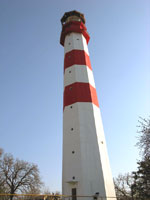 The whole life of Larisa Nikolaevna Yurchenko, as they say, from the cradle was connected with the Gelendzhik lighthouse. Father - Nikolai Grigorievich - was the head of the lighthouse for 37 years! Two years ago he passed away. And there is nothing surprising in the fact that Larisa followed in her father’s footsteps, because she did not see any other life other than the lighthouse one. However, she did not come to this troublesome position right away. The naval base has been operating in the hydrographic region of Novorossiysk since 1992. At first she worked regularly as a technician at the radio navigation station “Mars-75”, which is located next to the lighthouse, then as a senior technician, and only after graduating from the Gelendzhik Institute of Management, having received a diploma of higher education, she took up her current responsible position.
Larisa’s mother, Zoya Mikhailovna, has been working as a technician at the lighthouse for 36 years. Larisa's brother - captain 2nd rank reserve Anatoly Yurchenko - graduated from the hydrographic department of the Higher Naval School named after M.V. Frunze. A professional hydrographer, he, having retired to the reserve, became the head of the Gelendzhik forward (main) lighthouse, but this is a separate conversation. And her husband, captain 3rd rank Evgeniy Mazhurin, is also a professional hydrographer, o
graduated from the same university as Larisa’s brother. He served at the Tuapse site, and since February 2005 - head of the lighthouse service of the Novorossiysk region.
Even during our first meeting, Larisa showed me the book “Lighthouses of the Black Sea” with a dedicatory inscription from one of its authors - the legendary head of the hydrographic service of the Black Sea Fleet, Candidate of Sciences, Rear Admiral Lev Mitin. He was the leader of a round-the-world expedition to the shores of Antarctica on the oceanographic research vessel Admiral Vladimirsky, and compiled a unique map of ships and vessels that sank in the Black Sea.
 Among the lighthouses there are no random people. They are people of a special type, I would say, a special state of mind and increased responsibility. Despite any storms, bad weather or even cataclysms, the lighthouse light must flare up at the appointed time and be a guiding star for passing ships and vessels.
Nothing can replace the light of a lighthouse for a sailor. Even now, in the age of an extensive global system of orientation in space with the help of space communication satellites, which provide orientation not only to ships and vessels at sea, but even to cars in cities.
Modern electronics are as perfect as they are vulnerable. It may fail. And, if necessary, during military operations it can be blocked or disabled, making ships and vessels “blind.” Therefore, the role and importance of lighthouses for the military cannot be overestimated.
By the way, I think this is one of the reasons why today, like for many decades, they are under the jurisdiction of the military, as part of the country’s Ministry of Defense. These are rightfully strategic objects on which the safety of navigation of thousands and thousands of domestic and foreign ships and vessels of various purposes directly depends. And it’s not without reason that in a conversation with me, Evgeny Mazhurin emphasized that there is a decree of the Government of the Russian Federation on recognizing lighthouse towns as closed military camps. With all the ensuing consequences.
The territory of the lighthouse town on Tolstoy Cape is also fenced because next door there is another important facility of the Black Sea Fleet hydrographic service - the Mars-75 station, whose team is headed by captain 3rd rank Sergei Makarenko. Three such stations, located in different areas of the Black Sea coast (on Tarkhankut, Genichesk and Gelendzhik), form a system. It does not depend on satellites
communication devices, operates autonomously and turns on when necessary. With its help, ships and fleet vessels can navigate the Black Sea without a global satellite system. These stations are used during exercises and mass departures of ships and vessels to sea.
And next to the lighthouse town there is a border post. Lighthouses and border guards are friends and know each other well. So this important area is under special control and supervision. Such a triumvirate of military sailors, lighthouse workers and border guards benefits the common cause, since the “alien” here will be immediately identified.
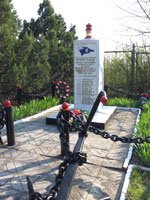
My “pass” to enter the town was the head of the lighthouse service, with whom we came here after visiting the Penai lighthouse. It is located in Kabardinka, just below the well-known battery of Captain A. Zubkov - an open-air museum where there are 100-mm naval guns that defended the city during the Great Patriotic War. To the right of the road leading to the lighthouse there is a well-kept monument with the inscription “Eternal glory to the hydrographic sailors who died in the battles for the city of Novorossiysk in the Great Patriotic War.” And the names of 15 sailors in alphabetical order, including sailors, foremen, and officers. Boss
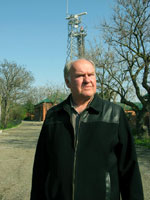
lighthouse Anatoly Nikolaevich Shinkarenko is a hereditary lighthouse maker. His father Nikolai Ivanovich, the former head of the lighthouse, worked there since 1952 and died in September 1985, two months short of retirement. Since then, the son has continued his father’s work shift. This year it will turn 60 years old, and the Penai lighthouses (there are two of them, the second in alignment with the first at a distance of 500 meters) are 130 years old. In 1943, the lighthouse's lantern structure was blown up because it served as a good landmark for enemy aircraft. But after the war the lighthouse was restored. True, they built equipment on it from logs that was appropriate for that time.
“I didn’t find equipment with kerosene-heat lamps,” says Anatoly Nikolaevich, “even the drawings were not preserved. But my mother, she is already 81 years old, remembers those times and sometimes talks about them. In the fall, insects appear in these places, they fly into the light and fall into the net, which eventually crumbles. To prevent this, we had to catch these insects. Then acetylene torches appeared and were replaced by electric ones. They worked from batteries. 60 large battery packs with huge capacity. When they were discharged, diesel generators were started and
charged the batteries.
All this was extremely troublesome and uneconomical. Anatoly’s father managed to get a kilometer of power electrical cable and supplied a stationary power supply to the lighthouse. But this did not mean abandoning autonomy. In case of accidents, this, as well as other lighthouses, has backup power sources - diesel generators. Beacons should not go out under any circumstances. This is an immutable rule. Now, as before, this beacon produces a green light that is pleasant to the eye for one and a half seconds and flashes again after one and a half seconds.
 I noticed that the territory of the Penai lighthouse is clean and well-groomed. Everything here is orderly, the material part, according to Captain 3rd Rank Mazhurin, is in good working order. You can feel the owner's firm hand. Obviously, because everything was passed down from father to son. The son became the successor to the business of his father and mother. One married couple replaced another. Yes, yes, Anatoly Nikolaevich’s wife, Tatyana Vladimirovna, works at the Penai lighthouse. Probably, such family continuity is one of the factors of a careful, prudent attitude towards property and equipment. There are no temporary workers here, there are vested interests here
dedication to improving business. And lighthouses are often located on the outskirts, where you don’t come every day from a city or town. You have to live here permanently. So people “build” family nests in lighthouses. Then lighthouse business becomes their life's work.
Many improvements at the Penai lighthouse complex were made by craftsman Anatoly Shinkarenko with his own hands. Let's say I replaced the same relays with electronics. And they are aimed at increasing the reliability of lighthouse equipment.
At lighthouses, where wages are very low, truly obsessed people work.
During my second visit to the Gelendzhik lighthouse, the position of its chief was filled by Viktor Terekhov, one of the oldest workers of the Black Sea Fleet hydrographic service. Viktor Mikhailovich began his career back in 1958 on hydrographic vessels (HS) as a radio operator, and ended as a senior assistant of the HS with a transfer in 1981 to the Gelendzhik lighthouse, where he has been working as a senior mechanic for more than a quarter of a century. Since Larisa Yurchenko is on maternity leave, Viktor Mikhailovich is acting as a lighthouse keeper.
- In 1985, a new lighthouse tower was built on Tolstoy Cape, one of the tallest on Cherno
sea coast of Russia, says Terekhov. - The white light of the beacon lasting three and a half seconds with the new light-optical equipment is visible at a distance exceeding 20 nautical miles.
The lighthouse tower is so high that not everyone dares to climb the multi-section metal ladder to its “heart” - the rotating lantern. The feeling of fear of altitude is triggered. And the service personnel, although not often, have to climb to the very top. And do much more to ensure the smooth operation of beacons.
Born of the sea, shrouded in a haze of mystery, the word “lighthouse” never leaves the heart of a sailor indifferent. The saving ray either sees off or meets the sailor from distant travels, helps him in bad weather, gives him hope and confidence that his native land is waiting for him.
Many of the sailors more than once told the lighthouse men how, having safely moored, they had a keen sense of unspoken gratitude to this center of earthly fire, the symbol of the most faithful of all sea signs.
Leningrad writer Gennady Cherkashin, who loved Sevastopol very much, surprisingly aptly noted: “The light of a lighthouse... People took a star and placed it at the top of the night
, in order to show the sailor his home harbor in order to protect his life from risk. The lighthouse has become a symbol of Hope, Faith and Love.”
So I have more than once looked at the light of the Black Sea lighthouses both from the shore and from the boards of ships leaving and returning from the sea. And every time this light gave rise to warm, exciting feelings. The feeling of a close and native shore. Feeling of Motherland.
In the pictures: Gelendzhik lighthouse; Anatoly SHINKARENKO; monument to fallen hydrographers.
*
*
This description is machine-translated and has not yet been reviewed.
Vladimir PASYAKIN, “Red Star”.
Photo by the author.
At the Black Sea lighthouses
The whole life of Larisa Nikolaevna Yurchenko, as they say, from the cradle was connected with the Gelendzhik lighthouse. Father - Nikolai Grigorievich - was the head of the lighthouse for 37 years! Two years ago he passed away. And there is nothing surprising in the fact that Larisa followed in her father’s footsteps, because she did not see any other life other than the lighthouse one. However, she did not come to this troublesome position right away. The naval base has been operating in the hydrographic region of Novorossiysk since 1992. At first she worked regularly as a technician at the radio navigation station “Mars-75”, which is located next to the lighthouse, then as a senior technician, and only after graduating from the Gelendzhik Institute of Management, having received a diploma of higher education, she took up her current responsible position.
Larisa’s mother, Zoya Mikhailovna, has been working as a technician at the lighthouse for 36 years. Larisa's brother - captain 2nd rank reserve Anatoly Yurchenko - graduated from the hydrographic department of the Higher Naval School named after M.V. Frunze. A professional hydrographer, he, having retired to the reserve, became the head of the Gelendzhik forward (main) lighthouse, but this is a separate conversation. And her husband, captain 3rd rank Evgeniy Mazhurin, is also a professional hydrographer, o
graduated from the same university as Larisa’s brother. He served at the Tuapse site, and since February 2005 - head of the lighthouse service of the Novorossiysk region.
Even during our first meeting, Larisa showed me the book “Lighthouses of the Black Sea” with a dedicatory inscription from one of its authors - the legendary head of the hydrographic service of the Black Sea Fleet, Candidate of Sciences, Rear Admiral Lev Mitin. He was the leader of a round-the-world expedition to the shores of Antarctica on the oceanographic research vessel Admiral Vladimirsky, and compiled a unique map of ships and vessels that sank in the Black Sea.
Among the lighthouses there are no random people. They are people of a special type, I would say, a special state of mind and increased responsibility. Despite any storms, bad weather or even cataclysms, the lighthouse light must flare up at the appointed time and be a guiding star for passing ships and vessels.
Nothing can replace the light of a lighthouse for a sailor. Even now, in the age of an extensive global system of orientation in space with the help of space communication satellites, which provide orientation not only to ships and vessels at sea, but even to cars in cities.
Modern electronics are as perfect as they are vulnerable. It may fail. And, if necessary, during military operations it can be blocked or disabled, making ships and vessels “blind.” Therefore, the role and importance of lighthouses for the military cannot be overestimated.
By the way, I think this is one of the reasons why today, like for many decades, they are under the jurisdiction of the military, as part of the country’s Ministry of Defense. These are rightfully strategic objects on which the safety of navigation of thousands and thousands of domestic and foreign ships and vessels of various purposes directly depends. And it’s not without reason that in a conversation with me, Evgeny Mazhurin emphasized that there is a decree of the Government of the Russian Federation on recognizing lighthouse towns as closed military camps. With all the ensuing consequences.
The territory of the lighthouse town on Tolstoy Cape is also fenced because next door there is another important facility of the Black Sea Fleet hydrographic service - the Mars-75 station, whose team is headed by captain 3rd rank Sergei Makarenko. Three such stations, located in different areas of the Black Sea coast (on Tarkhankut, Genichesk and Gelendzhik), form a system. It does not depend on satellites
communication devices, operates autonomously and turns on when necessary. With its help, ships and fleet vessels can navigate the Black Sea without a global satellite system. These stations are used during exercises and mass departures of ships and vessels to sea.
And next to the lighthouse town there is a border post. Lighthouses and border guards are friends and know each other well. So this important area is under special control and supervision. Such a triumvirate of military sailors, lighthouse workers and border guards benefits the common cause, since the “alien” here will be immediately identified.
My “pass” to enter the town was the head of the lighthouse service, with whom we came here after visiting the Penai lighthouse. It is located in Kabardinka, just below the well-known battery of Captain A. Zubkov - an open-air museum where there are 100-mm naval guns that defended the city during the Great Patriotic War. To the right of the road leading to the lighthouse there is a well-kept monument with the inscription “Eternal glory to the hydrographic sailors who died in the battles for the city of Novorossiysk in the Great Patriotic War.” And the names of 15 sailors in alphabetical order, including sailors, foremen, and officers. Boss
lighthouse Anatoly Nikolaevich Shinkarenko is a hereditary lighthouse maker. His father Nikolai Ivanovich, the former head of the lighthouse, worked there since 1952 and died in September 1985, two months short of retirement. Since then, the son has continued his father’s work shift. This year it will turn 60 years old, and the Penai lighthouses (there are two of them, the second in alignment with the first at a distance of 500 meters) are 130 years old. In 1943, the lighthouse's lantern structure was blown up because it served as a good landmark for enemy aircraft. But after the war the lighthouse was restored. True, they built equipment on it from logs that was appropriate for that time.
“I didn’t find equipment with kerosene-heat lamps,” says Anatoly Nikolaevich, “even the drawings were not preserved. But my mother, she is already 81 years old, remembers those times and sometimes talks about them. In the fall, insects appear in these places, they fly into the light and fall into the net, which eventually crumbles. To prevent this, we had to catch these insects. Then acetylene torches appeared and were replaced by electric ones. They worked from batteries. 60 large battery packs with huge capacity. When they were discharged, diesel generators were started and
charged the batteries.
All this was extremely troublesome and uneconomical. Anatoly’s father managed to get a kilometer of power electrical cable and supplied a stationary power supply to the lighthouse. But this did not mean abandoning autonomy. In case of accidents, this, as well as other lighthouses, has backup power sources - diesel generators. Beacons should not go out under any circumstances. This is an immutable rule. Now, as before, this beacon produces a green light that is pleasant to the eye for one and a half seconds and flashes again after one and a half seconds.
I noticed that the territory of the Penai lighthouse is clean and well-groomed. Everything here is orderly, the material part, according to Captain 3rd Rank Mazhurin, is in good working order. You can feel the owner's firm hand. Obviously, because everything was passed down from father to son. The son became the successor to the business of his father and mother. One married couple replaced another. Yes, yes, Anatoly Nikolaevich’s wife, Tatyana Vladimirovna, works at the Penai lighthouse. Probably, such family continuity is one of the factors of a careful, prudent attitude towards property and equipment. There are no temporary workers here, there are vested interests here
dedication to improving business. And lighthouses are often located on the outskirts, where you don’t come every day from a city or town. You have to live here permanently. So people “build” family nests in lighthouses. Then lighthouse business becomes their life's work.
Many improvements at the Penai lighthouse complex were made by craftsman Anatoly Shinkarenko with his own hands. Let's say I replaced the same relays with electronics. And they are aimed at increasing the reliability of lighthouse equipment.
At lighthouses, where wages are very low, truly obsessed people work.
During my second visit to the Gelendzhik lighthouse, the position of its chief was filled by Viktor Terekhov, one of the oldest workers of the Black Sea Fleet hydrographic service. Viktor Mikhailovich began his career back in 1958 on hydrographic vessels (HS) as a radio operator, and ended as a senior assistant of the HS with a transfer in 1981 to the Gelendzhik lighthouse, where he has been working as a senior mechanic for more than a quarter of a century. Since Larisa Yurchenko is on maternity leave, Viktor Mikhailovich is acting as a lighthouse keeper.
- In 1985, a new lighthouse tower was built on Tolstoy Cape, one of the tallest on Cherno
sea coast of Russia, says Terekhov. - The white light of the beacon lasting three and a half seconds with the new light-optical equipment is visible at a distance exceeding 20 nautical miles.
The lighthouse tower is so high that not everyone dares to climb the multi-section metal ladder to its “heart” - the rotating lantern. The feeling of fear of altitude is triggered. And the service personnel, although not often, have to climb to the very top. And do much more to ensure the smooth operation of beacons.
Born of the sea, shrouded in a haze of mystery, the word “lighthouse” never leaves the heart of a sailor indifferent. The saving ray either sees off or meets the sailor from distant travels, helps him in bad weather, gives him hope and confidence that his native land is waiting for him.
Many of the sailors more than once told the lighthouse men how, having safely moored, they had a keen sense of unspoken gratitude to this center of earthly fire, the symbol of the most faithful of all sea signs.
Leningrad writer Gennady Cherkashin, who loved Sevastopol very much, surprisingly aptly noted: “The light of a lighthouse... People took a star and placed it at the top of the night
, in order to show the sailor his home harbor in order to protect his life from risk. The lighthouse has become a symbol of Hope, Faith and Love.”
So I have more than once looked at the light of the Black Sea lighthouses both from the shore and from the boards of ships leaving and returning from the sea. And every time this light gave rise to warm, exciting feelings. The feeling of a close and native shore. Feeling of Motherland.
In the pictures: Gelendzhik lighthouse; Anatoly SHINKARENKO; monument to fallen hydrographers.
*
*
This description is machine-translated and has not yet been reviewed.
Vladimir PASYAKIN, “Red Star”.
Photo by the author.
At the Black Sea lighthouses
The whole life of Larisa Nikolaevna Yurchenko, as they say, from the cradle was connected with the Gelendzhik lighthouse. Father - Nikolai Grigorievich - was the head of the lighthouse for 37 years! Two years ago he passed away. And there is nothing surprising in the fact that Larisa followed in her father’s footsteps, because she did not see any other life other than the lighthouse one. However, she did not come to this troublesome position right away. The naval base has been operating in the hydrographic region of Novorossiysk since 1992. At first she worked regularly as a technician at the radio navigation station “Mars-75”, which is located next to the lighthouse, then as a senior technician, and only after graduating from the Gelendzhik Institute of Management, having received a diploma of higher education, she took up her current responsible position.
Larisa’s mother, Zoya Mikhailovna, has been working as a technician at the lighthouse for 36 years. Larisa's brother - captain 2nd rank reserve Anatoly Yurchenko - graduated from the hydrographic department of the Higher Naval School named after M.V. Frunze. A professional hydrographer, he, having retired to the reserve, became the head of the Gelendzhik forward (main) lighthouse, but this is a separate conversation. And her husband, captain 3rd rank Evgeniy Mazhurin, is also a professional hydrographer, o
graduated from the same university as Larisa’s brother. He served at the Tuapse site, and since February 2005 - head of the lighthouse service of the Novorossiysk region.
Even during our first meeting, Larisa showed me the book “Lighthouses of the Black Sea” with a dedicatory inscription from one of its authors - the legendary head of the hydrographic service of the Black Sea Fleet, Candidate of Sciences, Rear Admiral Lev Mitin. He was the leader of a round-the-world expedition to the shores of Antarctica on the oceanographic research vessel Admiral Vladimirsky, and compiled a unique map of ships and vessels that sank in the Black Sea.
Among the lighthouses there are no random people. They are people of a special type, I would say, a special state of mind and increased responsibility. Despite any storms, bad weather or even cataclysms, the lighthouse light must flare up at the appointed time and be a guiding star for passing ships and vessels.
Nothing can replace the light of a lighthouse for a sailor. Even now, in the age of an extensive global system of orientation in space with the help of space communication satellites, which provide orientation not only to ships and vessels at sea, but even to cars in cities.
Modern electronics are as perfect as they are vulnerable. It may fail. And, if necessary, during military operations it can be blocked or disabled, making ships and vessels “blind.” Therefore, the role and importance of lighthouses for the military cannot be overestimated.
By the way, I think this is one of the reasons why today, like for many decades, they are under the jurisdiction of the military, as part of the country’s Ministry of Defense. These are rightfully strategic objects on which the safety of navigation of thousands and thousands of domestic and foreign ships and vessels of various purposes directly depends. And it’s not without reason that in a conversation with me, Evgeny Mazhurin emphasized that there is a decree of the Government of the Russian Federation on recognizing lighthouse towns as closed military camps. With all the ensuing consequences.
The territory of the lighthouse town on Tolstoy Cape is also fenced because next door there is another important facility of the Black Sea Fleet hydrographic service - the Mars-75 station, whose team is headed by captain 3rd rank Sergei Makarenko. Three such stations, located in different areas of the Black Sea coast (on Tarkhankut, Genichesk and Gelendzhik), form a system. It does not depend on satellites
communication devices, operates autonomously and turns on when necessary. With its help, ships and fleet vessels can navigate the Black Sea without a global satellite system. These stations are used during exercises and mass departures of ships and vessels to sea.
And next to the lighthouse town there is a border post. Lighthouses and border guards are friends and know each other well. So this important area is under special control and supervision. Such a triumvirate of military sailors, lighthouse workers and border guards benefits the common cause, since the “alien” here will be immediately identified.
My “pass” to enter the town was the head of the lighthouse service, with whom we came here after visiting the Penai lighthouse. It is located in Kabardinka, just below the well-known battery of Captain A. Zubkov - an open-air museum where there are 100-mm naval guns that defended the city during the Great Patriotic War. To the right of the road leading to the lighthouse there is a well-kept monument with the inscription “Eternal glory to the hydrographic sailors who died in the battles for the city of Novorossiysk in the Great Patriotic War.” And the names of 15 sailors in alphabetical order, including sailors, foremen, and officers. Boss
lighthouse Anatoly Nikolaevich Shinkarenko is a hereditary lighthouse maker. His father Nikolai Ivanovich, the former head of the lighthouse, worked there since 1952 and died in September 1985, two months short of retirement. Since then, the son has continued his father’s work shift. This year it will turn 60 years old, and the Penai lighthouses (there are two of them, the second in alignment with the first at a distance of 500 meters) are 130 years old. In 1943, the lighthouse's lantern structure was blown up because it served as a good landmark for enemy aircraft. But after the war the lighthouse was restored. True, they built equipment on it from logs that was appropriate for that time.
“I didn’t find equipment with kerosene-heat lamps,” says Anatoly Nikolaevich, “even the drawings were not preserved. But my mother, she is already 81 years old, remembers those times and sometimes talks about them. In the fall, insects appear in these places, they fly into the light and fall into the net, which eventually crumbles. To prevent this, we had to catch these insects. Then acetylene torches appeared and were replaced by electric ones. They worked from batteries. 60 large battery packs with huge capacity. When they were discharged, diesel generators were started and
charged the batteries.
All this was extremely troublesome and uneconomical. Anatoly’s father managed to get a kilometer of power electrical cable and supplied a stationary power supply to the lighthouse. But this did not mean abandoning autonomy. In case of accidents, this, as well as other lighthouses, has backup power sources - diesel generators. Beacons should not go out under any circumstances. This is an immutable rule. Now, as before, this beacon produces a green light that is pleasant to the eye for one and a half seconds and flashes again after one and a half seconds.
I noticed that the territory of the Penai lighthouse is clean and well-groomed. Everything here is orderly, the material part, according to Captain 3rd Rank Mazhurin, is in good working order. You can feel the owner's firm hand. Obviously, because everything was passed down from father to son. The son became the successor to the business of his father and mother. One married couple replaced another. Yes, yes, Anatoly Nikolaevich’s wife, Tatyana Vladimirovna, works at the Penai lighthouse. Probably, such family continuity is one of the factors of a careful, prudent attitude towards property and equipment. There are no temporary workers here, there are vested interests here
dedication to improving business. And lighthouses are often located on the outskirts, where you don’t come every day from a city or town. You have to live here permanently. So people “build” family nests in lighthouses. Then lighthouse business becomes their life's work.
Many improvements at the Penai lighthouse complex were made by craftsman Anatoly Shinkarenko with his own hands. Let's say I replaced the same relays with electronics. And they are aimed at increasing the reliability of lighthouse equipment.
At lighthouses, where wages are very low, truly obsessed people work.
During my second visit to the Gelendzhik lighthouse, the position of its chief was filled by Viktor Terekhov, one of the oldest workers of the Black Sea Fleet hydrographic service. Viktor Mikhailovich began his career back in 1958 on hydrographic vessels (HS) as a radio operator, and ended as a senior assistant of the HS with a transfer in 1981 to the Gelendzhik lighthouse, where he has been working as a senior mechanic for more than a quarter of a century. Since Larisa Yurchenko is on maternity leave, Viktor Mikhailovich is acting as a lighthouse keeper.
- In 1985, a new lighthouse tower was built on Tolstoy Cape, one of the tallest on Cherno
sea coast of Russia, says Terekhov. - The white light of the beacon lasting three and a half seconds with the new light-optical equipment is visible at a distance exceeding 20 nautical miles.
The lighthouse tower is so high that not everyone dares to climb the multi-section metal ladder to its “heart” - the rotating lantern. The feeling of fear of altitude is triggered. And the service personnel, although not often, have to climb to the very top. And do much more to ensure the smooth operation of beacons.
Born of the sea, shrouded in a haze of mystery, the word “lighthouse” never leaves the heart of a sailor indifferent. The saving ray either sees off or meets the sailor from distant travels, helps him in bad weather, gives him hope and confidence that his native land is waiting for him.
Many of the sailors more than once told the lighthouse men how, having safely moored, they had a keen sense of unspoken gratitude to this center of earthly fire, the symbol of the most faithful of all sea signs.
Leningrad writer Gennady Cherkashin, who loved Sevastopol very much, surprisingly aptly noted: “The light of a lighthouse... People took a star and placed it at the top of the night
, in order to show the sailor his home harbor in order to protect his life from risk. The lighthouse has become a symbol of Hope, Faith and Love.”
So I have more than once looked at the light of the Black Sea lighthouses both from the shore and from the boards of ships leaving and returning from the sea. And every time this light gave rise to warm, exciting feelings. The feeling of a close and native shore. Feeling of Motherland.
In the pictures: Gelendzhik lighthouse; Anatoly SHINKARENKO; monument to fallen hydrographers.
*
*
|
Владимир ПАСЯКИН, «Красная звезда».
Фото автора. |
Вся жизнь Ларисы Николаевны Юрченко, как говорится, с пеленок была связана с Геленджикским маяком. Отец - Николай Григорьевич - целых 37 лет был начальником маяка! Два года назад его не стало. И в том, что Лариса пошла по стопам отца, нет ничего удивительного, ведь другой жизни, кроме маячной, она не видела. Впрочем, пришла она к этой хлопотной должности не сразу. В гидрографическом районе Новороссийской ВМБ трудится с 1992 года. Сначала исправно работала техником на радионавигационной станции «Марс-75», что находится рядом с маяком, затем - старшим техником и лишь после окончания Геленджикского института управления, получив диплом о высшем образовании, заняла нынешний ответственный пост.Мама Ларисы - Зоя Михайловна - работает техником на маяке вот уже 36 лет. Брат Ларисы - капитан 2 ранга запаса Анатолий Юрченко - окончил в свое время гидрографический факультет Высшего военно-морского училища имени М.В. Фрунзе. Профессиональный гидрограф, он, уйдя в запас, стал начальником Геленджикского переднего (створного) маяка, но об этом разговор особый. А муж - капитан 3 ранга Евгений Мажурин - тоже профессиональный гидрограф, окончивший тот же вуз, что и брат Ларисы. Служил на Туапсинском участке, а с февраля 2005 года - начальник маячной службы Новороссийского района.
Еще во время нашей первой встречи Лариса показала мне книгу «Маяки Черноморья» с дарственной надписью одного из ее авторов - легендарного начальника гидрографической службы Черноморского флота, кандидата наук контр-адмирала Льва Митина. Он был руководителем кругосветной экспедиции к берегам Антарктиды на океанографическом исследовательском судне «Адмирал Владимирский», составил уникальную карту затонувших в Черном море кораблей и судов.
Среди маячников нет случайных людей. Они - люди особого склада, я бы сказал, особого состояния души и повышенной ответственности. Несмотря ни на какие шторма, непогоду или даже катаклизмы, огонь маяка должен вспыхнуть в назначенное время и быть путеводной звездой для проходящих кораблей и судов.Ничто моряку не заменит свет маяка. Даже сейчас, в век разветвленно-глобальной системы ориентирования в пространстве с помощью космических спутников связи, которые дают ориентировку не только кораблям и судам в море, но даже автомобилям в городах. Современная электроника насколько совершенна, настолько и уязвима. Она может выйти из строя. И ее, если нужно, во время военных действий можно заблокировать или вывести из строя, сделав корабли и суда «слепыми». Поэтому роль и значение маяков для военных переоценить невозможно.
Кстати, думаю, это одна из причин, по которой они и сегодня, как и многие десятки лет, находятся в ведении военных, в составе Министерства обороны страны. Это по праву стратегические объекты, от которых напрямую зависит безопасность плавания тысяч и тысяч отечественных и иностранных кораблей и судов самых разных назначений. И недаром в беседе со мной Евгений Мажурин подчеркнул, что есть распоряжение Правительства РФ о признании маячных городков закрытыми военными городками. Со всеми вытекающими отсюда последствиями.
Территория маячного городка на Толстом мысу огорожена еще и потому, что по соседству находится другой важный объект гидрографической службы ЧФ - станция «Марс-75», коллектив которой возглавляет капитан 3 ранга Сергей Макаренко. Три такие станции, расположенные в разных районах Черноморского побережья (на Тарханкуте, в Геническе и Геленджике), образуют систему. Она не зависит от спутников связи, действует автономно и включается в случае надобности. С ее помощью корабли и суда флота могут ориентироваться в Черном море без глобальной спутниковой системы. Эти станции используют во время учений, массового выхода кораблей и судов в море.
А еще по соседству с маячным городком расположена погранзастава. Маячники и пограничники дружат, хорошо знают друг друга. Так что этот важный участок находится под особым контролем и присмотром. Такой триумвират военных моряков, маячников и пограничников идет на пользу общему делу, поскольку «чужого» здесь сразу вычислят.
Моим «пропуском» на въезд в городок стал начальник маячной службы, вместе с которым мы приехали сюда, побывав на Пенайском маяке. Он расположен в Кабардинке, чуть ниже известной многим батареи капитана А. Зубкова - музея под открытым небом, где стоят 100-мм корабельные орудия, защищавшие город в период Великой Отечественной войны. Справа от дороги, ведущей к маяку, находится ухоженный памятник с надписью «Вечная слава морякам-гидрографам, погибшим в боях за город Новороссийск в Великой Отечественной войне». И фамилии 15 моряков в алфавитном порядке, среди которых матросы, старшины, офицеры. Начальник маяка Анатолий Николаевич Шинкаренко - потомственный маячник. Его отец Николай Иванович - в прошлом начальник маяка - трудился на нем с 1952 года и умер в сентябре 1985 года, не дожив до пенсии два месяца. С тех самых пор трудовую вахту отца продолжил сын. Ему в этом году исполнится 60 лет, а Пенайским маякам (их два, второй в створе с первым на расстоянии 500 метров) - 130 лет. В 1943 году фонарное сооружение маяка было взорвано, поскольку служило хорошим ориентиром для вражеской авиации. Но после войны маяк восстановили. Правда, соорудили из бревен и оборудование на нем, соответствовавшее тому времени.
- Я не застал технику с керосинокалильными лампами, - рассказывает Анатолий Николаевич, - не сохранились даже чертежи. А вот мама моя, ей уже 81 год, помнит те времена и порой рассказывает о них. С осени в этих местах появляются насекомые, они летят на свет и попадают в сетку, которая со временем от этого рассыпается. Чтобы не допустить этого, приходилось ловить этих букашек. Потом появились ацетиленовые горелки, их сменили электрические. Работали они от аккумуляторов. 60 больших аккумуляторных банок с огромной емкостью. Когда они разряжались, запускали дизель-генераторы и заряжали аккумуляторы.
Все это было крайне хлопотно и неэкономично. Отец Анатолия сумел достать километр силового электрического кабеля и подвел к маяку стационарное электропитание. Но это не означало отказа от автономного. На случай аварий на этом, как и на других маяках, есть резервные источники питания - дизель-генераторы. Маяки не должны гаснуть ни при каких обстоятельствах. Это непреложное правило. Сейчас, как и ранее, этот маяк на полторы секунды выдает приятный для глаз зеленый свет и через полторы секунды вспыхивает вновь.
Я обратил внимание на то, что территория Пенайского маяка чистая, ухоженная. Здесь все упорядоченно, материальная часть, по свидетельству капитана 3 ранга Мажурина, в исправности. Чувствуется твердая хозяйская рука. Очевидно, потому, что все передалось от отца к сыну. Сын стал преемником дела отца и матери. Одна семейная пара сменила другую. Да-да, на Пенайском маяке трудится супруга Анатолия Николаевича - Татьяна Владимировна. Наверное, такая семейная преемственность - один из факторов бережного, рачительного отношения к имуществу, оборудованию. Здесь нет временщиков, здесь кровная заинтересованность в улучшении дела. Да и маяки находятся нередко на «отшибе», куда не наездишься каждый день из города или населенного пункта. Здесь надо постоянно жить. Вот и «вьют» люди семейные гнезда на маяках. Тогда маячное дело становится делом их жизни.Много усовершенствований на Пенайском маячном комплексе сделал собственными руками умелец Анатолий Шинкаренко. Скажем, те же реле заменил электроникой. И направлены они на то, чтобы повысить надежность маячного оборудования.
На маяках, где совсем невысокая зарплата, трудятся поистине одержимые люди.
Во времЯ моего второго посещения Геленджикского маяка должность его начальника исполнял Виктор Терехов - один из старейших работников гидрографической службы ЧФ. Свой трудовой путь Виктор Михайлович начал в далеком 1958 году на гидрографических судах (ГС) еще радистом, а завершил старшим помощником ГС с переводом в 1981 году на Геленджикский маяк, где вот уже более четверти века работает в должности старшего механика. Поскольку Лариса Юрченко в декретном отпуске, Виктор Михайлович исполняет должность смотрителя маяка.
- В 1985 году на Толстом мысу была построена новая маячная башня, одна из самых высоких на Черноморском побережье России, - говорит Терехов. - Белый свет маяка продолжительностью три с половиной секунды с новой светооптической аппаратурой виден на дальность, превышающую 20 морских миль.
Башня маяка так высока, что не каждый отважится подняться по многосекционному металлическому трапу к его «сердцу» - вращающемуся фонарю. Срабатывает чувство высотобоязни. А обслуживающему персоналу хоть и не часто, но приходится подниматься на самую верхотуру. И делать многое другое, чтобы обеспечить бесперебойную работу маяков.
Рожденное морем, окутанное дымкой таинственности, слово «маяк» никогда не оставляет равнодушным сердце моряка. Спасительный луч то провожает, то встречает морехода из дальних странствий, помогает ему в непогоду, дарит надежду, уверенность в том, что родная земля его ждет.
Многие из моряков не раз рассказывали маячникам, как у них, благополучно пришвартовавшихся, возникало острое чувство невысказанной благодарности этому очагу земного огня, символу самой верной из всех морских примет.
Ленинградский писатель Геннадий Черкашин, очень любивший Севастополь, удивительно метко подметил: «Свет маяка... Люди взяли звезду и поместили ее в вершине ночи, дабы указать моряку родную гавань, дабы уберечь его жизнь от риска. Маяк стал символом Надежды, Веры и Любви».
Вот и я не раз глядел на свет черноморских маяков и с берега, и с борта уходящих и возвращающихся с моря кораблей. И каждый раз этот свет рождал теплые волнующие чувства. Чувство близкого и родного берега. Чувство Родины.
На снимках: Геленджикский маяк; Анатолий ШИНКАРЕНКО; памятник погибшим гидрографам.
This description is machine-translated and has not yet been reviewed.
Vladimir PASYAKIN, “Red Star”.
Photo by the author.
At the Black Sea lighthouses
The whole life of Larisa Nikolaevna Yurchenko, as they say, from the cradle was connected with the Gelendzhik lighthouse. Father - Nikolai Grigorievich - was the head of the lighthouse for 37 years! Two years ago he passed away. And there is nothing surprising in the fact that Larisa followed in her father’s footsteps, because she did not see any other life other than the lighthouse one. However, she did not come to this troublesome position right away. The naval base has been operating in the hydrographic region of Novorossiysk since 1992. At first she worked regularly as a technician at the radio navigation station “Mars-75”, which is located next to the lighthouse, then as a senior technician, and only after graduating from the Gelendzhik Institute of Management, having received a diploma of higher education, she took up her current responsible position.
Larisa’s mother, Zoya Mikhailovna, has been working as a technician at the lighthouse for 36 years. Larisa's brother - captain 2nd rank reserve Anatoly Yurchenko - graduated from the hydrographic department of the Higher Naval School named after M.V. Frunze. A professional hydrographer, he, having retired to the reserve, became the head of the Gelendzhik forward (main) lighthouse, but this is a separate conversation. And her husband, captain 3rd rank Evgeniy Mazhurin, is also a professional hydrographer, o
graduated from the same university as Larisa’s brother. He served at the Tuapse site, and since February 2005 - head of the lighthouse service of the Novorossiysk region.
Even during our first meeting, Larisa showed me the book “Lighthouses of the Black Sea” with a dedicatory inscription from one of its authors - the legendary head of the hydrographic service of the Black Sea Fleet, Candidate of Sciences, Rear Admiral Lev Mitin. He was the leader of a round-the-world expedition to the shores of Antarctica on the oceanographic research vessel Admiral Vladimirsky, and compiled a unique map of ships and vessels that sank in the Black Sea.
Among the lighthouses there are no random people. They are people of a special type, I would say, a special state of mind and increased responsibility. Despite any storms, bad weather or even cataclysms, the lighthouse light must flare up at the appointed time and be a guiding star for passing ships and vessels.
Nothing can replace the light of a lighthouse for a sailor. Even now, in the age of an extensive global system of orientation in space with the help of space communication satellites, which provide orientation not only to ships and vessels at sea, but even to cars in cities.
Modern electronics are as perfect as they are vulnerable. It may fail. And, if necessary, during military operations it can be blocked or disabled, making ships and vessels “blind.” Therefore, the role and importance of lighthouses for the military cannot be overestimated.
By the way, I think this is one of the reasons why today, like for many decades, they are under the jurisdiction of the military, as part of the country’s Ministry of Defense. These are rightfully strategic objects on which the safety of navigation of thousands and thousands of domestic and foreign ships and vessels of various purposes directly depends. And it’s not without reason that in a conversation with me, Evgeny Mazhurin emphasized that there is a decree of the Government of the Russian Federation on recognizing lighthouse towns as closed military camps. With all the ensuing consequences.
The territory of the lighthouse town on Tolstoy Cape is also fenced because next door there is another important facility of the Black Sea Fleet hydrographic service - the Mars-75 station, whose team is headed by captain 3rd rank Sergei Makarenko. Three such stations, located in different areas of the Black Sea coast (on Tarkhankut, Genichesk and Gelendzhik), form a system. It does not depend on satellites
communication devices, operates autonomously and turns on when necessary. With its help, ships and fleet vessels can navigate the Black Sea without a global satellite system. These stations are used during exercises and mass departures of ships and vessels to sea.
And next to the lighthouse town there is a border post. Lighthouses and border guards are friends and know each other well. So this important area is under special control and supervision. Such a triumvirate of military sailors, lighthouse workers and border guards benefits the common cause, since the “alien” here will be immediately identified.
My “pass” to enter the town was the head of the lighthouse service, with whom we came here after visiting the Penai lighthouse. It is located in Kabardinka, just below the well-known battery of Captain A. Zubkov - an open-air museum where there are 100-mm naval guns that defended the city during the Great Patriotic War. To the right of the road leading to the lighthouse there is a well-kept monument with the inscription “Eternal glory to the hydrographic sailors who died in the battles for the city of Novorossiysk in the Great Patriotic War.” And the names of 15 sailors in alphabetical order, including sailors, foremen, and officers. Boss
lighthouse Anatoly Nikolaevich Shinkarenko is a hereditary lighthouse maker. His father Nikolai Ivanovich, the former head of the lighthouse, worked there since 1952 and died in September 1985, two months short of retirement. Since then, the son has continued his father’s work shift. This year it will turn 60 years old, and the Penai lighthouses (there are two of them, the second in alignment with the first at a distance of 500 meters) are 130 years old. In 1943, the lighthouse's lantern structure was blown up because it served as a good landmark for enemy aircraft. But after the war the lighthouse was restored. True, they built equipment on it from logs that was appropriate for that time.
“I didn’t find equipment with kerosene-heat lamps,” says Anatoly Nikolaevich, “even the drawings were not preserved. But my mother, she is already 81 years old, remembers those times and sometimes talks about them. In the fall, insects appear in these places, they fly into the light and fall into the net, which eventually crumbles. To prevent this, we had to catch these insects. Then acetylene torches appeared and were replaced by electric ones. They worked from batteries. 60 large battery packs with huge capacity. When they were discharged, diesel generators were started and
charged the batteries.
All this was extremely troublesome and uneconomical. Anatoly’s father managed to get a kilometer of power electrical cable and supplied a stationary power supply to the lighthouse. But this did not mean abandoning autonomy. In case of accidents, this, as well as other lighthouses, has backup power sources - diesel generators. Beacons should not go out under any circumstances. This is an immutable rule. Now, as before, this beacon produces a green light that is pleasant to the eye for one and a half seconds and flashes again after one and a half seconds.
I noticed that the territory of the Penai lighthouse is clean and well-groomed. Everything here is orderly, the material part, according to Captain 3rd Rank Mazhurin, is in good working order. You can feel the owner's firm hand. Obviously, because everything was passed down from father to son. The son became the successor to the business of his father and mother. One married couple replaced another. Yes, yes, Anatoly Nikolaevich’s wife, Tatyana Vladimirovna, works at the Penai lighthouse. Probably, such family continuity is one of the factors of a careful, prudent attitude towards property and equipment. There are no temporary workers here, there are vested interests here
dedication to improving business. And lighthouses are often located on the outskirts, where you don’t come every day from a city or town. You have to live here permanently. So people “build” family nests in lighthouses. Then lighthouse business becomes their life's work.
Many improvements at the Penai lighthouse complex were made by craftsman Anatoly Shinkarenko with his own hands. Let's say I replaced the same relays with electronics. And they are aimed at increasing the reliability of lighthouse equipment.
At lighthouses, where wages are very low, truly obsessed people work.
During my second visit to the Gelendzhik lighthouse, the position of its chief was filled by Viktor Terekhov, one of the oldest workers of the Black Sea Fleet hydrographic service. Viktor Mikhailovich began his career back in 1958 on hydrographic vessels (HS) as a radio operator, and ended as a senior assistant of the HS with a transfer in 1981 to the Gelendzhik lighthouse, where he has been working as a senior mechanic for more than a quarter of a century. Since Larisa Yurchenko is on maternity leave, Viktor Mikhailovich is acting as a lighthouse keeper.
- In 1985, a new lighthouse tower was built on Tolstoy Cape, one of the tallest on Cherno
sea coast of Russia, says Terekhov. - The white light of the beacon lasting three and a half seconds with the new light-optical equipment is visible at a distance exceeding 20 nautical miles.
The lighthouse tower is so high that not everyone dares to climb the multi-section metal ladder to its “heart” - the rotating lantern. The feeling of fear of altitude is triggered. And the service personnel, although not often, have to climb to the very top. And do much more to ensure the smooth operation of beacons.
Born of the sea, shrouded in a haze of mystery, the word “lighthouse” never leaves the heart of a sailor indifferent. The saving ray either sees off or meets the sailor from distant travels, helps him in bad weather, gives him hope and confidence that his native land is waiting for him.
Many of the sailors more than once told the lighthouse men how, having safely moored, they had a keen sense of unspoken gratitude to this center of earthly fire, the symbol of the most faithful of all sea signs.
Leningrad writer Gennady Cherkashin, who loved Sevastopol very much, surprisingly aptly noted: “The light of a lighthouse... People took a star and placed it at the top of the night
, in order to show the sailor his home harbor in order to protect his life from risk. The lighthouse has become a symbol of Hope, Faith and Love.”
So I have more than once looked at the light of the Black Sea lighthouses both from the shore and from the boards of ships leaving and returning from the sea. And every time this light gave rise to warm, exciting feelings. The feeling of a close and native shore. Feeling of Motherland.
In the pictures: Gelendzhik lighthouse; Anatoly SHINKARENKO; monument to fallen hydrographers.
*
*
Heritage identity & evidence
Identity
- LUX ID
LUX-LH-000456- Type
- Range light
- Object kind
- Range light
Review & coverage
External identifiers
No reviewed external identifiers yet.
Key source-backed claims
- Location taxonomy Геленджик · Геленджикский derived
- Location taxonomy Черное море · Геленджикский derived
- Location taxonomy Россия · Геленджикский derived
- Media reference 1183 · Геленджикский archive
Translation transparency
Research-only display metadata. Editorial provenance and translation provider are tracked separately.
- Title generated rewrite · provider provider not recorded
- Body generated rewrite · provider provider not recorded
- Narrative teaser generated rewrite · provider provider not recorded
Claim evidence
No field claim history or inherited technical values are available yet.
Key sources
1 active / 1 total in-archive source link. Full sources and reference search leads below
External Identity Graph
- LUX Light ArchiveLUX-LH-000456 Canonical LUX ID
Local identity anchor for the record and related claims.
- Wikidata
- WikipediaSearch / review Search lead
review lead · Useful for public descriptions and cross-checking, but text must be rewritten or quoted sparingly.
- ARLHSSearch / review Review source
review lead · Search the World List of Lights and add a verified ARLHS ID when found.
- OpenStreetMapSearch / review Search lead
review lead · Resolve to a stable node, way, or relation URL before acceptance.
- Source URLs1 active / 1 total in-record source link Record source URLs
record provenance · Record-level source URLs are listed in the source provenance section.
- Lighthouse DirectorySearch / review Review source
review lead · Use the regional directory page as a trusted catalogue lead; add the exact URL after review.
Evidence graph
Derived view of how sources, facts, identifiers, lifecycle events, and relationships support this record.
Claim provenance
Select a fact to foreground its source path.
Sources
Facts
- No field claim nodes yet.
Identifiers
- Search / review object
- Search / review object
- Search / review object
- Search / review object
- Search / review object
Lifecycle
- No lifecycle evidence nodes yet.
View by year
Reconstructed state
No reviewed year-by-year state profile yet.
State profile JSON will appear here after review.
History and connections
Evidence and data
Detailed timeline, graph, map history, and JSON exports for review and research.
Coverage: no-accepted-coordinates
Open timeline JSON · Open graph JSON · Open map history JSON
Lighthouse history (0 events)
No timeline events yet.
Record history (2 changes)
- Archive record createdarchive-metadata
- Archive record updatedarchive-metadata
Connection graph (1 objects)
Geo timeline (0 points)
No accepted coordinate point yet. The text geography remains listed as context.
- Geography contextРоссия, Геленджик · text-only
Rights & Attribution
Content License
Original editorial content on this page: Creative Commons Attribution-NonCommercial-ShareAlike 4.0 International. See Rights & Reuse.
Media Rights
No published media with documented rights on this record.
Attribution
"Gelendzhik Lighthouse" · LUX-LH-000456 · © LUX143 · Creative Commons Attribution-NonCommercial-ShareAlike 4.0 International · https://light.lux143.org/node/1180/
Citation
LUX Light Archive, Lighthouse record: "Gelendzhik Lighthouse", LUX-LH-000456, https://light.lux143.org/node/1180/, accessed 2026-09-24, archive v0.24.572.
Legacy archive provenance
This object now uses its LUX identity as the public record. The original Drupal node is preserved as migration provenance and a compatibility route.
- Canonical LUX ID
- LUX-LH-000456
- Legacy node
- node:1180
- Legacy URL
- /node/1180/
- Drupal source type
- lighthouse
- Source system
- drupal_migration
- Source path
- /node/1180
Trusted References
Known external identifiers and review leads for Wikipedia, Wikidata, map, registry, and catalogue coverage. Search leads are not accepted evidence until reviewed. Field-level evidence is implied only when evidence scope or supported fields are explicit.
| Source | Status | Evidence scope | Reference | Review note |
|---|---|---|---|---|
| Wikidata | search-candidate | Search / review | Resolve to a verified QID before treating as evidence. | |
| Wikipedia | search-candidate | Search / review | Useful for public descriptions and cross-checking, but text must be rewritten or quoted sparingly. | |
| OpenStreetMap | search-candidate | Search / review | Resolve to a stable node, way, or relation URL before acceptance. | |
| ARLHS | review-source | Search / review | Search the World List of Lights and add a verified ARLHS ID when found. | |
| Lighthouse Directory | review-source | Search / review | Use the regional directory page as a trusted catalogue lead; add the exact URL after review. |
Record identifiers
- Node
- 1180
- Source type
- lighthouse
- Review class
- Navigation light or range light
- Created
- 02/10/2014 13:20:57 UTC
- Changed
- 02/10/2014 13:20:57 UTC
- Source path
- /node/1180
All technical fields
Structure
- Status
- Not recorded
- Construction date
- Not recorded
- Tower height
- Not recorded
- Tower form
- Not recorded
- Material
- Not recorded
- Daymark / colour scheme
- Not recorded
- Focal height
- Not recorded
- Light height
- Not recorded
Signal
- Light characteristic
- Not recorded
- Light intensity
- Not recorded
- Light range
- Not recorded
- Light number
- Not recorded
- Operation
- Not recorded
- Legacy light IDs
- Not recorded
- Call sign
- Not recorded
- Lens / optics
- Not curated
Position
- Latitude
- Not recorded
- Longitude
- Not recorded
Person
- Surname
- Not recorded
- Name
- Not recorded
- Patronymic
- Not recorded
- Work period
- Not recorded
- Job
- Not recorded
Empty lighthouse fields are shown so review gaps are visible. Lens and optics are curated as heritage assets when evidence exists.