story · research_note · en
We Are Serious About Lighthouse Research. Usually.
Are Lighthouses Actually Boring?
A serious investigation into disappearances, ghosts, UFOs, radioactive navigation lights, ecological extinction, automation, AI, secret codes, space navigation and quantum physics.
An evidence-led Lighthouse Boredom Stress Test exploring disappearances, ghosts, UFOs, radioactive navigation lights, automation, AI, space navigation and real lighthouse effects in modern physics.
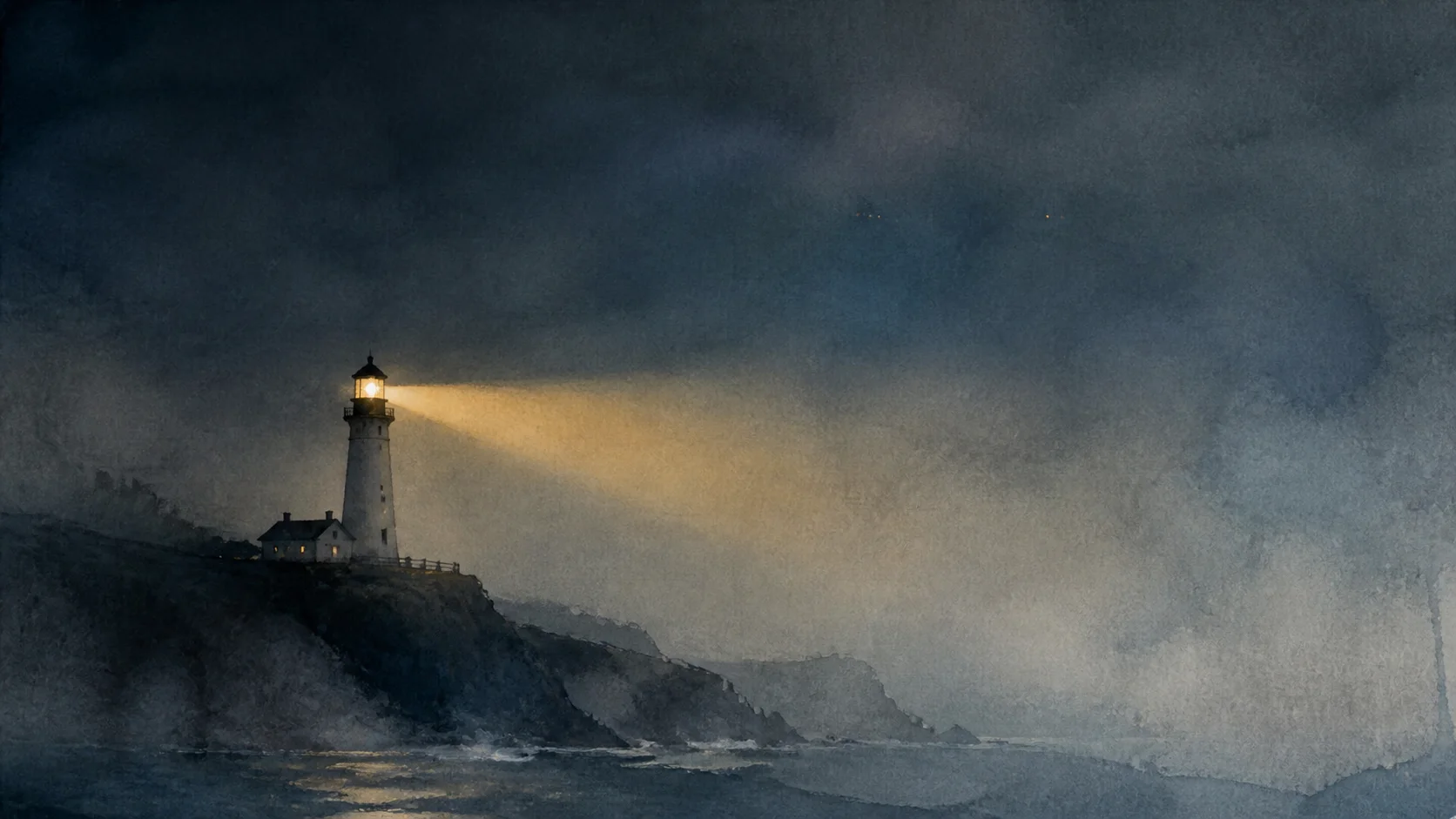
Introduction — The boredom hypothesis
There is a fairly conventional way to talk about lighthouses.
They are beautiful.
They are historic.
They are romantic.
They stand dramatically against the sea, preferably during sunset, fog or a storm.
And then, if we are being slightly less polite, there is another possible description:
They are towers with lamps.
The lamp flashes.
Ships notice.
Repeat for a century or two.
Perhaps lighthouses are important — but fundamentally a little boring.
We decided to investigate.
Not by asking people whether they liked photographs of lighthouses, but by subjecting lighthouse history to what we called the Lighthouse Boredom Stress Test.
The method was deliberately unreasonable.
We searched for lighthouses at the intersection of the kinds of subjects that reliably attract human attention: ghosts, unexplained disappearances, UFOs, conspiracies, radioactive technology, ecological disasters, artificial intelligence, secret codes, lost professions, space navigation and, eventually, quantum physics.
The research itself, however, was not allowed to be unreasonable.
Where possible, we went back to lighthouse authorities, national archives, government agencies, scientific institutions and peer-reviewed papers. Folklore was labelled as folklore. Interpretation remained interpretation. Popular stories were checked against contemporary records.
We also imposed an inconvenient rule:
A story was allowed to become less exciting when the evidence required it.
Something unexpected happened.
Several famous stories became weaker.
Several became better.
And some of the most ridiculous-sounding claims turned out to have the strongest sources.
Boredom hypothesis status
NOT SUPPORTED BY THIS SAMPLE
Selection bias acknowledged.
Test 1 — Can three lighthouse keepers simply disappear?
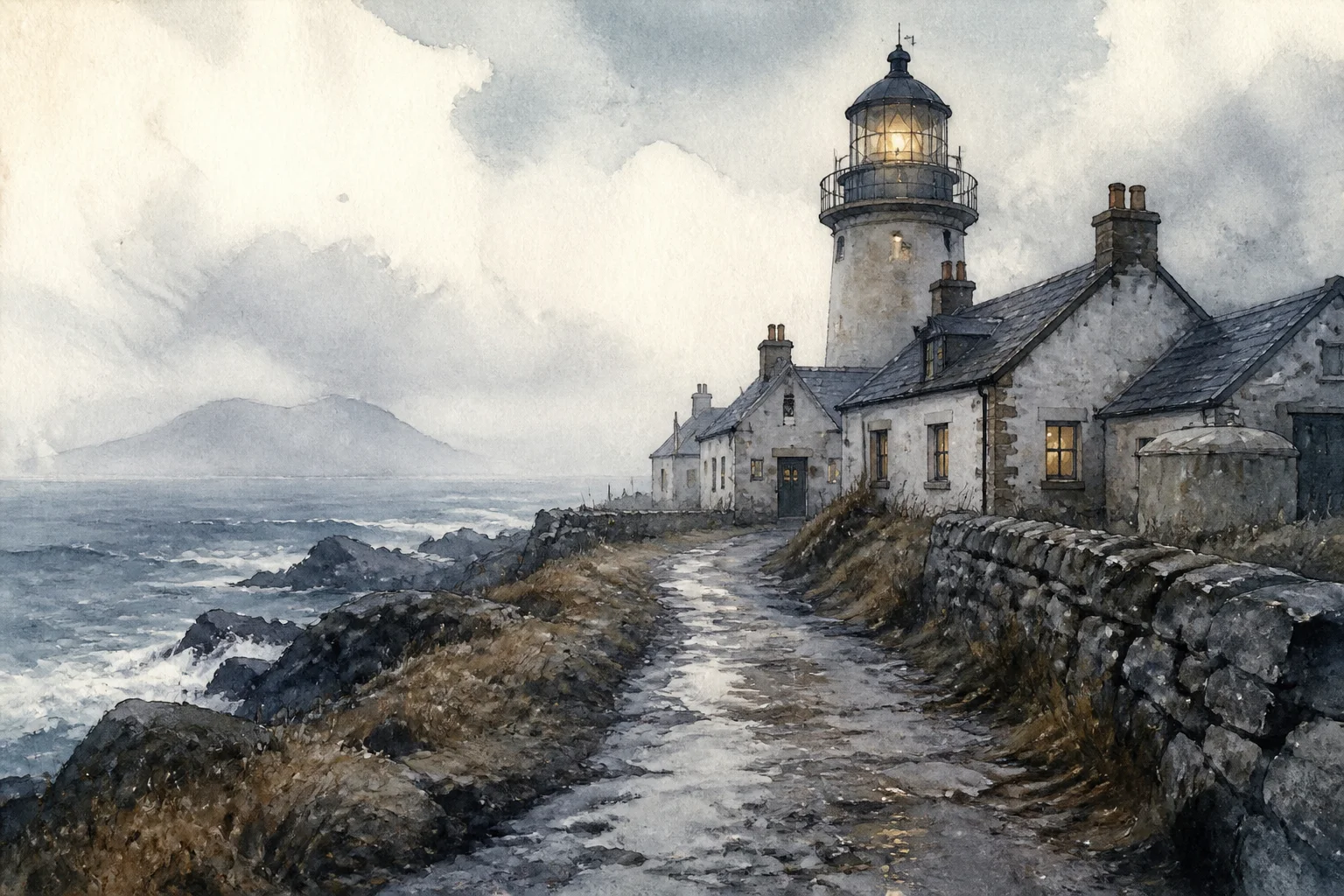
high confidence · reviewed
Three Flannan Isles keepers disappeared in December 1900; the official likely explanation was that heavy seas swept them away.
Source: Flannan Isles, The Flannan Islands lighthouse: a disappearance
Limit: Later diary entries, an untouched meal and an overturned-chair scene are unsupported by the official record; stopped clocks are reported but do not establish a supernatural timestamp.
Yes.
This is the famous Flannan Isles case — and it remains strange even after most of the internet mythology is removed.
In December 1900, three keepers disappeared from the lighthouse on Eilean Mòr in Scotland’s Outer Hebrides: Principal Keeper James Ducat, Second Assistant Thomas Marshall and Donald McArthur, who was temporarily replacing the ill First Assistant William Ross.
When the lighthouse tender Hesperus finally reached the island on 26 December, relief keeper Joseph Moore found the station deserted.
The official investigation concluded that the men had probably gone down towards the western landing and had been overwhelmed by an exceptionally heavy sea.
There was physical evidence for violent wave action around the landing.
There were no bodies.
And there were no witnesses.
That should already be enough for a mystery.
Apparently it was not.
Over time, the story accumulated an untouched meal, an overturned chair, impossible weather, frightened keepers and increasingly theatrical diary entries.
Much of this is unsupported by the surviving official record.
The National Records of Scotland instead describes a tidied kitchen, lamps prepared for use and outdoor clothing missing from the station.
Even the famous stopped clocks need nuance. A contemporary telegram does mention that clocks had stopped. What it does not provide is a supernatural timestamp for the moment three men vanished.
This distinction matters.
The documented story is:
three experienced keepers disappeared from an isolated Atlantic lighthouse, apparently taken by the sea.
The mythology then looked at this and decided it needed improvement.
It probably did not.
Test 2 — Ghosts?
folklore confidence · reviewed
The deaths underlying St Augustine’s ghost tradition are historical; reported apparitions remain folklore.
Source: Ghost Stories: The Pittee Girls
Limit: The source supports site history and a cultural tradition, not supernatural causation.
This category required a different evidential rule.
We did not attempt to verify ghosts.
We verified whether the history underneath the ghost stories was real.
At St Augustine Lighthouse in Florida, it was.
Keeper Joseph Andreu died in 1859 after falling while working on the tower.
On 10 July 1873, a railway cart used during construction went into the water. Mary Pittee, aged fifteen, her thirteen-year-old sister Eliza, and an approximately ten-year-old African American girl whose name has not been recovered drowned. Four-year-old Carrie Pittee survived.
Those events belong to history.
The later accounts of apparitions, voices and other paranormal experiences belong to the site’s folklore.
The distinction makes the story stronger, not weaker.
A heritage site does not need to prove that a dead child walks its stairs to explain why generations of visitors might associate the place with memory, loss and haunting.
Perhaps the useful question is not:
Are there ghosts in lighthouses?
It is:
Why do structures built to make danger visible accumulate so many stories about things we cannot see?
That is a much harder question.
Test 3 — UFOs?
medium confidence · reviewed
Rendlesham generated official records, and Orfordness Lighthouse is a serious terrestrial explanation for part of the observed repeating light.
Source: UFO reports, The lighthouse explanation
Limit: Neither alien visitation nor the claim that the entire incident was the lighthouse is established.
Unfortunately for our boredom hypothesis, yes.
One of Britain’s best-known UFO incidents has a lighthouse sitting inside the evidence file.
In late December 1980, US military personnel stationed near RAF Woodbridge in Suffolk reported unusual lights around Rendlesham Forest.
The incident generated official documentation. A memorandum by Deputy Base Commander Lieutenant Colonel Charles Halt survives among British government UFO records.
No government archive establishes extraterrestrial visitation.
But the case developed another lighthouse-specific complication.
Orfordness Lighthouse, visible in the relevant coastal direction, became one of the main terrestrial explanations for at least some of the repeating light seen by observers.
Analyses using period navigation data identified a roughly five-second flash rhythm, intriguingly close to a recurring interval heard in Halt’s field recording.
Does that prove that the entire Rendlesham incident was a lighthouse?
No.
And saying so would merely replace one overclaim with another.
What can safely be said is more interesting:
a lighthouse became part of a decades-long argument about what trained military observers thought they saw.
For a supposedly boring piece of coastal infrastructure, that is respectable performance.
Test 4 — Secret signals and conspiracy networks?
high confidence · reviewed
Optical characteristics and RACON or historical radiobeacon identifiers are distinct published signal systems.
Source: Types and characteristics of lights, Kish Bank
Limit: Not every lighthouse flashes Morse code; optical characteristics must not be collapsed into RACON or radiobeacon identifiers.
This investigation produced an unfortunate result for conspiracy theorists.
A global network of towers really has spent generations sending coded signals into the darkness.
The codes are real.
They are standardized.
And anyone can look them up.
A lighthouse does not merely switch on and off.
Its characteristic can be fixed, flashing, occulting, isophase or grouped into repeating patterns. Colour sectors can change depending on bearing. The period of the cycle, focal height and nominal range help identify and interpret the aid.
Modern lighthouse stations can also carry radar beacons with Morse-coded replies. Kish Bank, for example, has a RACON identified by Morse T; other Irish stations use their own published patterns.
Historically, lighthouse radiobeacons also transmitted explicit Morse identifiers.
In other words:
A global network of towers really does transmit distinctive coded patterns into the darkness. Unfortunately for the conspiracy, the codes are published.
The main difficulty for secrecy is that mariners are supposed to understand them.
Test 5 — Did wreckers use false lights?
medium confidence · reviewed
The classic Cornish false-light wrecker narrative is difficult to support with hard evidence, despite real wrecking, salvage and looting.
Source: Neglectful or worse?
Limit: This does not deny maritime crime; it limits the famous deliberate false-light claim.
This one failed.
Or at least the famous version largely did.
The image is irresistible: sinister coastal inhabitants display false lanterns, ships mistake them for navigation lights, vessels crash onto the rocks, and the wreckers descend to plunder the cargo.
Wrecking and salvage were real.
So was looting.
But historian Cathryn Pearce’s research into Cornwall and the Isles of Scilly found the classic deliberate false-light narrative surprisingly difficult to support with hard evidence.
Later retellings helped convert ambiguous stories into accepted folklore.
This is an important result of the Boredom Stress Test.
Sometimes research destroys a good story.
Sometimes it replaces it with a better one.
The better story here is about how societies manufacture reputations.
A coastal community becomes associated with wrecks.
Economic conflict becomes folklore.
Folklore becomes literature.
Literature becomes something everyone “knows” happened.
Two centuries later, historians have to work backwards through the story.
That is less cinematic than murderous villagers waving lanterns.
It is also more interesting.
Test 6 — Radioactive lighthouses?
high confidence · reviewed
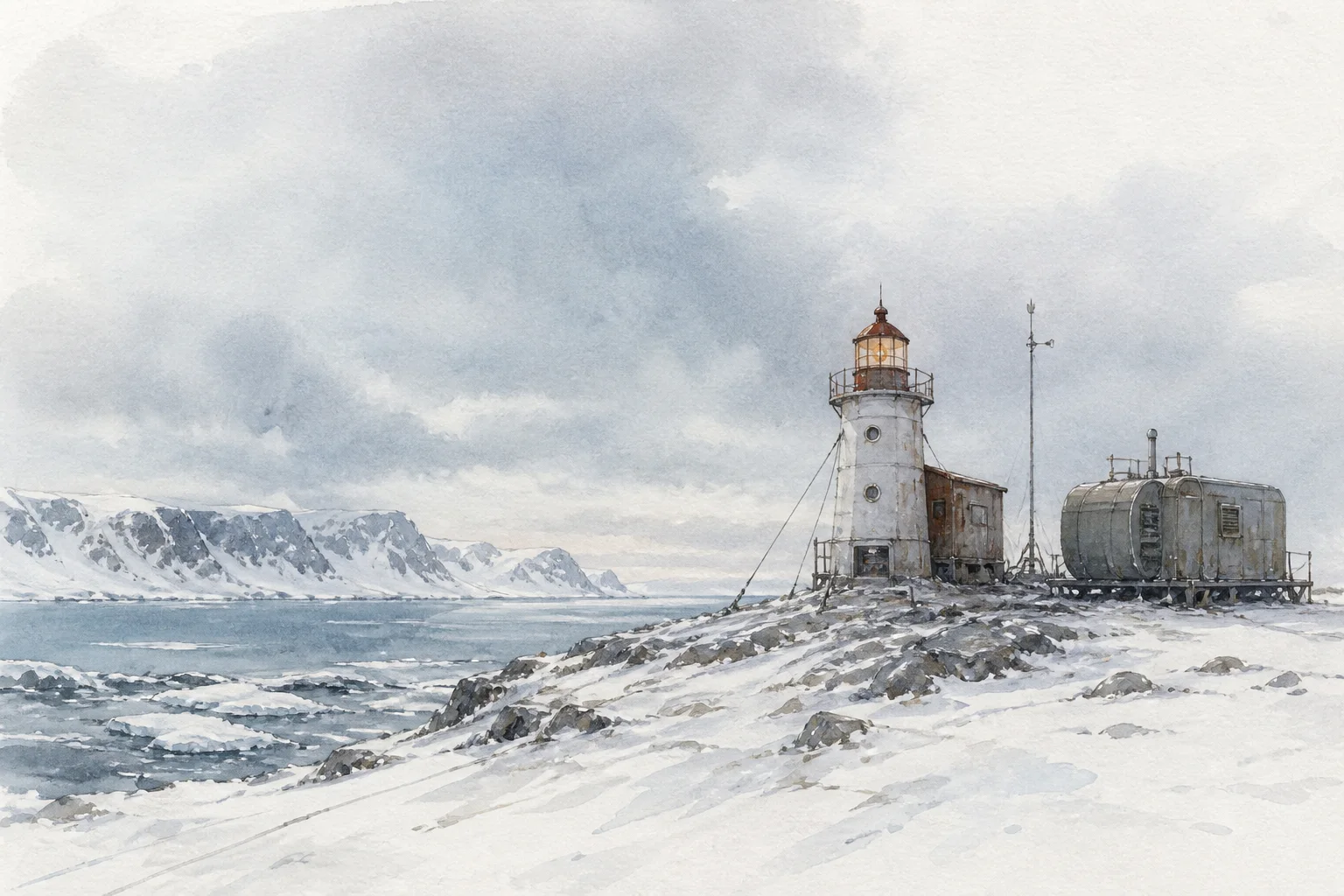
Approximately 1,000 former Soviet RTGs powered remote infrastructure, mostly lighthouses and navigation beacons; a major programme recovered and decommissioned 751 Russian units.
Source: Nuclear safety cooperation with Russia 2006–2008, EPREV mission report — Murmansk Region, Russian radioisotope thermoelectric generator removal programme
Limit: RTGs use radioactive decay and thermoelectric conversion; they are not nuclear reactors.
At this point the research stopped behaving normally.
Yes.
The Soviet Union used radioisotope thermoelectric generators — RTGs — to power remote navigation infrastructure, especially along northern and Arctic coasts.
The wording matters.
These were not tiny nuclear reactors.
An RTG contains radioactive material whose natural decay produces heat. Thermoelectric elements turn that heat into electricity.
No controlled fission chain reaction is involved.
Official documentation puts the former Soviet inventory at approximately 1,000 RTGs, with most used for lighthouses and navigation beacons.
Many of the navigation units used strontium-90.
For places where fuel deliveries, electrical grids and human maintenance were exceptionally difficult, this made engineering sense.
Then the Soviet Union disappeared.
Some of the devices did not.
Poorly secured and abandoned RTGs became radiological and security hazards. International programmes involving Russia, Norway, the United States and others undertook their recovery and replacement.
One major programme reported 751 Russian RTGs recovered and decommissioned.
So “nuclear lighthouse” is slightly wrong.
The accurate version is:
remote navigation infrastructure powered for years by radioactive decay later required an international nuclear-security programme to remove it.
The correction has not made the story less strange.
Test 7 — Can you move a lighthouse?
high confidence · reviewed
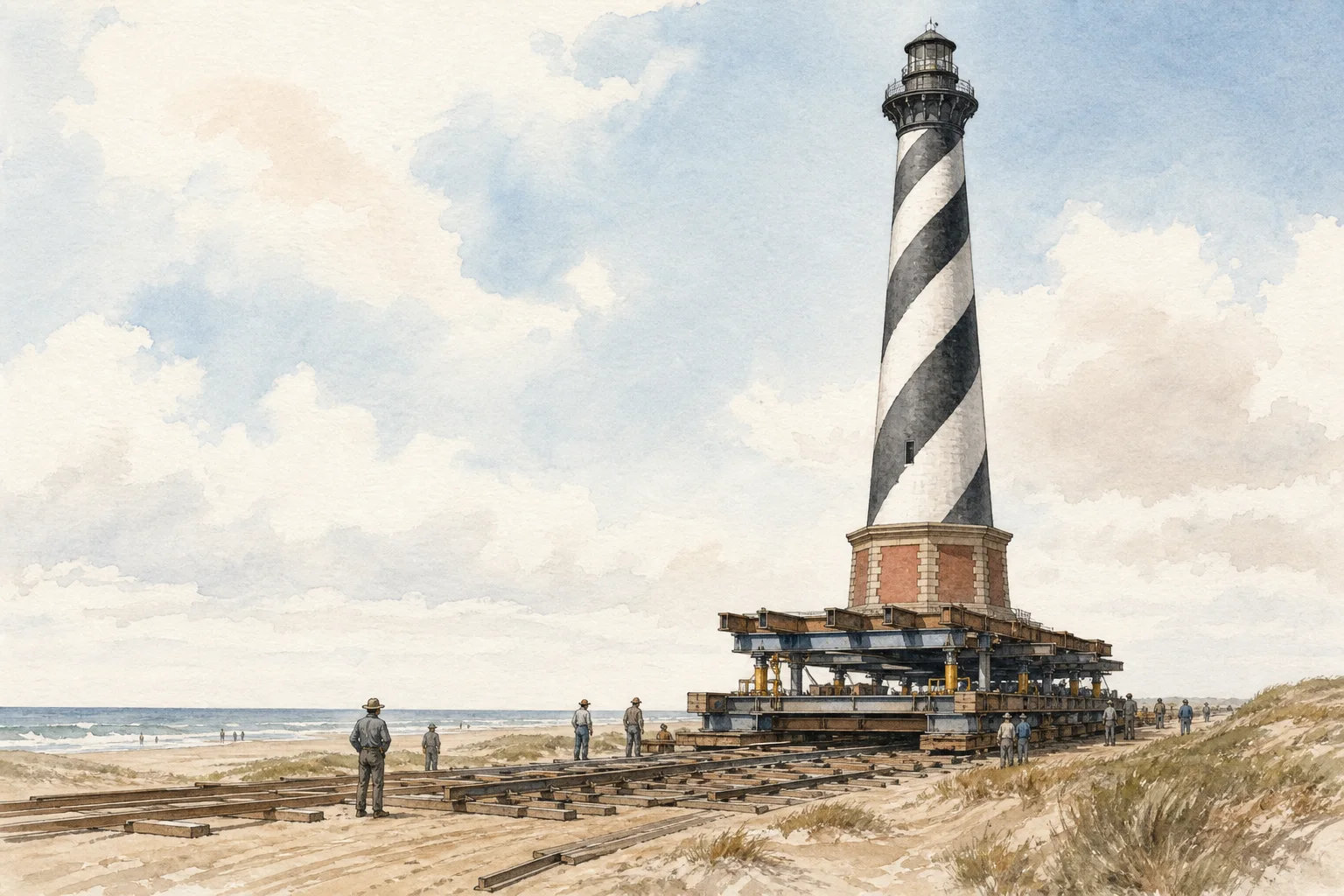
Cape Hatteras Lighthouse, approximately 4,830 tons, moved 2,900 feet over 23 days in 1999 at a cost of $11.8 million because shoreline erosion threatened it.
Source: Cape Hatteras Lighthouse move FAQs
Limit: The historical reason is shoreline erosion; the move is not simplified here into a generic climate-change claim.
Related lighthouse: Cape Hatteras
Yes.
A very large one.
By the late twentieth century, shoreline erosion had brought the Atlantic dangerously close to Cape Hatteras Lighthouse in North Carolina.
The solution adopted in 1999 was unusual.
Move it.
The National Park Service gives the moving weight of the brick tower at approximately 4,830 tons.
It travelled 2,900 feet — about 884 metres.
The move itself took 23 days, from 17 June to 9 July 1999, using hydraulic jacks and a specially prepared system of steel supports.
The project cost $11.8 million.
This is worth pausing over.
People looked at one of the most recognizable brick lighthouses in the world and concluded that the easiest way to preserve it was to pick up approximately five thousand tons of masonry and take it somewhere else.
There are many philosophical debates about what it means to preserve cultural heritage through change.
Cape Hatteras used hydraulic jacks.
Test 8 — Can a lighthouse help discover — and help destroy — a species?
high confidence · reviewed
David Lyall was central to discovery of the Stephens Island wren, while established feral cats were probably the principal extinction driver.
Source: The extinction of the Stephens Island wren
Limit: One cat named Tibbles did not single-handedly exterminate the species overnight.
The Stephens Island wren gives us one of the best examples of how folklore can compress an already extraordinary historical story into something slightly less accurate.
The popular version says that a lighthouse keeper’s cat, usually called Tibbles, discovered an unknown flightless bird and then single-handedly exterminated the entire species.
The archival reconstruction is different.
Lighthouse keeper David Lyall really was central to the scientific discovery of the Stephens Island wren, Traversia lyalli, in 1894.
Cats also really were introduced to the island as human settlement developed around the lighthouse.
They became feral.
And specialist ornithological research concludes that cat predation was probably the principal driver of the bird’s extinction.
But one cat did not exterminate the species overnight.
Specimens were collected beyond the initial year, probably into the later 1890s.
Roughly fifteen specimens survive in museums.
So the meme version is false.
The actual sequence is:
an isolated island receives lighthouse infrastructure;
human settlement changes the ecosystem;
a keeper helps science discover an unknown flightless bird;
introduced predators multiply;
within a few years, the bird disappears forever.
Again, debunking did not make the lighthouse boring.
Test 9 — Were lighthouse keepers always lonely men with beards?
high confidence · reviewed
At least 122 women were officially appointed US lighthouse keepers between 1828 and 1905, with roughly twice as many serving as assistants; Ida Lewis was formally appointed in 1879.
Source: Forward Into Light, Ida Lewis Wilson
Limit: Official appointment, assistant service, co-residence and informal work remain distinct categories.
No.
The personnel records are considerably more interesting than the stereotype.
Research by the US National Park Service has identified at least 122 women who were officially appointed lighthouse keepers between 1828 and 1905, with roughly twice that number serving as assistant keepers.
These were not simply wives who happened to live beside the lamp.
They held the job.
Ida Lewis performed lighthouse duties for years before receiving her formal federal appointment in 1879 and became famous for lifesaving work.
Kate Walker formally served as principal keeper at Robbins Reef from 1894 to 1919.
Women maintained lights, raised families at stations, rowed through difficult waters and performed rescues.
The conventional image of lighthouse history is often highly selective.
Sometimes the most effective way to make heritage less boring is simply to notice the people who were always there.
Test 10 — Did technology take the keepers’ jobs?
high confidence · reviewed
Scottish lighthouse automation began at Oxcars in 1894; Baily, Fair Isle South and North Foreland lost resident keepers in 1997–1998; Boston Light automated in 1998 while its special staffed role continued until Sally Snowman retired in 2023.
Source: Automation, Baily Lighthouse, Fair Isle South, A fine farewell, History of Lighthouses in the United States
Limit: Successive automation technologies transformed the profession; historical automation was not AI.
Absolutely.
It just took more than a century.
This makes lighthouse automation an unexpectedly useful historical analogy for present debates about artificial intelligence.
Automatic operation did not suddenly arrive with computers.
The Northern Lighthouse Board records automatic lighthouse operation at Oxcars in Scotland as early as 1894.
Over the following century, clockwork systems, gas controls, electric lamps, photocells, telemetry and remote monitoring progressively reduced the need for resident crews.
The final staffed stations then disappeared remarkably close together.
Irish Lights withdrew the keepers from Baily on 24 March 1997.
Northern Lighthouse Board keepers left Fair Isle South on 31 March 1998.
North Foreland became the final Trinity House lighthouse to be fully automated on 26 November 1998.
Boston Light in the United States was automated in 1998 but remained a special staffed case; Sally Snowman, appointed in 2003, retired at the end of 2023 as the US Coast Guard’s last civilian lighthouse keeper.
So no:
AI did not replace lighthouse keepers.
The truth is more instructive.
An entire profession was gradually transformed by successive layers of automation until the human role that once seemed inseparable from the technology became exceptional.
That sounds oddly contemporary.
Test 11 — AI?
medium confidence · reviewed
Peer-reviewed AtoN recognition research and a 2024 lighthouse sensor-fault preprint test machine-learning methods.
Source: Buoy light pattern classification for autonomous ship navigation, Machine learning for lighthouse light-sensor fault detection
Limit: The lighthouse-specific work used simulated gradual failures; the sources do not show that AI currently operates modern lighthouses.
Here we had to resist the temptation to improve the headline.
Modern lighthouses are not secretly being operated by autonomous artificial intelligence.
But AI has entered the broader Aids to Navigation research field.
Peer-reviewed work has used neural networks to recognize navigation marks and classify the temporal flashing patterns of illuminated buoys for autonomous ship navigation.
And in 2024, researchers from the University of Essex and the General Lighthouse Authorities’ R&D environment published a lighthouse-specific preprint exploring machine-learning methods for detecting slowly developing faults in lighthouse light sensors.
The work is promising.
It is also experimental.
It used simulated gradual sensor failures.
That is precisely why the wording matters.
The correct statement is:
researchers are testing AI and machine learning for navigation-aid perception and lighthouse maintenance diagnostics.
The incorrect statement is:
AI now runs the lighthouses.
For the moment, “AI lighthouse keeper” remains a better headline than a job description.
Test 12 — Digital twins?
high confidence · reviewed
The Kish implementation is a BIM-integrated Structural Health Monitoring system representing seven sensors and integrating pressure and geophone data.
Source: Design of a BIM-integrated structural health monitoring system for Kish Bank Lighthouse
Limit: The paper does not establish an AI-enabled real-time digital twin.
Almost.
But here terminology itself became part of the research.
In 2020, researchers Michael O’Shea and Jimmy Murphy at University College Cork published a peer-reviewed study of Kish Bank Lighthouse off Dublin.
They developed a BIM-integrated Structural Health Monitoring system connecting a digital building model with physical sensor data.
Pressure measurements and geophone data could be brought into the Revit environment through Dynamo scripts and examined in relation to virtual representations of the sensors.
Seven sensors were represented in the model during the implementation described.
It is tempting to call this an AI-powered real-time digital twin.
We decided not to.
The authors themselves described it more carefully as BIM-integrated structural health monitoring and noted that the monitoring programme was still in its early stages.
This may be the least spectacular finding in the article.
It may also be one of the most representative of serious heritage research:
sometimes the difference between an interesting story and hype is one adjective.
Test 13 — Can a lighthouse leave Earth?
high confidence · reviewed
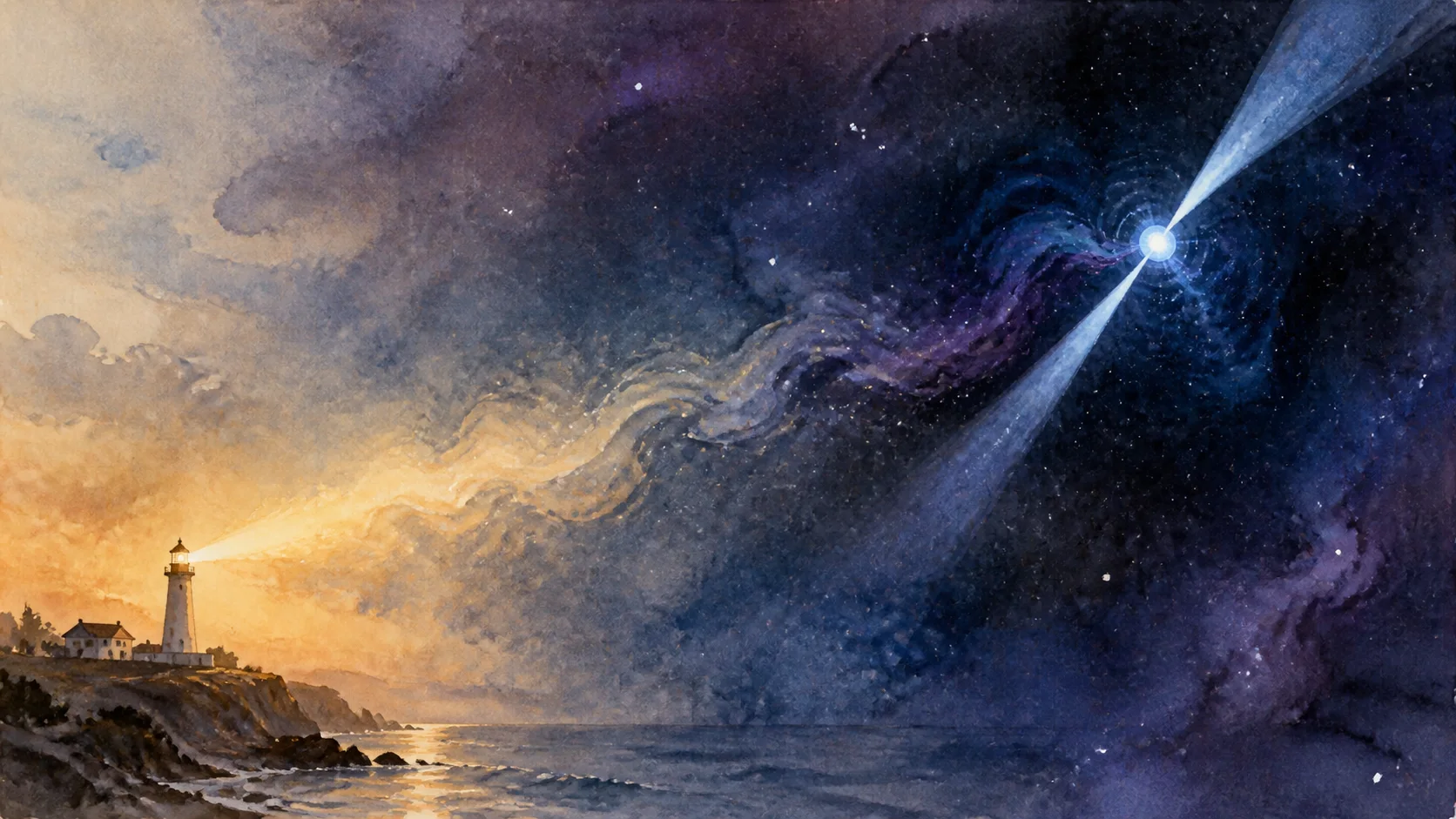
NASA uses the lighthouse analogy for pulsars; SEXTANT used four millisecond pulsars and reached its ten-mile target within eight hours in 2017.
Source: NASA team first to demonstrate X-ray navigation in space, Neutron stars and pulsars
Limit: The analogy is conceptual; pulsars are not terrestrial navigation structures.
Apparently.
Astronomers routinely explain pulsars using a lighthouse analogy.
A pulsar is a rapidly rotating neutron star whose radiation beams can periodically sweep across our line of sight.
Each time the beam crosses us, we detect a pulse.
That is the metaphorical part.
Then NASA made the metaphor operational.
In November 2017, the SEXTANT experiment aboard the International Space Station used X-ray observations of four millisecond pulsars to calculate its own position autonomously.
The demonstration processed pulsar data in real time.
NASA’s goal was to locate the experiment within a ten-mile radius.
It achieved that range within eight hours, with a substantial portion of results falling within three miles.
A terrestrial lighthouse allows a navigator to determine position by observing a known signal.
Pulsar navigation does something conceptually related on an astronomical scale.
At this point, our lighthouse research had left Earth.
This was not in the original project plan.
Final test — Quantum physics
high confidence · reviewed
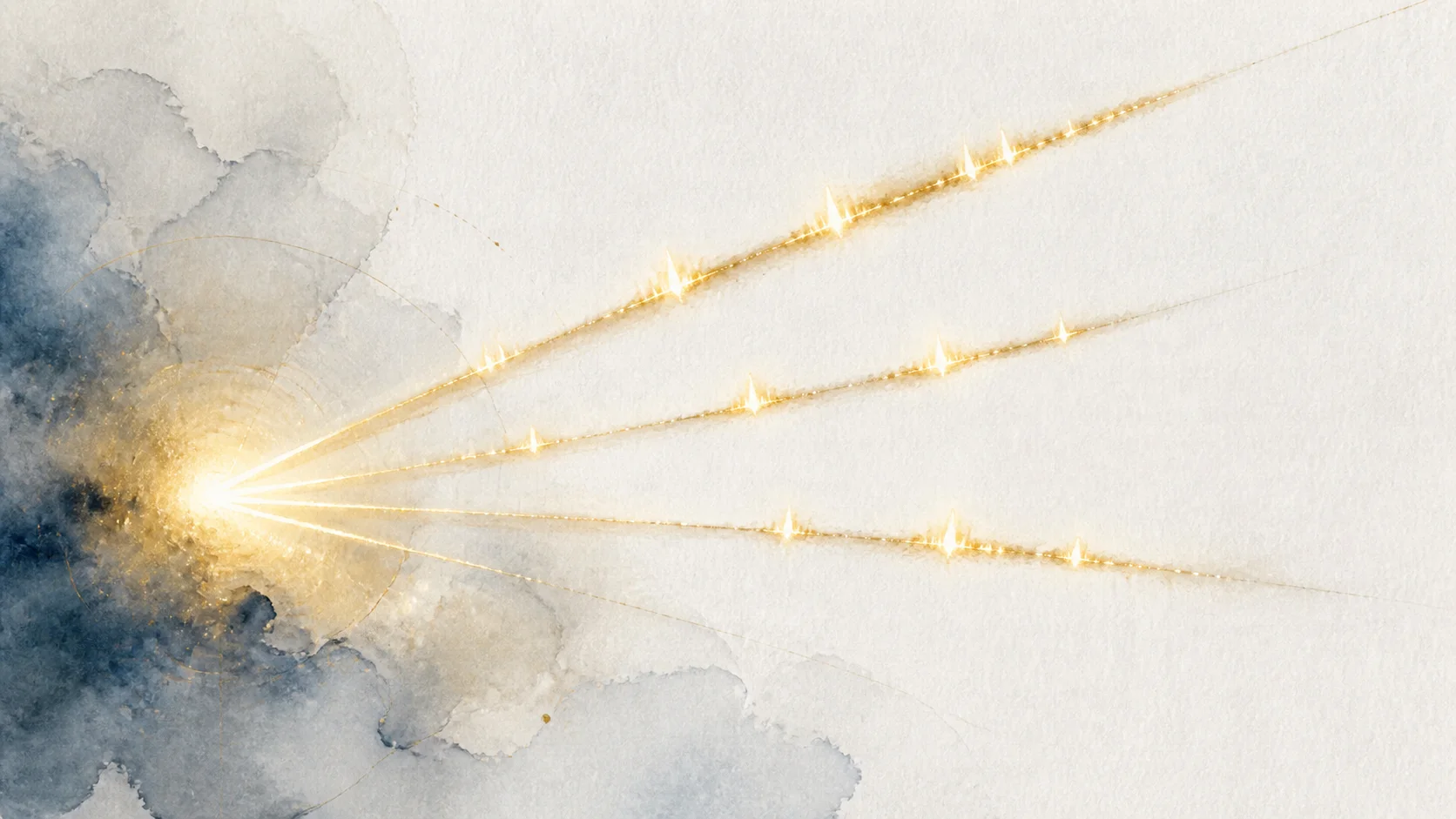
Peer-reviewed literature contains several explicitly named lighthouse effects, including attosecond, ultrafast, atomic, nuclear and polariton examples, plus APS’s 2026 electron-lighthouse description.
Source: Attosecond lighthouses from plasma mirrors, Theory of the attosecond lighthouse, Ultrafast lighthouse effect, Atomic lighthouse effect, Nuclear lighthouse effect, Polariton lighthouse effect, Physical Review Letters 137, issue 3
Limit: These names do not describe one unified physical phenomenon; lighthouse is a technical analogy used in different contexts.
We included quantum physics because every stress test needs a category expected to fail.
The plan was simple.
Search for “quantum lighthouse.”
Find nothing serious.
Record an honest negative result.
Possibly make a tasteful joke.
Physics refused to cooperate.
There is a peer-reviewed “Attosecond lighthouses from plasma mirrors” paper in Nature Photonics.
There is an atomic lighthouse effect.
There is a nuclear lighthouse effect, used in nuclear resonant scattering experiments.
There is an ultrafast lighthouse effect.
There is a polariton lighthouse effect used for all-optical beam steering.
And in July 2026, Physical Review Letters published work on directional photocurrent generated through quantum interference; the American Physical Society described the result as an “electron lighthouse.”
These are not all the same physical phenomenon.
Nor did anyone build a tiny quantum lighthouse with stairs, a keeper’s cottage and a Fresnel lens.
“Lighthouse” is being used as a technical analogy for directional or angularly separated emission, scattering or current.
But the terminology is real.
The papers are real.
The experiments are real.
Which leaves us with a publication-safe sentence that sounds considerably less safe than it actually is:
We checked quantum and ultrafast physics expecting nothing. We found several real lighthouse effects.
Of all the results in this investigation, this may be the most damaging to the original hypothesis.
Conclusion — So, are lighthouses boring?
We cannot answer that scientifically.
There is an obvious methodological problem.
We deliberately searched for unusual lighthouse stories.
That creates selection bias.
If you search specifically for radioactive devices, missing keepers, UFO investigations, extinct birds and quantum-optical effects, you should not be surprised that your final dataset contains more than average levels of radioactive devices, missing keepers, UFO investigations, extinct birds and quantum-optical effects.
So this investigation does not prove that lighthouses are objectively non-boring.
It proves something narrower.
There exists a surprisingly broad and well-documented body of lighthouse history connecting these structures with subjects far beyond conventional maritime architecture:
human isolation;
folklore;
military observation;
ecological disruption;
automation;
radioactive technology;
artificial intelligence;
structural monitoring;
coded communication;
astronomy;
and modern physics.
And there was another result we did not anticipate.
Some of the most famous stories became weaker under verification.
The Flannan Isles did not need the invented diary entries.
The Stephens Island wren did not need one murderous super-cat.
Cornish wreckers did not need to lure vessels ashore with lanterns.
Rendlesham did not need either aliens or a total lighthouse explanation.
In each case, separating evidence from mythology did not destroy the story.
It made the mechanism by which stories are created visible.
That may be the most interesting connection of all.
Lighthouses were designed to make dangerous coastlines readable.
Their history requires something similar.
A signal.
A source.
A distinction between what we know, what we think happened, and what generations later decided would make a better story.
We started with a deliberately unserious hypothesis:
perhaps lighthouses are beautiful, historically important — and a little boring.
Then we checked disappearances, ghosts, UFOs, wreckers, radioactive power sources, ecological extinction, automation, artificial intelligence, coded signals, space navigation and quantum physics.
Some claims collapsed.
Some became better when the mythology was removed.
Several of the most ridiculous-sounding claims turned out to be the best documented.
So no, we cannot scientifically prove that lighthouses are not boring.
But after this investigation, the burden of proof has shifted considerably.
Perhaps lighthouses were never boring.
Perhaps we were simply asking them boring questions.
Watch the research overview
Creative coda — Boring Questions
Research note
This article grew from the Lighthouse Boredom Stress Test, an intentionally playful but evidence-led research exercise by LUX Light Archive / LUX143.
The investigation deliberately searched for unusual lighthouse connections, creating an obvious selection bias. It therefore does not establish that lighthouses are objectively “non-boring.”
What the evidence does establish is narrower:
lighthouse history intersects an unexpectedly broad range of engineering, science, ecology, warfare, folklore, automation and cultural history.
Historical claims were checked, where possible, against lighthouse authorities, national archives, government agencies and peer-reviewed research.
Folklore is presented as folklore.
Interpretation remains interpretation.
And the Lighthouse Non-Boringness Index, if shown anywhere, is an editorial joke rather than a validated scientific instrument.
Research principle: funny framing, boringly strong provenance.
LUX Light Archive / LUX143 Light That Unites
Sources & verification
Research Documents
- We Are Serious About Lighthouse Research. Usually. — final article textowner_supplied_editorialOwner-supplied canonical editorial body and verified correction pack; used for prose, scope and claim boundaries.
- Are Lighthouses Actually Boring? — visual specificationeditorial_asset_specificationProject-local prompt, alt-text, caption and AI-asset provenance specification.
- NotebookLM audiovisual overview transcriptowner_supplied_video_transcriptUsed to identify compressed wording and write the adjacent editorial note; the transcript is not treated as evidence.
Bibliography
- Flannan Isleslighthouse_authorityNorthern Lighthouse Board history and official likely explanation.
- The Flannan Islands lighthouse: a disappearancenational_archiveNational Records of Scotland archival account, including station condition and contemporary records.
- Smalls Lighthouselighthouse_authorityTrinity House account; used only for the explicitly variable pre-1801 story boundary.
- Ghost Stories: The Pittee Girlssite_museumSite history and clearly attributed folklore context.
- UFO reportsnational_archiveUK National Archives overview of documented UFO records.
- The lighthouse explanationsecondary_analysisClearly attributed secondary analysis of the Orfordness light; not treated as proof that the entire incident was a lighthouse.
- Neglectful or worse?scholarly_public_historyNational Maritime Museum Cornwall publication on Cathryn Pearce’s myth-versus-evidence research.
- Nuclear safety cooperation with Russia 2006–2008government_reportGovernment programme documentation for RTG recovery and replacement.
- EPREV mission report — Murmansk Regioninternational_agencyIAEA context for radioisotope generators and emergency preparedness.
- Russian radioisotope thermoelectric generator removal programmegovernment_technical_reportTechnical programme account, including recovery/decommissioning totals.
- Cape Hatteras Lighthouse move FAQsgovernment_agencyCanonical move weight, distance, duration, cost and erosion context.
- The extinction of the Stephens Island wrenpeer_reviewed_researchSpecialist reconstruction of discovery, specimens, feral cats and extinction driver.
- Forward Into Lightgovernment_agencyNPS research on officially appointed women lighthouse keepers and assistants.
- Ida Lewis Wilsonnational_archiveNational Archives record for Ida Lewis, including formal appointment context.
- A fine farewelllighthouse_authorityNorth Foreland automation date and final Trinity House keeper context.
- Fair Isle Southlighthouse_authorityNorthern Lighthouse Board station and automation history.
- Baily Lighthouselighthouse_authorityIrish Lights station history and keeper withdrawal date.
- Automationlighthouse_authorityNorthern Lighthouse Board history of automation beginning at Oxcars in 1894 and completing at Fair Isle South in 1998.
- History of Lighthouses in the United Statesgovernment_agencyNational Park Service account of Boston Light automation in 1998 and Sally Snowman’s retirement in 2023.
- Types and characteristics of lightsstandards_bodyIALA terminology for optical light characteristics.
- Kish Banklighthouse_authorityPublished Kish Bank station and RACON details.
- Buoy light pattern classification for autonomous ship navigationpeer_reviewed_researchPeer-reviewed AtoN light-pattern classification research.
- Machine learning for lighthouse light-sensor fault detectionresearch_preprint2024 preprint using simulated gradual sensor faults; not evidence that AI operates lighthouses.
- Design of a BIM-integrated structural health monitoring system for Kish Bank Lighthousepeer_reviewed_researchPeer-reviewed BIM/SHM implementation with seven represented sensors, pressure and geophone data.
- NASA team first to demonstrate X-ray navigation in spacespace_agencyNASA SEXTANT demonstration, pulsar count, target accuracy and timing.
- Neutron stars and pulsarsspace_agencyNASA explainer explicitly using the lighthouse analogy.
- Attosecond lighthouses from plasma mirrorspeer_reviewed_researchNamed attosecond lighthouse effect in Nature Photonics.
- Theory of the attosecond lighthousepeer_reviewed_researchPhysical Review A theory paper.
- Ultrafast lighthouse effectpeer_reviewed_researchNamed ultrafast lighthouse effect in JOSA B.
- Atomic lighthouse effectpeer_reviewed_researchNamed atomic lighthouse effect in the Journal of the Optical Society of America A.
- Nuclear lighthouse effectpeer_reviewed_researchNamed nuclear lighthouse effect in Physical Review Letters.
- Polariton lighthouse effectpeer_reviewed_researchNamed polariton lighthouse effect in ACS Photonics.
- Physical Review Letters 137, issue 3peer_reviewed_issueJuly 2026 issue containing the work APS described as an electron lighthouse.
Generated Package Files
Evidence
- No evidence recorded in package yet.
Open Questions
- No open questions recorded.