Paphos harbour and lighthouse — CyBC catalogue, 1975
Open the original archive catalogue and shot list. Video copyright remains with CyBC; no copy or transcript is reproduced.
Open media sourceHeritage Journey
What changes when a working lighthouse becomes part of the memory of its coast?
Follow the tower, the keeper's home and the continuing signal through a landscape with several histories.
Story mode is the guided heritage-continuity mode inside the LUX Light Archive renderer.
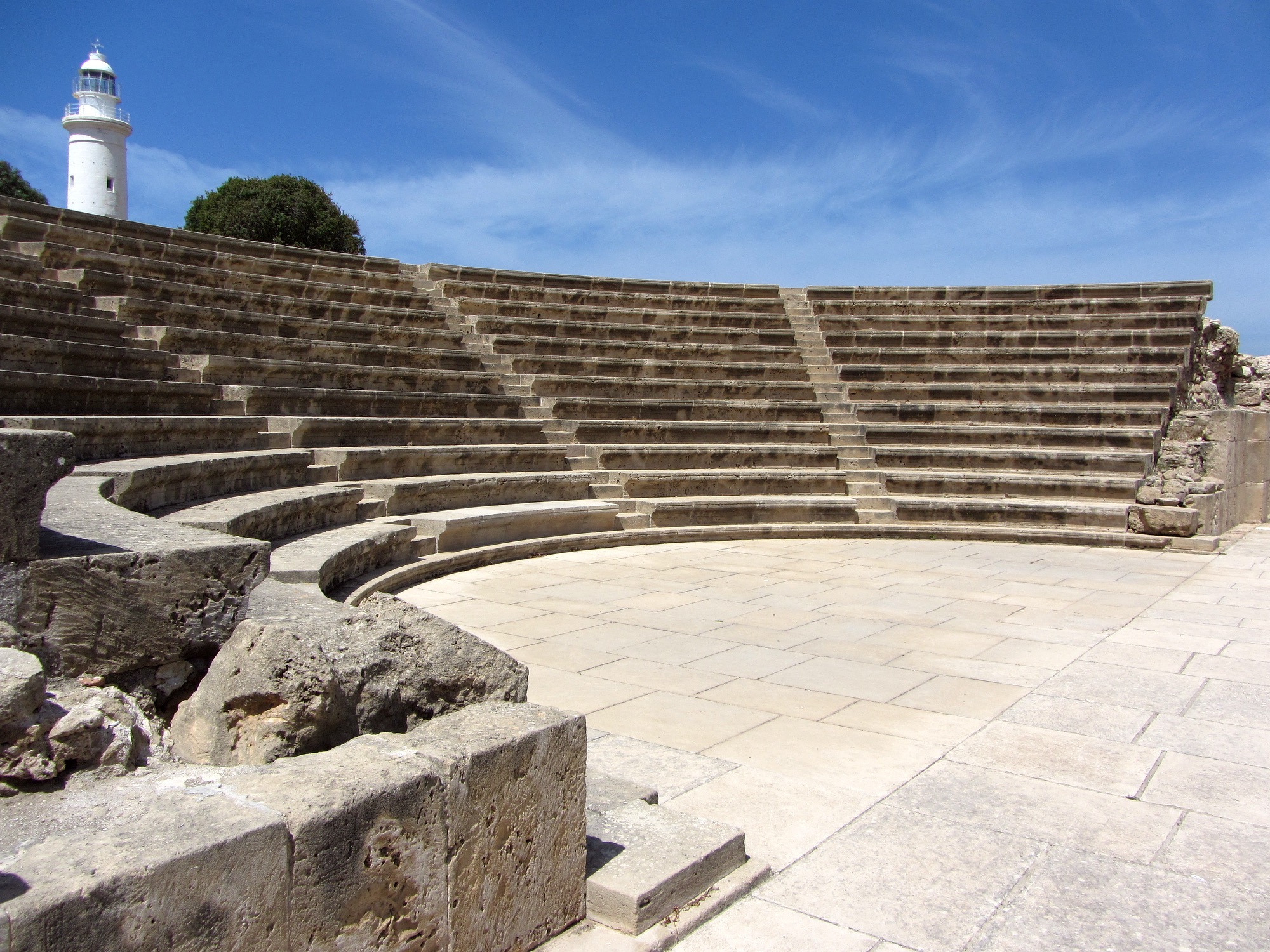
Paphos Archaeological Park Odeon and Lighthouse — Stefan Bellini (2014) · CC0 1.0 · Source
Signature moment
A change in staffing and equipment is not the disappearance of the station.
Conceptual illustration only — not to scale.
The journey
Verified fact
The white stone tower belongs to the British period of Cyprus, not to the ancient city around it. The operator dates construction to 1888. The station's later history changes its equipment and human presence while keeping this place recognizable.
Verified fact
A CyBC catalogue record dated 30 July 1975 takes us inside the lighthouse: its shot list identifies equipment, gas cylinders and burner maintenance. It preserves a trace of work without giving us a complete apparatus specification or a securely identified keeper.
Verified fact
The operator records a keeper's residence beside the tower until 1982, when solar batteries were installed. Automation changed the station's staffing and power. It did not erase the tower or the need for a navigational signal.
Verified fact
The operator's 2023 book records an exhibition about Cyprus, the sea and lighthouses in the station buildings. It describes a white flashing signal every fifteen seconds, with a focal height of 36 metres and a range of 17 nautical miles. These are dated operator figures, not present-day sailing instructions.
Verified fact
September reporting attributed to named antiquities and port officials describes restored auxiliary buildings and grounds. A cistern, pebbled floor and canal nearby were interpreted as an early Roman water system. Ancient water infrastructure and the modern lighthouse remain different histories sharing one landscape.
Video
Open the original archive catalogue and shot list. Video copyright remains with CyBC; no copy or transcript is reproduced.
Open media sourceAcross time
One tower reference point; chronological stages do not imply geographic relocation or a surveyed archaeological boundary.
Loading detailed map...
Paphos lighthouse stationStage 1
The white stone tower belongs to the British period of Cyprus, not to the ancient city around it. The operator dates construction to 1888. The station's later history changes its equipment and human presence while keeping this place recognizable.
Place
Continuity site
Paphos connects a documented 1888 tower, the work of its keepers, solar automation and an archaeological landscape without claiming an unproven optical lineage.
Why it matters
Paphos connects a documented 1888 tower, the work of its keepers, solar automation and an archaeological landscape without claiming an unproven optical lineage.
The Story interpretation and Research evidence remain on the same URL.
Heritage Journey
What changes when a working lighthouse becomes part of the memory of its coast?
Paphos connects a documented 1888 tower, the work of its keepers, solar automation and an archaeological landscape without claiming an unproven optical lineage.
LUX Light Archive is the heritage renderer of the LUX143 research field, preserving lighthouse continuity through evidence, memory, movement, and sources.
Understand how this archive fits into the wider research field.
Inside this heritage renderer, Story and Research are two modes of the same evidence-grounded journey: Story gives a guided path, while Research shows the sources, relationships, uncertainty, and open questions behind it.
Verified fact
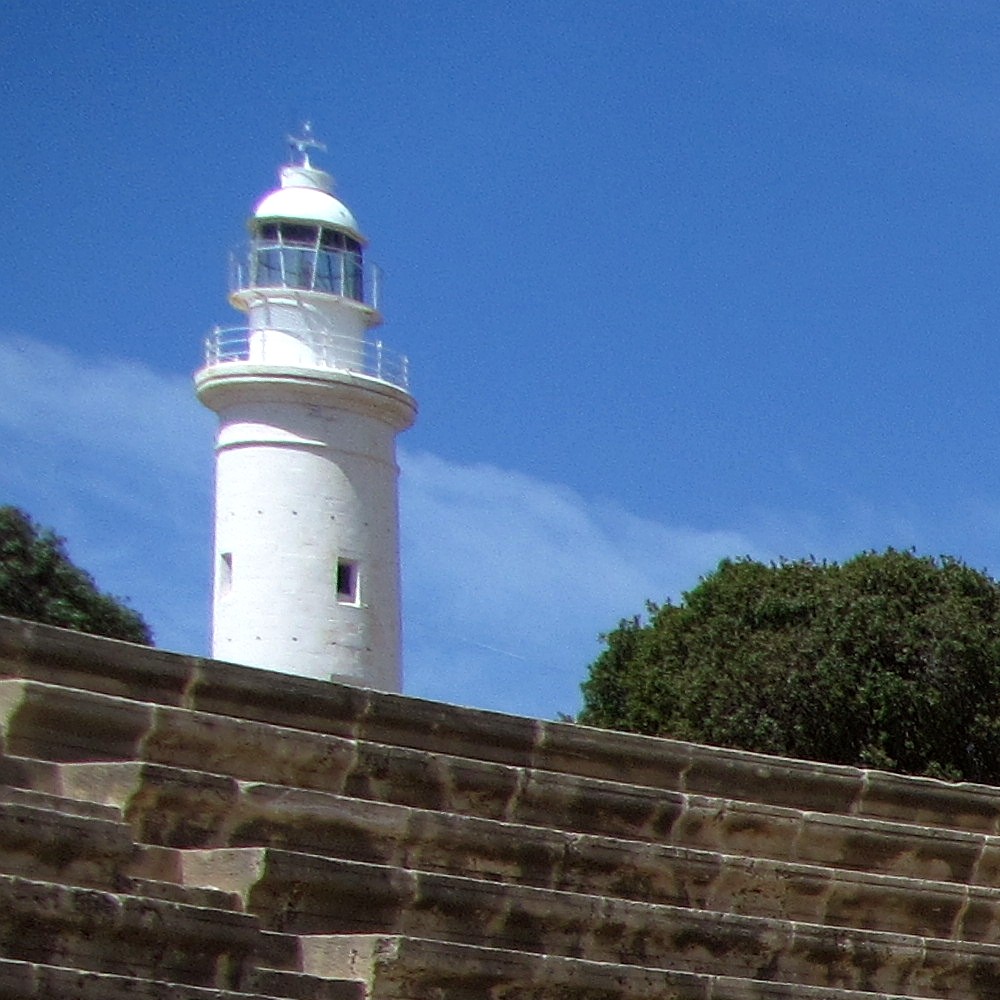
A new tower in an ancient landscapeThe white stone tower belongs to the British period of Cyprus, not to the ancient city around it. The operator dates construction to 1888. The station's later history changes its equipment and human presence while keeping this place recognizable.
Verified fact
An archive preserves the workA CyBC catalogue record dated 30 July 1975 takes us inside the lighthouse: its shot list identifies equipment, gas cylinders and burner maintenance. It preserves a trace of work without giving us a complete apparatus specification or a securely identified keeper.
Verified fact
The light no longer needs a resident householdThe operator records a keeper's residence beside the tower until 1982, when solar batteries were installed. Automation changed the station's staffing and power. It did not erase the tower or the need for a navigational signal.
Verified fact
A working station also carries memoryThe operator's 2023 book records an exhibition about Cyprus, the sea and lighthouses in the station buildings. It describes a white flashing signal every fifteen seconds, with a focal height of 36 metres and a range of 17 nautical miles. These are dated operator figures, not present-day sailing instructions.
Verified fact
Older traces appear around the lighthouseSeptember reporting attributed to named antiquities and port officials describes restored auxiliary buildings and grounds. A cistern, pebbled floor and canal nearby were interpreted as an early Roman water system. Ancient water infrastructure and the modern lighthouse remain different histories sharing one landscape.
Follow the tower, the keeper's home and the continuing signal through a landscape with several histories.
Paphos connects a documented 1888 tower, the work of its keepers, solar automation and an archaeological landscape without claiming an unproven optical lineage.
The Story interpretation and Research evidence remain on the same URL.
Connected research view
Select an event, object, or place to trace it across all three views.
The white stone tower belongs to the British period of Cyprus, not to the ancient city around it. The operator dates construction to 1888. The station's later history changes its equipment and human presence while keeping this place recognizable.
A CyBC catalogue record dated 30 July 1975 takes us inside the lighthouse: its shot list identifies equipment, gas cylinders and burner maintenance. It preserves a trace of work without giving us a complete apparatus specification or a securely identified keeper.
The operator records a keeper's residence beside the tower until 1982, when solar batteries were installed. Automation changed the station's staffing and power. It did not erase the tower or the need for a navigational signal.
The operator's 2023 book records an exhibition about Cyprus, the sea and lighthouses in the station buildings. It describes a white flashing signal every fifteen seconds, with a focal height of 36 metres and a range of 17 nautical miles. These are dated operator figures, not present-day sailing instructions.
September reporting attributed to named antiquities and port officials describes restored auxiliary buildings and grounds. A cistern, pebbled floor and canal nearby were interpreted as an early Roman water system. Ancient water infrastructure and the modern lighthouse remain different histories sharing one landscape.
The graph connects the confirmed tower and station. The unverified Chance lens remains outside the published relationship graph.
No path selected.
One tower reference point; chronological stages do not imply geographic relocation or a surveyed archaeological boundary.
Loading detailed map...
Paphos lighthouse stationStage 1
The white stone tower belongs to the British period of Cyprus, not to the ancient city around it. The operator dates construction to 1888. The station's later history changes its equipment and human presence while keeping this place recognizable.
Official and object-specific sources carry the strongest confidence; secondary sources are shown as corroborating context.
| Relationship | Objects | Date | Confidence | Review | Sources |
|---|---|---|---|---|---|
| Located atHERITAGE-REL-000386Appears in Story: A new tower in an ancient landscape · Appears in Story: An archive preserves the work · Appears in Story: The light no longer needs a resident household · Appears in Story: A working station also carries memory · Appears in Story: Older traces appear around the lighthouse | Paphos lighthouse towertoPaphos lighthouse station | 1888 | high | reviewed | Cyprus Ports Authority — Ναυτικοί Φάροι: Ιστορική εξέλιξη και σημασία |
Research still in progress — these do not affect accepted relationships above.
A present-day lighthouse card cannot show which parts changed and which identity continued.
LUX keeps the structure, signal, place, evidence and uncertainty distinct while making their continuity readable.
Original editorial content on this page: Creative Commons Attribution-NonCommercial-ShareAlike 4.0 International. See Rights & Reuse.
"Paphos: The Light and the Layers" · paphos-light-and-layers · © LUX143 · Creative Commons Attribution-NonCommercial-ShareAlike 4.0 International · https://light.lux143.org/heritage-journeys/paphos-light-and-layers/ Paphos Archaeological Park Odeon and Lighthouse — Stefan Bellini (2014) · Rights status: Public Domain · CC0 1.0 (https://creativecommons.org/publicdomain/zero/1.0/)
LUX Light Archive, Heritage journey: "Paphos: The Light and the Layers", paphos-light-and-layers, https://light.lux143.org/heritage-journeys/paphos-light-and-layers/, accessed 2026-10-25, archive v0.24.577.