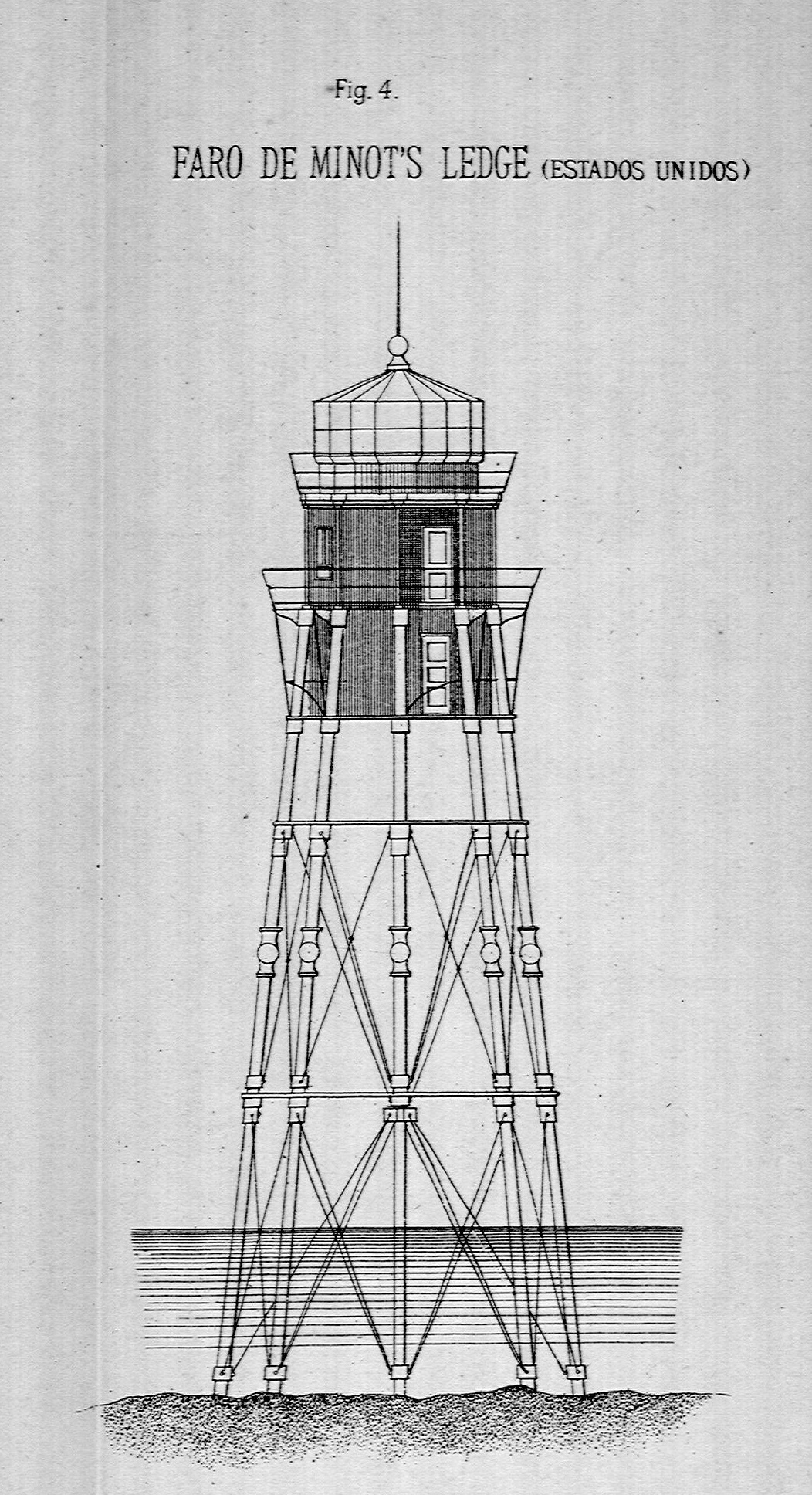
Historical drawing of Minot's Ledge Light offshore Massachusetts. — José Eugenio Ribera / Wikimedia Commons · Public domain · Source
Signature moment
Minot's Ledge: 1-4-3 and the LUX143 Name
Conceptual illustration only — not to scale.
The journey
How an offshore light's flash pattern became a name for a research field
A ledge that wrecked shipsHistorical drawing of Minot's Ledge Light offshore Massachusetts. — José Eugenio Ribera / Wikimedia Commons · Public domain · Source
11850
Probable reconstruction
A ledge that wrecked ships
Minot's Ledge offshore of Cohasset and Scituate was already known as a deadly hazard before a permanent tower stood there.
1-4-3 becomes 'I love you'Historical drawing of Minot's Ledge Light offshore Massachusetts. — José Eugenio Ribera / Wikimedia Commons · Public domain · Source
4folk
Interpretive bridge
1-4-3 becomes 'I love you'
The light's 1-4-3 characteristic entered popular memory as Lover's Light. Treat the love-code reading as cultural interpretation layered on a navigational pattern.
Why LUX143 is named 143Historical drawing of Minot's Ledge Light offshore Massachusetts. — José Eugenio Ribera / Wikimedia Commons · Public domain · Source
5LUX
Interpretive bridge
Why LUX143 is named 143
LUX Light Archive is the heritage renderer of the LUX143 research field. The 143 in that name points to this light's famous pattern: evidence-backed heritage that still carries human meaning.
The first Minot's Ledge tower was washed away in a storm; the rebuilt light remains famous for a 1-4-3 characteristic popularly read as 'I love you.' That cultural reading is why the LUX143 research field uses 143 — as product meaning, not as a replacement for navigational evidence.
Why it matters
Why this journey matters
The first Minot's Ledge tower was washed away in a storm; the rebuilt light remains famous for a 1-4-3 characteristic popularly read as 'I love you.' That cultural reading is why the LUX143 research field uses 143 — as product meaning, not as a replacement for navigational evidence.
This pilot stays hidden from public discovery until evidence, rights, and AAA Story review are complete.
5 staged beats3 relation leadshidden research pilot
Heritage Journey
Minot's Ledge: 1-4-3 and the LUX143 Name
How an offshore light's flash pattern became a name for a research field
The first Minot's Ledge tower was washed away in a storm; the rebuilt light remains famous for a 1-4-3 characteristic popularly read as 'I love you.' That cultural reading is why the LUX143 research field uses 143 — as product meaning, not as a replacement for navigational evidence.
LUX Light Archive is the heritage renderer of the LUX143 research field, preserving lighthouse continuity through evidence, memory, movement, and sources.
Inside this heritage renderer, Story and Research are two modes of the same evidence-grounded journey: Story gives a guided path, while Research shows the sources, relationships, uncertainty, and open questions behind it.
Historical drawing of Minot's Ledge Light offshore Massachusetts. — José Eugenio Ribera / Wikimedia Commons · Public domain · Source
The light's 1-4-3 characteristic entered popular memory as Lover's Light. Treat the love-code reading as cultural interpretation layered on a navigational pattern.
LUX Light Archive is the heritage renderer of the LUX143 research field. The 143 in that name points to this light's famous pattern: evidence-backed heritage that still carries human meaning.
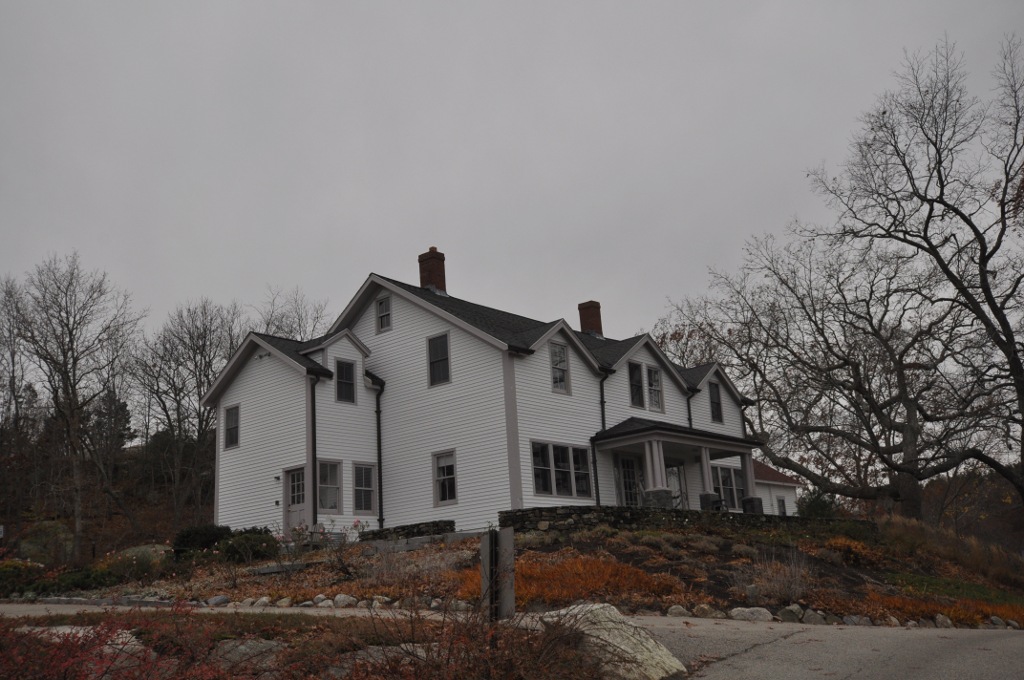
Storm, rebuild, Lover's Light folklore, and the interpretive bridge to LUX143.José Eugenio Ribera / Wikimedia Commons · Public domain · SourceGovernment Island keepers' house — shore continuity for an offshore light.Magicpiano / Wikimedia Commons · CC BY-SA 4.0 · Source
In brief
Storm, rebuild, Lover's Light folklore, and the interpretive bridge to LUX143.
The first Minot's Ledge tower was washed away in a storm; the rebuilt light remains famous for a 1-4-3 characteristic popularly read as 'I love you.' That cultural reading is why the LUX143 research field uses 143 — as product meaning, not as a replacement for navigational evidence.
This pilot stays hidden from public discovery until evidence, rights, and AAA Story review are complete.
5 staged beats3 relation leadshidden research pilot
Connected research view
Graph, time and place
Select an event, object, or place to trace it across all three views.
Interactive Movement Timeline
Stage 1A ledge that wrecked ships
Minot's Ledge offshore of Cohasset and Scituate was already known as a deadly hazard before a permanent tower stood there.
The light's 1-4-3 characteristic entered popular memory as Lover's Light. Treat the love-code reading as cultural interpretation layered on a navigational pattern.
LUX Light Archive is the heritage renderer of the LUX143 research field. The 143 in that name points to this light's famous pattern: evidence-backed heritage that still carries human meaning.
1850: A ledge that wrecked ships — Minot's Ledge offshore of Cohasset and Scituate was already known as a deadly hazard before a permanent tower stood there.
1851: The first tower fails — The first lighthouse on the ledge was destroyed by storm after only a short service life — a hard lesson in exposed-wave construction.
1860: A rebuilt offshore sentinel — A second tower rose on the ledge. Continuity of the navigational identity survived the physical rupture.
folk: 1-4-3 becomes 'I love you' — The light's 1-4-3 characteristic entered popular memory as Lover's Light. Treat the love-code reading as cultural interpretation layered on a navigational pattern.
LUX: Why LUX143 is named 143 — LUX Light Archive is the heritage renderer of the LUX143 research field. The 143 in that name points to this light's famous pattern: evidence-backed heritage that still carries human meaning.
Current Status
Hidden research Heritage Journey pilot.
Focus lighthouse/lightship draft or card: LUX-LH-000015.
Not public AAA-ready; Wikipedia/MarineRadar leads only.
Open Questions
Research still in progress — these do not affect accepted relationships above.
A present-day card can say the light flashes 1-4-3 without explaining why that pattern became a cultural name — or why LUX143 exists as a research field.
LUX keeps navigational fact, popular interpretation, reconstruction history, and product naming in separate readable layers.