First permanent light / heritage survivor
Pencarrow Head Lighthouse
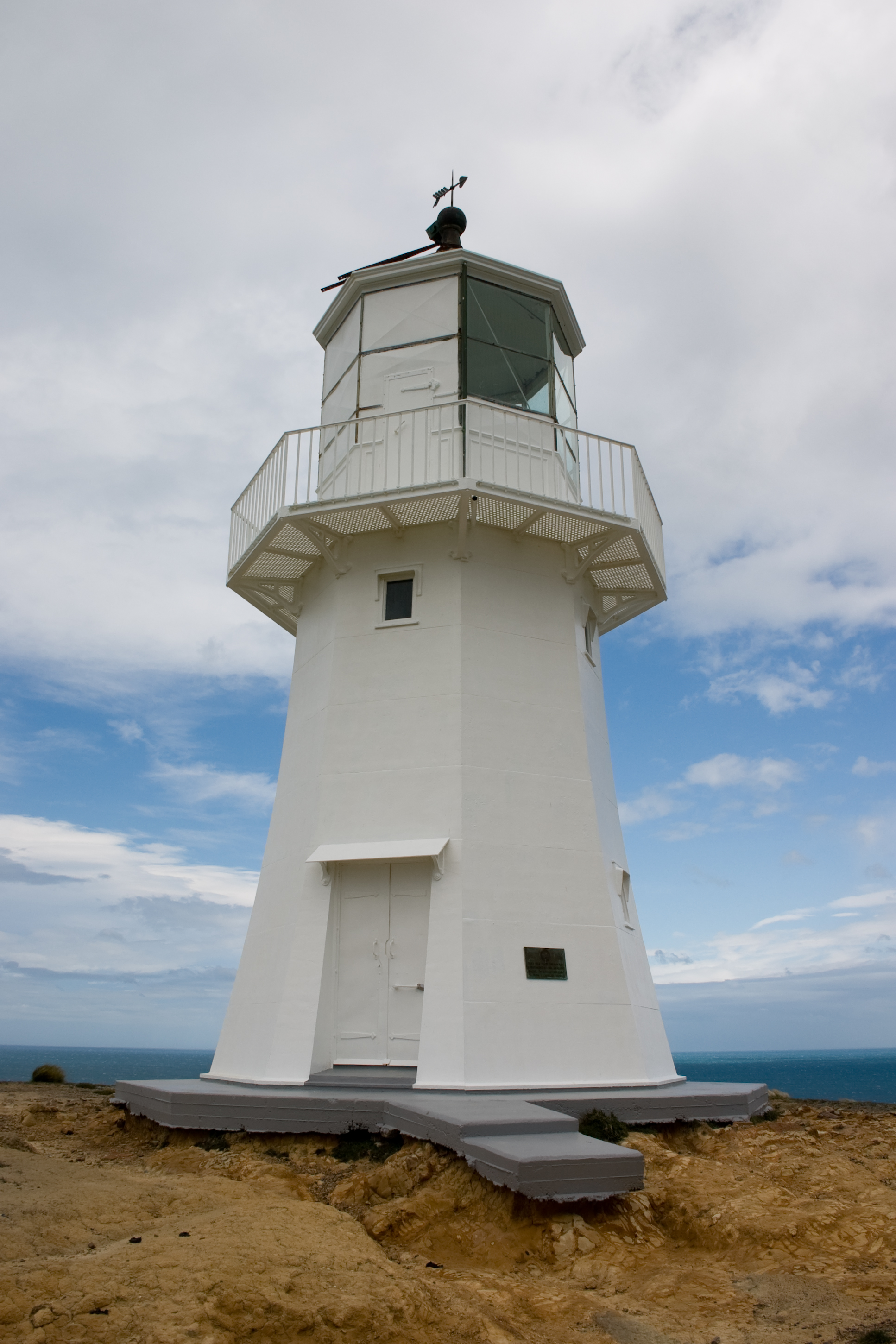
Upper Pencarrow is the first permanent lighthouse site and the surviving heritage object whose role changed after Baring Head took over the approach light.
Heritage Journey
The first permanent light that became a heritage signal
New Zealand’s first permanent lighthouse was born from wrecks, public pressure, a temporary cottage light, and an imported cast-iron kit, then became a story about fog, family, replacement, and the survival of a light as heritage.
Story mode is the guided heritage-continuity mode inside the LUX Light Archive renderer.
Upper lighthouse at Pencarrow Head by Aidan Wojtas · CC BY-SA 2.0 · Source
She remains New Zealand’s only woman lighthouse keeper.
NZHistory / Manatū Taonga
Signature moment
Pencarrow’s upper light stopped being the main approach light, but it kept orienting memory, heritage, and place identity.
Conceptual illustration only — not to scale.
The journey
Verified fact
Before the permanent light, Wellington settlers pushed for a safer harbour entrance after repeated wrecks. A promised lighthouse funded by increased spirits duty first produced only a light in a keeper’s cottage window, until that inadequate arrangement led to an 1857 order for a Cochrane cast-iron tower kit shipped to Wellington in 480 packages.
Verified fact
After the imported tower kit was hauled up to Pencarrow Head and erected, the permanent light was first lit on 1 January 1859 as New Zealand’s first permanent lighthouse.
Verified fact
Mary Bennett makes the case different from a simple engineering first. She had taken over the temporary light after George Bennett’s death in 1855, was officially appointed with the permanent lighthouse in 1859, and remains New Zealand’s only woman lighthouse keeper.
Verified fact
The upper lighthouse was historically important, but its height created a practical problem. Fog and cloud could hide it, so the lower light introduced in 1906 kept the Pencarrow signal useful from a different level of the same headland.
Verified fact
In 1935 the navigational center moved again. Baring Head became the new automated approach light, while Pencarrow’s upper lighthouse remained as a day mark and memory of an older coastal system.
Verified fact
The upper light’s survival is the point of the journey. It no longer needed to be the main light to keep orienting people; transfer, reserve control, restoration, and regular maintenance turned a former aid to navigation into a legible heritage object.
Along the headlands
Geographic movement across mapped heritage places. Workshop, storage, or text-only locations appear in the timeline when they have no published coordinates.
Loading detailed map...
Pencarrow Head LighthouseArrival
NZHistory records the Pencarrow lighthouse arriving on Ambrosine in 480 packages, then being transferred by Caroline and hauled up to the headland site before the 1859 lighting.
Lower PencarrowFunction split
A lower-level light adds a second signal when fog or cloud hides the upper light.
Baring Head LighthouseReplacement
Baring Head becomes operational and the upper Pencarrow light is used solely as a day mark.
Places in this journey
First permanent light / heritage survivor
Upper Pencarrow is the first permanent lighthouse site and the surviving heritage object whose role changed after Baring Head took over the approach light.
Lower fog-answer light
Lower Pencarrow shows that the first light’s problem was not heritage value but practical visibility from a high, fog-prone site.
Replacement approach light
Baring Head marks the moment when the main navigational function moved away from the first permanent lighthouse.
Each connection follows reviewed archive relations and evidence.
Related journey
Shared geographic context: Chance Brothers Smethwick Works
See the connectionCross-entity routes follow the same governed relations as entity pages, ordered as one readable path.
Heritage Journey
The first permanent light that became a heritage signal
Pencarrow Head follows New Zealand’s first permanent lighthouse from Wellington’s wreck-driven demand and an inadequate cottage light through the UK-built cast-iron kit, the 1859 first lighting with Mary Bennett, the fog problem, the 1906 Lower Pencarrow light, the 1935 Baring Head replacement, and the upper lighthouse’s survival as heritage.
LUX Light Archive is the heritage renderer of the LUX143 research field, preserving lighthouse continuity through evidence, memory, movement, and sources.
Understand how this archive fits into the wider research field.
Inside this heritage renderer, Story and Research are two modes of the same evidence-grounded journey: Story gives a guided path, while Research shows the sources, relationships, uncertainty, and open questions behind it.
She remains New Zealand’s only woman lighthouse keeper.
NZHistory / Manatū Taonga
Verified fact
Wrecks force a real lighthouseBefore the permanent light, Wellington settlers pushed for a safer harbour entrance after repeated wrecks. A promised lighthouse funded by increased spirits duty first produced only a light in a keeper’s cottage window, until that inadequate arrangement led to an 1857 order for a Cochrane cast-iron tower kit shipped to Wellington in 480 packages.
Verified fact
New Zealand’s first permanent lighthouseAfter the imported tower kit was hauled up to Pencarrow Head and erected, the permanent light was first lit on 1 January 1859 as New Zealand’s first permanent lighthouse.
Verified fact
Mary Bennett keeps the lightMary Bennett makes the case different from a simple engineering first. She had taken over the temporary light after George Bennett’s death in 1855, was officially appointed with the permanent lighthouse in 1859, and remains New Zealand’s only woman lighthouse keeper.
Verified fact
A lower light answers the fogThe upper lighthouse was historically important, but its height created a practical problem. Fog and cloud could hide it, so the lower light introduced in 1906 kept the Pencarrow signal useful from a different level of the same headland.
Verified fact
Baring Head takes over the approachIn 1935 the navigational center moved again. Baring Head became the new automated approach light, while Pencarrow’s upper lighthouse remained as a day mark and memory of an older coastal system.
Verified fact
The light survives as heritageThe upper light’s survival is the point of the journey. It no longer needed to be the main light to keep orienting people; transfer, reserve control, restoration, and regular maintenance turned a former aid to navigation into a legible heritage object.
New Zealand’s first permanent lighthouse was born from wrecks, public pressure, a temporary cottage light, and an imported cast-iron kit. Pencarrow Head then became a story about family, fog, replacement, and the survival of a light as heritage.
Inspect the governed relationship and evidence path behind each selected journey.
Related journey
Shared geographic context: Chance Brothers Smethwick Works
Cross-entity routes follow the same governed relations as entity pages, ordered as one readable path.
Connected research view
Select an event, object, or place to trace it across all three views.
The provincial government accepts Cochrane and Company’s tender for the cast-iron lighthouse tower at Woodside Iron Works, Dudley.
NZHistory records the Pencarrow lighthouse arriving on Ambrosine in 480 packages, then being transferred by Caroline and hauled up to the headland site before the 1859 lighting.
The permanent upper light enters the record as New Zealand’s first permanent lighthouse.
A lower-level light adds a second signal when fog or cloud hides the upper light.
Baring Head becomes operational and the upper Pencarrow light is used solely as a day mark.
After the lighthouse is no longer required as a navigational aid, it is transferred to the New Zealand Historic Places Trust.
This graph is not a map of places. It is a map of identity transformation. It shows how heritage objects, places, and public identities connect through evidence-backed relationships.
No path selected.
Geographic movement across mapped heritage places. Workshop, storage, or text-only locations appear in the timeline when they have no published coordinates.
Loading detailed map...
Pencarrow Head LighthouseArrival
NZHistory records the Pencarrow lighthouse arriving on Ambrosine in 480 packages, then being transferred by Caroline and hauled up to the headland site before the 1859 lighting.
Lower PencarrowFunction split
A lower-level light adds a second signal when fog or cloud hides the upper light.
Baring Head LighthouseReplacement
Baring Head becomes operational and the upper Pencarrow light is used solely as a day mark.
Stable route nodes keep physical geometry, interpretive role, source evidence, and Story-beat synchronization separate from illustrative scene placement.
Begin at the reviewed upper-light position, where the permanent cast-iron lighthouse was first lit in 1859 and later survived as a day mark and heritage object.
Place: Pencarrow Head Lighthouse-41.35891, 174.85005 · source import coordinateStory beat: New Zealand’s first permanent lighthouseSources: NZHistory - New Zealand’s first lighthouse litMove down the illustrative headland route to the lower light introduced in 1906 when fog or cloud could hide the upper tower.
Place: Lower Pencarrow-41.36490, 174.85420 · approximate story coordinateStory beat: A lower light answers the fogSources: NZHistory - The lighthouse and its surroundingsFinish at an interpretive viewpoint toward Baring Head, which took over the main approach-light function in 1935. The terrain scene compresses distance and does not claim a literal walking route to the replacement lighthouse.
Place: Baring Head Lighthouse-41.40800, 174.87100 · approximate story coordinateStory beat: Baring Head takes over the approachSources: NZHistory - The lighthouse and its surroundingsOfficial and object-specific sources carry the strongest confidence; secondary sources are shown as corroborating context.
Research still in progress — these do not affect accepted relationships above.
Pencarrow is not just a first-on-a-list lighthouse. Its identity begins with wrecks, public pressure, an inadequate cottage light, and the decision to import a proper cast-iron tower before the coast learned what the first design could and could not do.
The story keeps the public demand, the UK-built kit, the light, the keeper, the fog problem, the lower signal, the replacement lighthouse, and the heritage object in one evidence-backed chain.
That makes Pencarrow different from a lens relocation story: here the object stays visible while its navigational job moves around it.
Original editorial content on this page: Creative Commons Attribution-NonCommercial-ShareAlike 4.0 International. See Rights & Reuse.
"Pencarrow Head" · pencarrow-head · © LUX143 · Creative Commons Attribution-NonCommercial-ShareAlike 4.0 International · https://light.lux143.org/heritage-journeys/pencarrow-head/ Upper lighthouse at Pencarrow Head by Aidan Wojtas · Rights status: CC BY-SA · CC BY-SA 2.0 (https://creativecommons.org/licenses/by-sa/2.0/) · Source: Wikimedia Commons / Flickr — https://commons.wikimedia.org/wiki/File:Upper_lighthouse_at_Pencarrow_Head.jpg · © Aidan Wojtas
LUX Light Archive, Heritage journey: "Pencarrow Head", pencarrow-head, https://light.lux143.org/heritage-journeys/pencarrow-head/, accessed 2026-09-24, archive v0.24.572.