Loguivy de la Mer (1952)
Open the Cinémathèque de Bretagne catalogue and viewing page for Pierre Gout's mixed documentary-fiction film containing the construction works.
Open media sourceHeritage Journey
How did a warning survive the destruction of the tower that carried it?
Follow France's most offshore lighthouse from an exhibition-built metal tower through wartime destruction to the granite ship lit in 1954.
Story mode is the guided heritage-continuity mode inside the LUX Light Archive renderer.
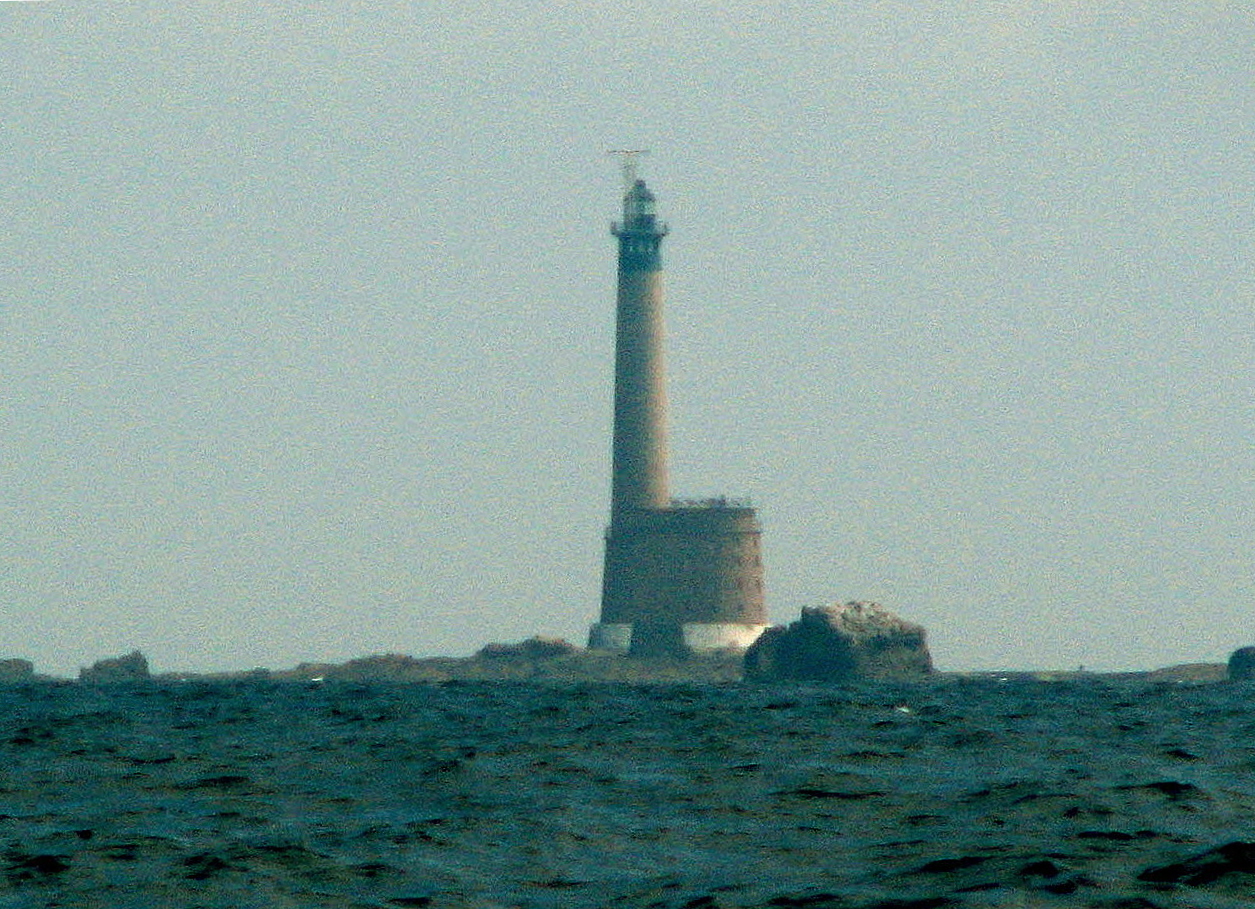
Roches-Douvres Lighthouse by Graham Rabbitts · CC BY 2.0 · Source
Signature moment
Material continuity breaks in 1944; function, place and lighthouse identity are rebuilt in granite.
Conceptual illustration only — not to scale.
The journey
Verified fact
A 57-metre prefabricated metal tower, first assembled for the 1867 Paris Universal Exhibition, was rebuilt on the plateau and lit on 6 August 1869.
Verified fact
German forces destroyed the occupied metal lighthouse in August 1944. Official records reviewed here establish the month, but not 4 August as the exact date for Roches-Douvres.
Conflicting evidence
Work began in 1947. Granite was cut and numbered on shore, carried three hours or more to sea, and assembled during short weather windows while workers initially lived aboard the Titan.
Interpretive bridge
Pierre Gout's Loguivy de la Mer used the real lighthouse works inside a part-fiction, part-documentary story about young fishers financing a cooperative boat.
Conflicting evidence
After seven years and eleven thousand tonnes of transported material, the current lighthouse entered service in 1954 as France's last newly built lighthouse at sea. Official sources conflict between June and the night of 13-14 July for the exact lighting date.
Verified fact
The final keepers left after automation on 6 October 2000. The whole lighthouse and its base were classified as a historic monument in 2017 while the white flash every five seconds continued.
Video
Open the Cinémathèque de Bretagne catalogue and viewing page for Pierre Gout's mixed documentary-fiction film containing the construction works.
Open media sourceExternal social post supplied by the contributor; linked as a lead, not republished or treated as rights-cleared archive media.
Open media sourceOne exposed plateau
The reviewed point is the Roches-Douvres plateau. All dated stages refer to the same station site; no movement route is implied.
Loading detailed map...
Roches-Douvres plateauFirst tower
The prefabricated tower is rebuilt on the plateau and first lit.
Place
Continuity site
The same exposed offshore plateau fixes the navigational mission across destruction and reconstruction.
Why it matters
Roches-Douvres makes identity continuity visible without pretending that the current building is the tower first lit in 1869.
The story also preserves construction as social memory through archival film while labelling where documentary scenes and staged narrative meet.
Heritage Journey
How did a warning survive the destruction of the tower that carried it?
Roches-Douvres preserves a navigational identity across two radically different structures: a metal tower first lit in 1869, destroyed in 1944, and the vast granite-and-concrete lighthouse completed after seven years of post-war work.
LUX Light Archive is the heritage renderer of the LUX143 research field, preserving lighthouse continuity through evidence, memory, movement, and sources.
Understand how this archive fits into the wider research field.
Inside this heritage renderer, Story and Research are two modes of the same evidence-grounded journey: Story gives a guided path, while Research shows the sources, relationships, uncertainty, and open questions behind it.
Verified fact
An exhibition tower becomes an offshore warningA 57-metre prefabricated metal tower, first assembled for the 1867 Paris Universal Exhibition, was rebuilt on the plateau and lit on 6 August 1869.
Verified fact
The tower is destroyed, but the need for the light remainsGerman forces destroyed the occupied metal lighthouse in August 1944. Official records reviewed here establish the month, but not 4 August as the exact date for Roches-Douvres.
Conflicting evidence
Reconstruction begins at the edge of possible workWork began in 1947. Granite was cut and numbered on shore, carried three hours or more to sea, and assembled during short weather windows while workers initially lived aboard the Titan.
Interpretive bridge
Film turns the construction site into social memoryPierre Gout's Loguivy de la Mer used the real lighthouse works inside a part-fiction, part-documentary story about young fishers financing a cooperative boat.
Conflicting evidence
The granite ship returns the warning to the seaAfter seven years and eleven thousand tonnes of transported material, the current lighthouse entered service in 1954 as France's last newly built lighthouse at sea. Official sources conflict between June and the night of 13-14 July for the exact lighting date.
Verified fact
Human occupation ends; heritage recognition beginsThe final keepers left after automation on 6 October 2000. The whole lighthouse and its base were classified as a historic monument in 2017 while the white flash every five seconds continued.
Follow France's most offshore lighthouse from an exhibition-built metal tower through wartime destruction to the granite ship lit in 1954.
Roches-Douvres makes identity continuity visible without pretending that the current building is the tower first lit in 1869.
The story also preserves construction as social memory through archival film while labelling where documentary scenes and staged narrative meet.
Connected research view
Select an event, object, or place to trace it across all three views.
The prefabricated tower is rebuilt on the plateau and first lit.
German forces destroy the occupied lighthouse in August 1944.
Shore-cut stone, workers, vessels and weather windows create a materially new lighthouse.
The new lighthouse enters service; its exact June-or-July commissioning date remains disputed in official sources.
The last keepers leave in 2000 and the whole lighthouse is classified in 2017.
The graph separates the continuing station identity from the destroyed metal tower, the replacement structure, the offshore place and the dated events between them.
No path selected.
The reviewed point is the Roches-Douvres plateau. All dated stages refer to the same station site; no movement route is implied.
Loading detailed map...
Roches-Douvres plateauFirst tower
The prefabricated tower is rebuilt on the plateau and first lit.
Official and object-specific sources carry the strongest confidence; secondary sources are shown as corroborating context.
Research still in progress — these do not affect accepted relationships above.
A present-day lighthouse card cannot explain which structure vanished, which one replaced it and what identity continued.
LUX keeps the station, two towers, place, dated relations, source conflicts and licensed media distinct while making one readable story.
Original editorial content on this page: Creative Commons Attribution-NonCommercial-ShareAlike 4.0 International. See Rights & Reuse.
"Roches-Douvres: The Granite Ship" · roches-douvres-granite-ship · © LUX143 · Creative Commons Attribution-NonCommercial-ShareAlike 4.0 International · https://light.lux143.org/heritage-journeys/roches-douvres-granite-ship/ Roches-Douvres Lighthouse by Graham Rabbitts · Rights status: CC BY · CC BY 2.0 (https://creativecommons.org/licenses/by/2.0/)
LUX Light Archive, Heritage journey: "Roches-Douvres: The Granite Ship", roches-douvres-granite-ship, https://light.lux143.org/heritage-journeys/roches-douvres-granite-ship/, accessed 2026-09-24, archive v0.24.572.