Heritage Journey
The Lighthouse That Was Too High to Be Seen
Clare Island, fog, fire, and the transfer of a light
Height promised reach but repeatedly placed Clare Island's light in fog and low cloud. The station survived when its navigational job moved to Achillbeg, leaving two tower generations and a new life within the same physical complex.
Story mode is the guided heritage-continuity mode inside the LUX Light Archive renderer.
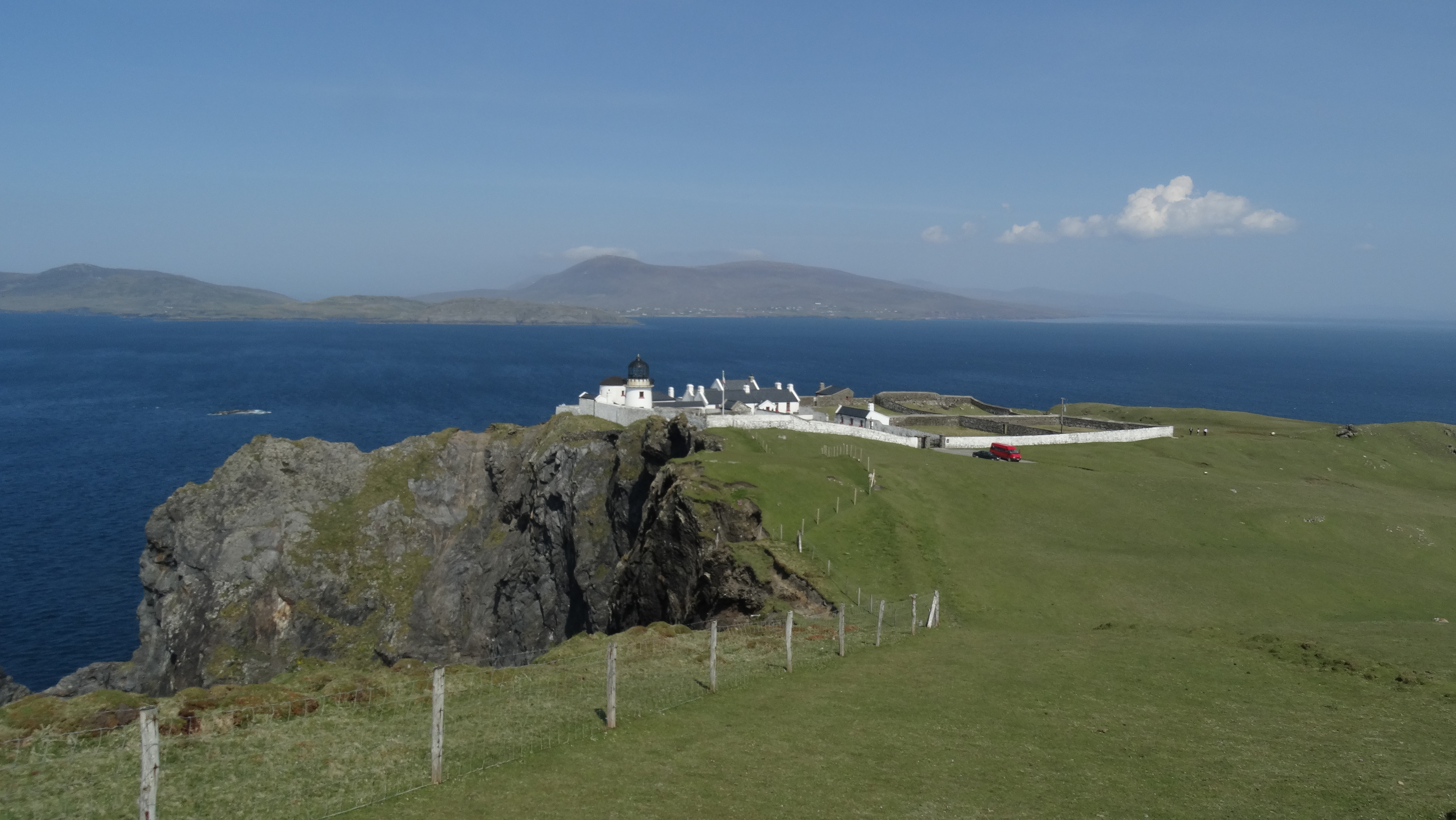
Clare Island - The Lighthouse by Colin Park · CC BY-SA 2.0 · Source
The lighthouse did not move. Its function did.
LUX143 interpretation
Signature moment
The station stayed. The signal moved.
Physical form remained on Clare Island while navigational responsibility continued at Achillbeg.
Conceptual illustration only — not to scale.
The journey
When height stopped helping
Verified fact
A Light Above the Atlantic
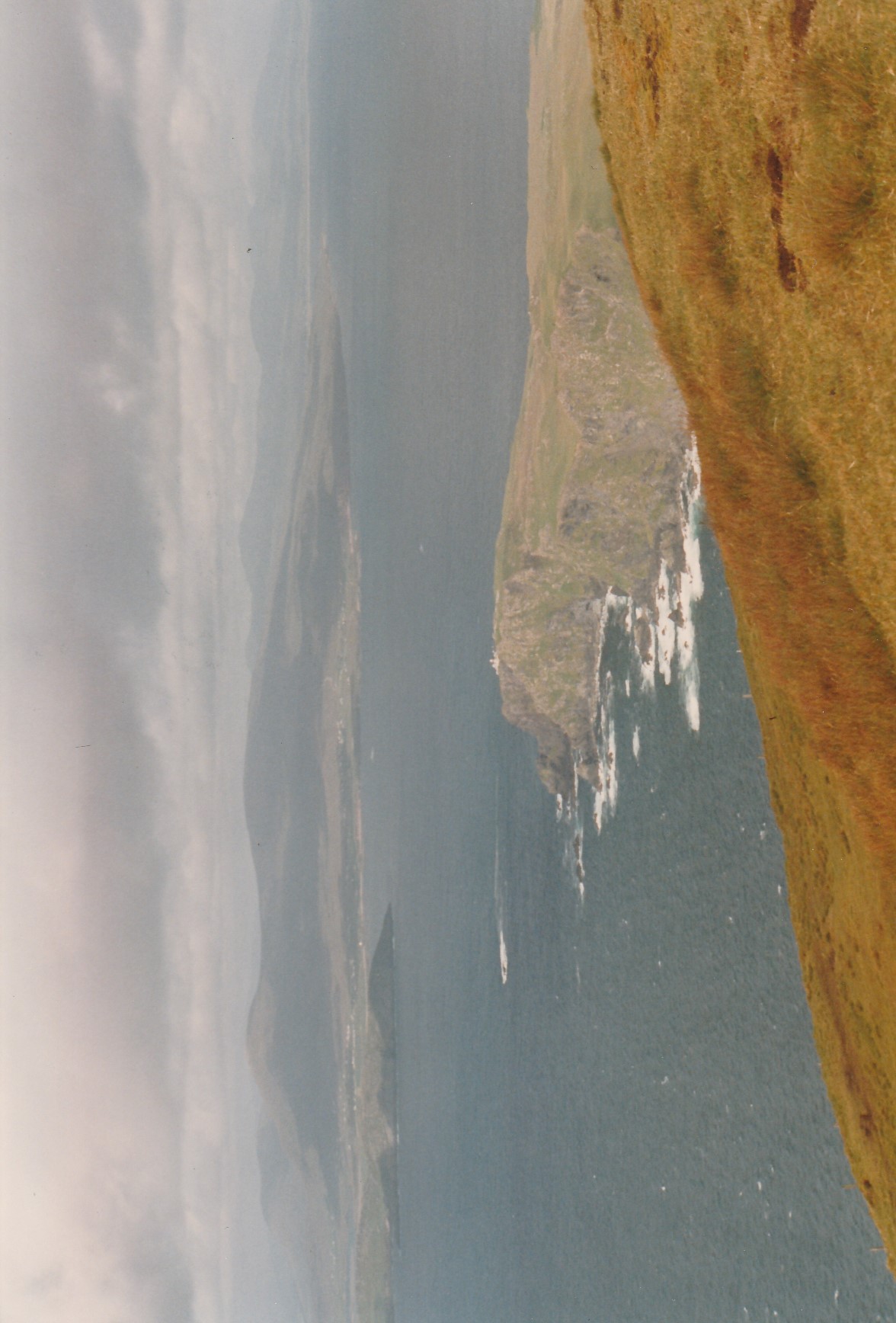
A lighthouse was established high on Clare Island's northern cliffs to mark the entrance to Clew Bay. Height was intended to extend the signal's reach.
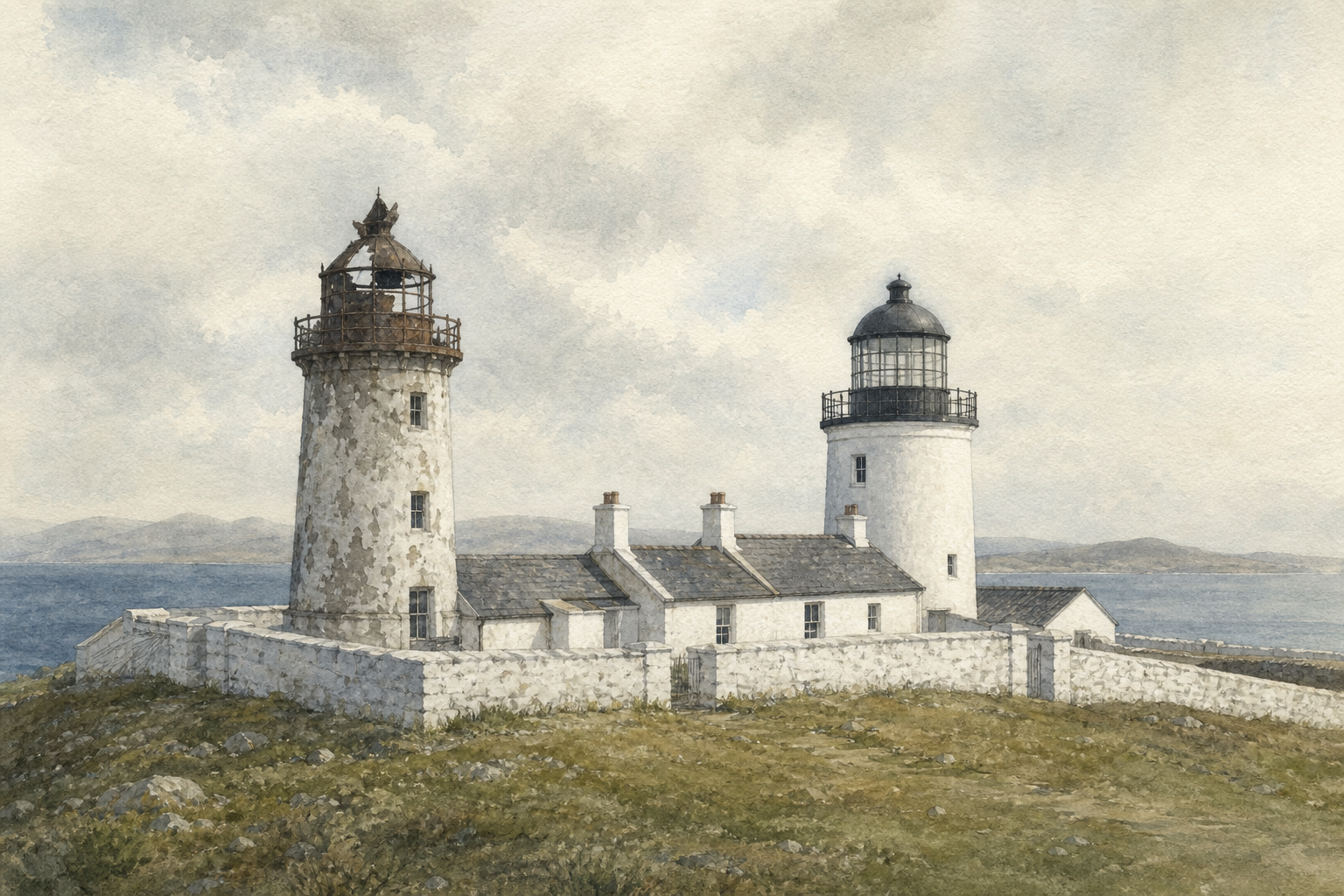
Damage and replacementAI-generated illustration — interpretative, not documentary evidence · Project illustration Verified fact
Fire in the Lantern
Fire damaged the original lantern and upper tower. The event changed the station's physical lifecycle without requiring an embellished account of its cause.
Verified fact
Two Towers, One Station
A replacement lantern tower entered service beside the damaged original. Replacement changed which tower carried the light; it did not create a second lighthouse station.
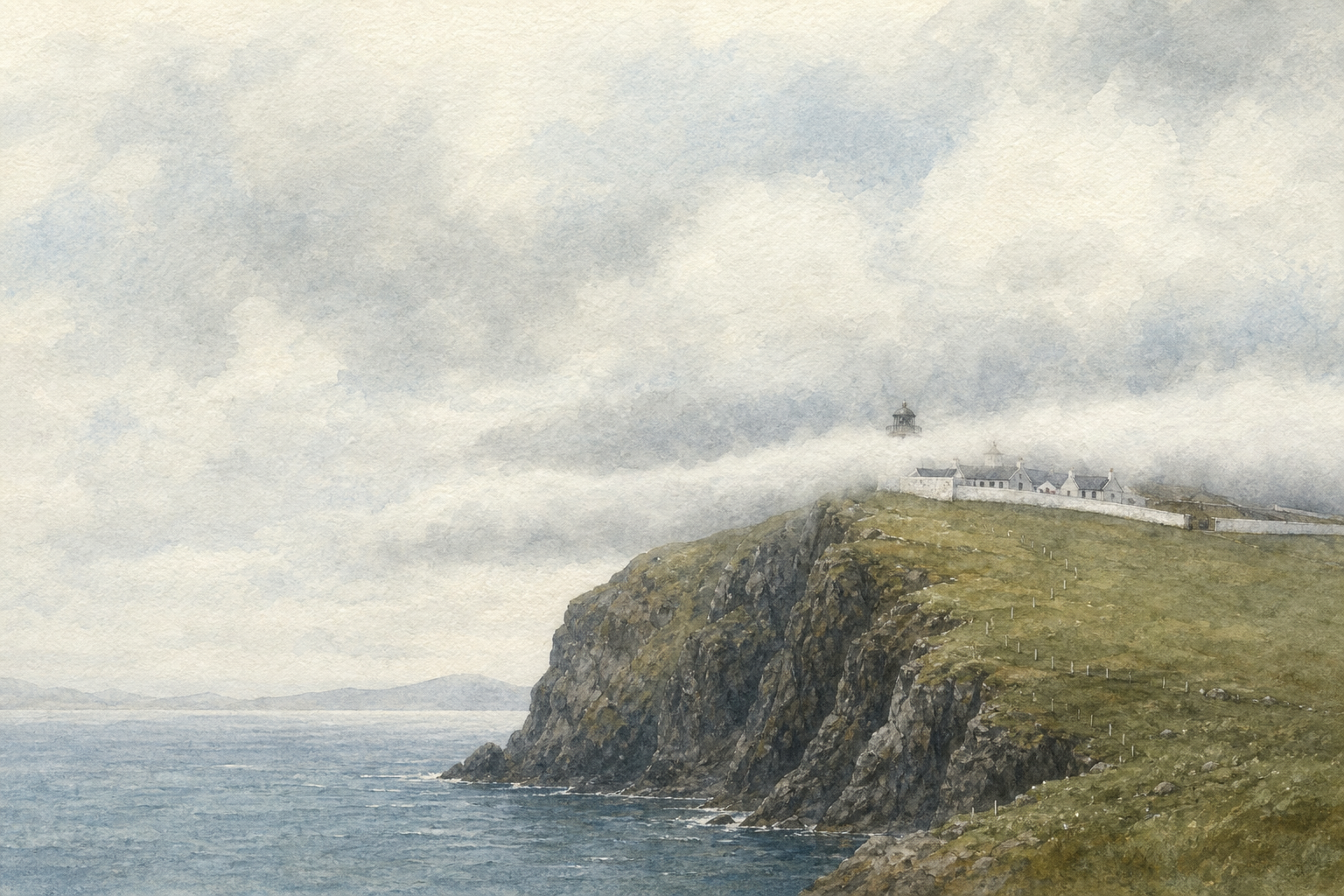
The high-light paradoxAI-generated illustration — interpretative, not documentary evidence · Project illustration Interpretive bridge
When Strength Became Weakness
The elevation that gave the light theoretical reach also placed it where fog and low cloud could hide it from mariners.
Verified fact
A Century of Doubt
Inspectors repeatedly questioned the station's suitability, yet the light continued operating while alternatives and automation were considered.
Verified fact
Better Technology, Same Geography
Irish Lights refurbished the light in 1914. Better equipment could strengthen the signal, but it could not remove the station from fog and low cloud.
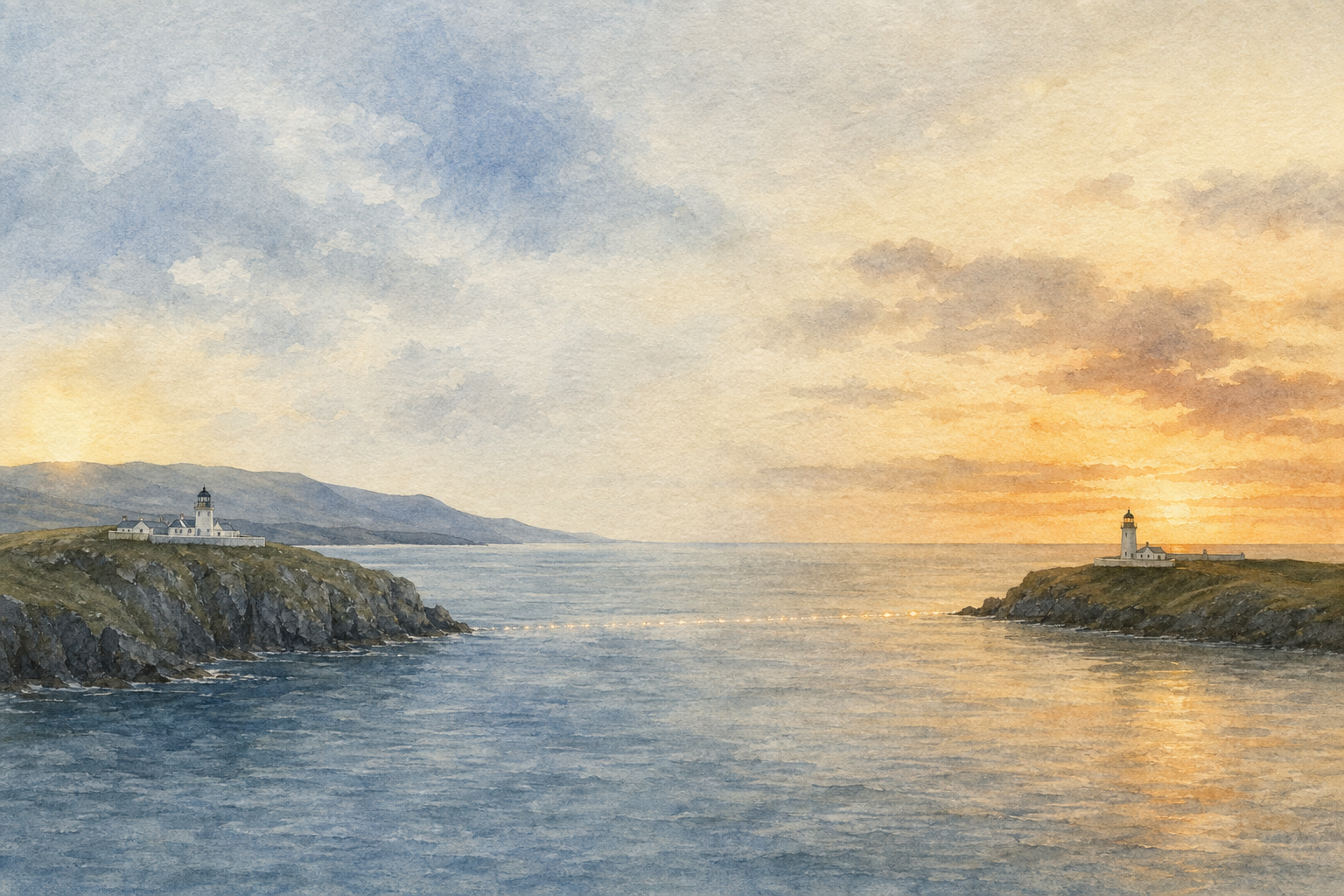
The signal changes placeAI-generated illustration — interpretative, not documentary evidence · Project illustration Conflicting evidence
The Light Moves
Clare Island was extinguished at sunrise and Achillbeg was inaugurated at sunset. The station did not move; its navigational function did.
Interpretive bridge
One Identity, Several Destinations
The buildings remained on Clare Island and the navigation function continued at Achillbeg. The 1914 apparatus may have followed another path, but its manufacturer, model and custody remain unverified.
Verified fact
Afterlife
The preserved station complex was renovated for private hospitality. A place once organised around orientation now also provides shelter.
Transfer of function
Clare Island to Achillbeg
Conceptual continuity overlay: the dashed Clare Island → Achillbeg line shows navigation function transferred on 28 September 1965. No tower, building or physical station moved.
Loading detailed map...
- 1
Clare Island LighthouseOne station on Clare Island
The original tower, fire damage, adjacent replacement tower, visibility problem and 1914 refurbishment all belong to one station history.
- 2
Achillbeg LighthouseNavigation function transferred
Clare Island was extinguished at sunrise and Achillbeg inaugurated at sunset. The dashed map connection is conceptual; no physical station moved.
Heritage Journey
The Lighthouse That Was Too High to Be Seen
Clare Island, fog, fire, and the transfer of a light
Clare Island Lighthouse follows one high Atlantic station from its 1806 first tower through fire, an adjacent 1818 replacement, a century of fog and low-cloud concern, 1914 refurbishment, extinction in 1965, functional succession by Achillbeg, and adaptive reuse of the surviving complex.
LUX Light Archive is the heritage renderer of the LUX143 research field, preserving lighthouse continuity through evidence, memory, movement, and sources.
Understand how this archive fits into the wider research field.
Inside this heritage renderer, Story and Research are two modes of the same evidence-grounded journey: Story gives a guided path, while Research shows the sources, relationships, uncertainty, and open questions behind it.
The lighthouse did not move. Its function did.
LUX143 interpretation
The journey
- 1806
Verified fact
A Light Above the AtlanticA lighthouse was established high on Clare Island's northern cliffs to mark the entrance to Clew Bay. Height was intended to extend the signal's reach.
- 1813
Verified fact
Fire in the LanternFire damaged the original lantern and upper tower. The event changed the station's physical lifecycle without requiring an embellished account of its cause.
- 1818
Verified fact
Two Towers, One StationA replacement lantern tower entered service beside the damaged original. Replacement changed which tower carried the light; it did not create a second lighthouse station.
- 19th–20th centuries
Interpretive bridge
When Strength Became WeaknessThe elevation that gave the light theoretical reach also placed it where fog and low cloud could hide it from mariners.
- 1863–1958
Verified fact
A Century of DoubtInspectors repeatedly questioned the station's suitability, yet the light continued operating while alternatives and automation were considered.
- 1914
Verified fact
Better Technology, Same GeographyIrish Lights refurbished the light in 1914. Better equipment could strengthen the signal, but it could not remove the station from fog and low cloud.
- 28 September 1965
Conflicting evidence
The Light MovesClare Island was extinguished at sunrise and Achillbeg was inaugurated at sunset. The station did not move; its navigational function did.
- After 1965
Interpretive bridge
One Identity, Several DestinationsThe buildings remained on Clare Island and the navigation function continued at Achillbeg. The 1914 apparatus may have followed another path, but its manufacturer, model and custody remain unverified.
- 2008–present
Verified fact
AfterlifeThe preserved station complex was renovated for private hospitality. A place once organised around orientation now also provides shelter.
In brief
Height promised reach but repeatedly placed Clare Island's light in fog and low cloud. The station survived when its navigational job moved to Achillbeg, leaving two tower generations and a new life within the same physical complex.
Connected research view
Graph, time and place
Select an event, object, or place to trace it across all three views.
Functional Continuity Timeline
One station on Clare IslandTwo tower generations and a high light
The original tower, fire damage, adjacent replacement tower, visibility problem and 1914 refurbishment all belong to one station history.
Evidence: 4 sourcesConfidence: highPlace: Clare Island LighthouseObjects: Clare Island Lighthouse station fabric, Clare Island original lighthouse tower, Clare Island replacement lantern tower, Clare Island lighthouse keeper dwellingsSources: An Introduction to the Architectural Heritage of County Mayo, An Introduction to the Architectural Heritage of County Mayo, An Introduction to the Architectural Heritage of County MayoAdaptive reuseThe station becomes private hospitality accommodation
The buildings remained on Clare Island and were adapted for a new use; access is by booking rather than unrestricted public entry.
Evidence: 1 sourceConfidence: mediumPlace: Clare Island LighthouseObjects: Clare Island Lighthouse station fabric, Clare Island original lighthouse tower, Clare Island replacement lantern tower, Clare Island lighthouse keeper dwellingsSources: Clare Island Lighthouse - Lighthouse history
Relationship Graph
This graph distinguishes one station from its tower components, physical replacement from operational succession, and navigation-function transfer from physical relocation.
No path selected.
Journey Map
Conceptual continuity overlay: the dashed Clare Island → Achillbeg line shows navigation function transferred on 28 September 1965. No tower, building or physical station moved.
Loading detailed map...
- 1
Clare Island LighthouseOne station on Clare Island
The original tower, fire damage, adjacent replacement tower, visibility problem and 1914 refurbishment all belong to one station history.
- 2
Achillbeg LighthouseNavigation function transferred
Clare Island was extinguished at sunrise and Achillbeg inaugurated at sunset. The dashed map connection is conceptual; no physical station moved.
Evidence
Official and object-specific sources carry the strongest confidence; secondary sources are shown as corroborating context.
Source Baseline
- Irish Lights - Achillbeg Lighthouseofficial_navigation_authorityAppears in Story: A Light Above the Atlantic · Appears in Story: When Strength Became Weakness · Appears in Story: A Century of Doubt · Appears in Story: Better Technology, Same Geography · Appears in Story: The Light Moves · Appears in Story: One Identity, Several Destinations · Appears in Story: Afterlife
- An Introduction to the Architectural Heritage of County Mayogovernment_heritage_inventoryAppears in Story: A Light Above the Atlantic · Appears in Story: Fire in the Lantern · Appears in Story: Two Towers, One Station · Appears in Story: When Strength Became Weakness · Appears in Story: A Century of Doubt · Appears in Story: Better Technology, Same Geography
- Clare Island Lighthouse - Lighthouse historycurrent_operatorAppears in Story: A Light Above the Atlantic · Appears in Story: Fire in the Lantern · Appears in Story: Two Towers, One Station · Appears in Story: One Identity, Several Destinations · Appears in Story: Afterlife
- Clare Island Lighthouse - The Lighthouse buildingscurrent_operatorAppears in Story: A Light Above the Atlantic · Appears in Story: Fire in the Lantern · Appears in Story: Two Towers, One Station · Appears in Story: One Identity, Several Destinations · Appears in Story: Afterlife
- Lighthouse Accommodation - Clare Island Lighthousespecialist_secondaryAppears in Story: The Light Moves
- National Library of Ireland - Clare Island Lighthouse Station, June 1911archival_catalogue
- Clare Island - The Lighthouse by Colin Parklicensed_media
Identity Changes
- One station, two towersThe 1818 tower functionally replaced the damaged 1806 tower while both remained components of one lighthouse station.
- Physical survivalThe Clare Island complex remained in place after operational closure.
- Functional successionAchillbeg received the navigational role without receiving the Clare Island structures.
- Material path remains openThe 1914 apparatus is not linked to Chance Brothers or a museum until stronger evidence resolves manufacturer, model and custody.
- Adaptive reuseThe preserved station became private hospitality accommodation with access by booking.
Current Status
- Accepted public Heritage Journey with Story and Research views, source-backed lifecycle evidence, and explicit access caution.
- Clare Island and Achillbeg canonical records are published as reviewed Journey anchors.
- Preferred extinction date is 28 September 1965 from Irish Lights; the 29 September secondary alternative remains visible in Research.
- Chance Brothers manufacture, optic model, present custody and unrestricted public access are not asserted; the operator-published coordinate is labelled approximate.
Open Questions
Research still in progress — these do not affect accepted relationships above.
- Can archival operational logs explain why secondary sources give 29 September when Irish Lights records extinction at sunrise on 28 September?Appears in Story: The Light Moves
- Which optic or lighting apparatus was installed in the 1914 refurbishment, who manufactured it, and when did it enter service?Appears in Story: When Strength Became Weakness · Appears in Story: A Century of Doubt · Appears in Story: Better Technology, Same Geography · Appears in Story: One Identity, Several Destinations · Appears in Story: Afterlife
- Can a museum catalogue or Irish Lights transfer record verify whether a Clare Island optic is held at The World of Glass or another collection?Appears in Story: One Identity, Several Destinations · Appears in Story: Afterlife
- Current operator pages confirm booking-based hospitality access; recheck the operator before describing seasonal availability or visitor arrangements.Appears in Story: One Identity, Several Destinations · Appears in Story: Afterlife
Why LUX?
A conventional card might call Clare Island a lighthouse built in 1806 and closed in 1965. That misses the two tower generations, the long visibility problem and the operational handoff to Achillbeg.
LUX keeps station, structures, function and unresolved apparatus history separate enough to remain truthful, while continuity threads show why they still belong to one heritage story.
The result is not a claim that the lighthouse moved. The buildings stayed; the responsibility for orientation moved elsewhere.
Rights & Attribution
Content License
Original editorial content on this page: Creative Commons Attribution-NonCommercial-ShareAlike 4.0 International. See Rights & Reuse.
Media Rights
- Clare Island Lighthouse complex on the high northern cliffs of Clare Island. · Rights status: CC BY-SA · License: CC BY-SA 2.0 · Third-party material
- Wide 1994 view across the Atlantic to Clare Island Lighthouse, small on the high northern headland. · Rights status: CC0 · License: CC0 1.0 · Third-party material
Attribution
"The Lighthouse That Was Too High to Be Seen" · clare-island-too-high-to-be-seen · © LUX143 · Creative Commons Attribution-NonCommercial-ShareAlike 4.0 International · https://light.lux143.org/heritage-journeys/clare-island-too-high-to-be-seen/ Clare Island - The Lighthouse by Colin Park · Rights status: CC BY-SA · CC BY-SA 2.0 (https://creativecommons.org/licenses/by-sa/2.0/) · Source: Geograph / Wikimedia Commons — https://commons.wikimedia.org/wiki/File:Clare_Island_-_The_Lighthouse_(geograph_5221186).jpg · © Colin Park Clare Island lighthouse 04 by Ridiculopathy · Rights status: CC0 · CC0 1.0 (https://creativecommons.org/publicdomain/zero/1.0/) · Source: Wikimedia Commons — https://commons.wikimedia.org/wiki/File:Clare_Island_lighthouse_04.jpg · © Ridiculopathy
Citation
LUX Light Archive, Heritage journey: "The Lighthouse That Was Too High to Be Seen", clare-island-too-high-to-be-seen, https://light.lux143.org/heritage-journeys/clare-island-too-high-to-be-seen/, accessed 2026-09-24, archive v0.24.572.